• Submit Poetry
  • Support SCP
  • About Us
  • Members
  • Join
Saturday, September 19, 2026
Society of Classical Poets
  • Poems
    • Beauty
    • Culture
    • Satire
    • Humor
    • Children’s
    • Art
    • Ekphrastic
    • Epic
    • Epigrams and Proverbs
    • Human Rights in China
    • Music
    • Performing Arts
    • Riddles
    • Science
    • Song Lyrics
    • The Environment
    • The Raven
    • Found Poems
    • High School Poets
    • Terrorism
    • Covid-19
  • Poetry Forms
    • Sonnet
    • Haiku
    • Limerick
    • Villanelle
    • Rondeau
    • Pantoum
    • Sestina
    • Triolet
    • Acrostic
    • Alexandroid
    • Alliterative
    • Blank Verse
    • Chant Royal
    • Clerihew
    • Rhupunt
    • Rondeau Redoublé
    • Rondel
    • Rubaiyat
    • Sapphic Verse
    • Shape Poems
    • Terza Rima
  • Great Poets
    • Geoffrey Chaucer
    • Emily Dickinson
    • Homer
    • Henry Wadsworth Longfellow
    • Dante Alighieri
    • John Keats
    • John Milton
    • Edgar Allan Poe
    • William Shakespeare
    • William Wordsworth
    • William Blake
    • Robert Frost
  • Love Poems
  • Contests
  • SCP Academy
    • Educational
    • Teaching Classical Poetry—A Guide for Educators
    • Poetry Forms
    • The SCP Journal
    • Books
No Result
View All Result
Society of Classical Poets
  • Poems
    • Beauty
    • Culture
    • Satire
    • Humor
    • Children’s
    • Art
    • Ekphrastic
    • Epic
    • Epigrams and Proverbs
    • Human Rights in China
    • Music
    • Performing Arts
    • Riddles
    • Science
    • Song Lyrics
    • The Environment
    • The Raven
    • Found Poems
    • High School Poets
    • Terrorism
    • Covid-19
  • Poetry Forms
    • Sonnet
    • Haiku
    • Limerick
    • Villanelle
    • Rondeau
    • Pantoum
    • Sestina
    • Triolet
    • Acrostic
    • Alexandroid
    • Alliterative
    • Blank Verse
    • Chant Royal
    • Clerihew
    • Rhupunt
    • Rondeau Redoublé
    • Rondel
    • Rubaiyat
    • Sapphic Verse
    • Shape Poems
    • Terza Rima
  • Great Poets
    • Geoffrey Chaucer
    • Emily Dickinson
    • Homer
    • Henry Wadsworth Longfellow
    • Dante Alighieri
    • John Keats
    • John Milton
    • Edgar Allan Poe
    • William Shakespeare
    • William Wordsworth
    • William Blake
    • Robert Frost
  • Love Poems
  • Contests
  • SCP Academy
    • Educational
    • Teaching Classical Poetry—A Guide for Educators
    • Poetry Forms
    • The SCP Journal
    • Books
No Result
View All Result
Society of Classical Poets
No Result
View All Result
Home Poetry Beauty

Essay: ‘To Rhyme or Not to Rhyme?’ by James Sale

June 21, 2014
in Beauty, Culture, Essays, Poetry
A A
81
poems Essay: 'To Rhyme or Not to Rhyme?' by James Sale

Imagine that you were lost in a wilderness and had to find your way out. Fortunately, you have with you a number of things, or tools if you will. In the first instance you have a kitbag, which is itself useful. Within it are various articles: a bottle of water, a knife, fork and spoon, a map, lighter fuel, matches, a compass, a chocolate bar, some rope, scissors, a can opener, a wrap-up plastic mac, and a few more pieces too, like the watch on your wrist. The question I would ask you is simply this: would you, therefore, given that you are lost and are not sure where or how far the next safe port of call is, jettison any of these items or tools? Would you say, this item is irrelevant, and I don’t need it – I’ll never need it – get rid of it? And further, when you are safely back home and start writing of your experiences, will you be prescribing to other travelers in the wilderness: you must never take a bottle of water with you – it’s stupid, it’s cheating, it’s pointless? Or, argue having a map with you means that you are not really lost, so you are not really making a journey?

Sound somewhat fanciful? Not really, for this is precisely what happens in all areas of modern art, and especially poetry. We have three thousand years of tradition which has established a very useful toolkit in the armoury of poetry (and read the same for art and music). Techniques like metre and rhythm, using rhetorical devices such as onomatopoeia, metaphor, simile, allusion, anaphora and so on have been well established for millennia. And the reason for this is clear: these techniques, used judiciously, work! They create appropriate emotional (primarily) and intellectual effects in the listeners and readers of the work.

In English poetry rhyme is a special example of one such special effect. In fact rhyme is so ubiquitous that some less informed people seem to think that poetry is just that: rhymed couplets. But because some less informed people think erroneously about this topic does not invalidate its force. The truth is that rhyme is a massively powerful adjunct of poetry and this is demonstrated in two ways in the English speaking world: first, children universally love nursery rhymes, and such rhymes are a brilliant device for aiding memory and recall. But second, advertising itself regularly uses rhyme – why? Because it works. One only has to think of one of the most memorable ads of the last 40 years: “A Mars a day/Helps you work, rest and play.” We get it and the message embeds itself in our consciousness.

Why, then, for heaven’s sake do we constantly get a stream of wannabe poets denigrating and banning rhyme, as if the use of rhyme were something no real poet would ever do? On the contrary, all significant poets have used it, and the very greatest poets do it a lot: Spenser, Shakespeare, Milton, Keats, Yeats – need I go on? Even the high apostle of free verse, TS Eliot, did quite a bit of it!

[column size=one_half position=first ]

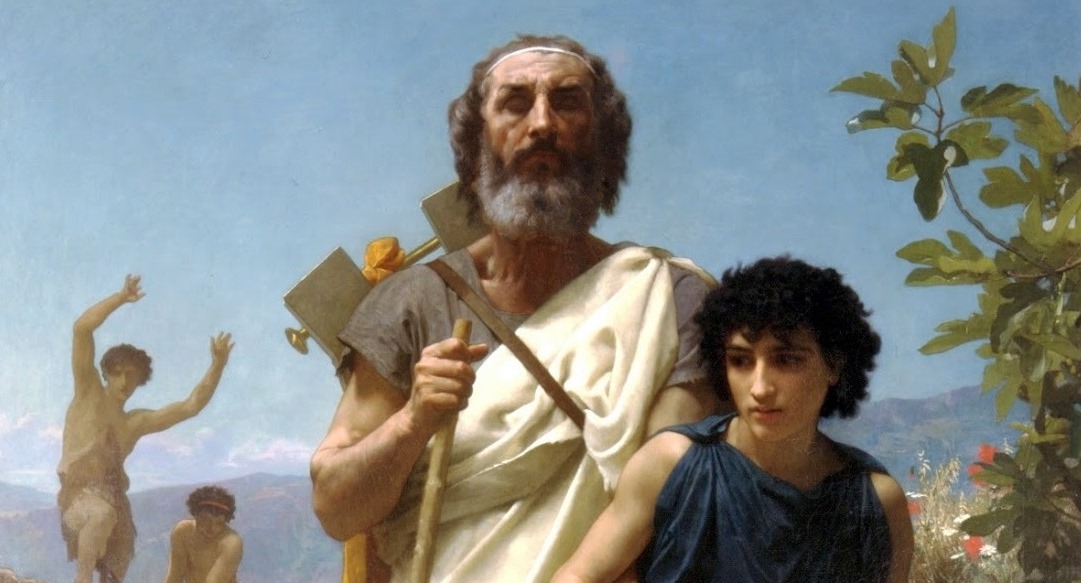
Bouguereau William-Adolphe, (1825 - 1905) French Neo Classical paintings homer-and-his-guide-1874 [phistars.com] 5 stars

[/column]

Of course, rhyming badly is not good. William McGonagall has become a by-word for bad poetry in which meaning has been wrenched by the necessity to find rhyme words. This, in his case, however, has become comical – people still want to read him for the pleasure of the forced rhymes. And here’s the weird thing: I would predict more people read and enjoy McGonagall for all its incompetence (there is still a pleasure to be had in rhyme!) than ever read those stalwarts of serious ‘free verse’: the ‘Howl’ and the ‘Paterson’ and all this shapeless stuff that drones on in its own self-importance.

There is, as I discovered recently in a debate, a vociferous number of people for whom poetry is not poetry at all, but a political act. For them, ‘rhyme’ is some sort of bondage (and that of course has a creditable heritage in Milton’s eschewing rhyme in order to write Paradise Lost) and they need to be ‘free’ – to write whatever comes into their minds as it comes without any sense of form or structure or device or technique or tools. And the result, of course, is that they don’t write poetry at all, although they promote it as such. And they never improve. No verse is free, said TS Eliot, for the man (read ‘person’) who wants to do a good job. They just do not get – and cannot discipline themselves to study and practise – that the tools, the techniques are the very way we find our way out of the wilderness of emotional chaos (which is really their ‘freedom’) and get to the land of true meaning, which is our home.

All this requires patience, study and craft. But all politics is too short-term for that – we want our freedom and we want it now: look at this scribble – it’s art! Right! We need to move on from this infantilism. Rhyme is not necessary for poetry; but rhyme is an amazingly powerful technique when used appropriately and properly, and understanding the various aspects of rhyme which are possible is itself an education. So let’s not be put down by these political activists proclaiming ‘freedom’ and who the while are wasting poetry with their wanton graffiti. Use rhyme when you want to – you know, it can sound so good!


James Sale is a motivational speaker and poet in the United Kingdom.

Featured Image: “Homer and His Guide” by William Adolph Bouguereau (1825-1905).



ShareTweetPin
The Society of Classical Poets does not endorse any views expressed in individual poems or commentary.
Read Our Comments Policy Here

RandomPoems

Poetry

‘Three Achaean Perspectives’ by Bruce Dale Wise

December 29, 2012

This poem shows three Achaean perspectives on three characters from Homer's Iliad, each from an individual point of view.  That...

‘Crank Out a Few, Please’: Observations on Poetic Composition by Joseph S. Salemi
Educational

‘Crank Out a Few, Please’: Observations on Poetic Composition by Joseph S. Salemi

May 3, 2022

. Crank Out a Few, Please by Joseph S. Salemi Many years ago, when I was in graduate school, I...

Next Post
‘The Calm’ by John Gray

'The Calm' by John Gray

‘Yin and Yang’ by Jane Blanchard

'Yin and Yang' by Jane Blanchard

‘I Left My Gloves at the Analyst’s’ by Nancy Weber

'I Left My Gloves at the Analyst's' by Nancy Weber

Comments 81

  1. Vernell says:
    7 years ago

    May I simply say what a comfort to find a person that actually understands what they are discussing online.

    You actually understand how to bding a problem too light and make it important.
    More people have to look at this and understand this side of your story.
    It’s surprising you aren’t more popular given that you definitely
    poswsess the gift.

    Reply
    • James Sale says:
      7 years ago

      Hi Vernell – thank you, I appreciate your comments on my article and am glad you like it so much. Do feel free to re-post it and let others know about it; in that way you might cure the problem of my popularity! Of course, the important thing is the ideas, and not the specific person behind them. On the pages of the SCP we are collectively (most of us) working towards helping the West regain its sense of order, purpose and beauty – through classical forms. Do come along to the events in New York on the 17th June – advertised at the top of this page – I am flying in from the UK to join this party, and can scarcely wait to be there with New York’s greats!

      Reply
  2. bitmain antminer s19 says:
    5 years ago

    The overall look of your site is magnificent, as well as the content!

    Reply
    • James Sale says:
      5 years ago

      Thanks Bitmain – I cannot take credit for the look: that must go to Evan Mantyk, the editor. But am glad you like the content of my article.

      Reply
Next

Leave a Reply Cancel reply

Your email address will not be published. Required fields are marked *


  1. Maria Panayi on The Society of Classical Poets 2026 Haiku CompetitionSeptember 19, 2026

    A lost moth mistakes bright lamp for life-giving light; Knocking on wrong door.

  2. Maura H. Harrison on The Society of Classical Poets 2026 Haiku CompetitionSeptember 18, 2026

    Your present laughter climbs on Utopian bliss, vines on a theory. Medusa's solstice, a standing still of the sun, turns…

  3. Joseph S. Salemi on ‘Military Quatrains, or the Modern Archilochus’: A Poem by Joseph S. SalemiSeptember 18, 2026

    Thank you, Mary Jane. I have a poem on bayonets somewhere, and if I can dig it out easily I'll…

  4. C.B. Anderson on ‘Island of Poets’: A Poem in Sapphic Verse by Margaret CoatsSeptember 18, 2026

    I guess we could call these English Sapphics. The few that I have written were done in this manner, and…

  5. Mary Jane Myers on ‘Military Quatrains, or the Modern Archilochus’: A Poem by Joseph S. SalemiSeptember 18, 2026

    Joseph This is a terrific read. I am in awe of our brave soldiers who wield these arms so expertly…

Subscribe to Daily Poems

Enter your email address to subscribe to this blog and receive notifications of new posts by email.

Join 1,645 other subscribers
No Result
View All Result

Resources

       1. A Guide to Writing Poetry

      2. The Best Poems of 2020      

      3. Poetry and Writing Contests

      4. Journals Accepting Formal Verse

Recent Poems

  • ‘Big Cat Dance’: A Poem by Paul Erlandson
  • ‘Freedom’s Wring’: A Poem by C.B. Anderson
  • ‘Island of Poets’: A Poem in Sapphic Verse by Margaret Coats
  • ‘Military Quatrains, or the Modern Archilochus’: A Poem by Joseph S. Salemi
  • ‘The Secret Rose’ and Other Poetry by Luke Perera
  • ‘The Family Archive’: A Poem by Robert Thomas
  • ‘Pedagogy’: A Poem by Jonathan Kinsman
  • ‘Who Are the Villains?’ and Other Poetry by Adam Wasem
  • ‘Isle of Romance’: A Poem by Margaret Brinton
  • ‘Professional Mourner’: A Poem by Brian Yapko
  • A Distillation of Shakespeare’s ‘A Midsummer Night’s Dream’ by Martin Briggs
  • ‘How the Mighty Fell!’: A Poem by Jeff Kemper
  • ‘The One Lone Juror’: A Poem by Joseph S. Salemi
  • ‘Soul of a Prophet’: A Trialog Poem by T.M. Moore
  • ‘Nelson and George’: A Poem by David Filpula
  • ‘When She Arrives’: A Poem by Bhairab Barman
  • ‘On to Better Days’: A Poem by Bruce Dale Wise
  • ‘Serenade’ and Other Poetry by Adam Sedia
  • ‘Self-Exploration’ and Other Poems by Paul Millan
  • ‘Victory’: A Poem by Jonathan Graver
  • ‘The Cristero Centennial’: A Poem by Margaret Coats
  • ‘A Potpourri of Aphoristic Verses’ by C.B. Anderson
  • ‘The Estuary’: A Poem by Jeff Eardley
  • ‘A World Without the Wednesday Child’: A Poem by Kimberly Fore
  • The 2026 Society of Classical Poets International Poetry Competition
  • The 2026 SCP International High School Poetry Competition
  • ‘Realistic Reflections’ and Other Poetry by Anna J. Arredondo
  • ‘China Made’: A Poem by Theresa Werba
  • ‘The Savage Moon’ and Other Poetry by Brian Yapko
  • Poetry Book Review: Love Found, Yearned For, and Lost by James A. Tweedie

Categories

  • Acrostic
  • Alexandroid
  • Alliterative
  • Art
  • Best Poems
  • Blank Verse
  • Chant Royal
  • Classical Poets Live
  • Clerihew
  • Covid-19
  • Deconstructing Communism
  • Educational
  • Epic
  • Epigrams and Proverbs
  • Essays
    • Interviews with Poets
    • Poetry Reviews
  • Featured
  • From the Society
  • Great Poets
    • Dante Alighieri
    • Edgar Allan Poe
    • Emily Dickinson
    • Geoffrey Chaucer
    • Henry Wadsworth Longfellow
    • Homer
    • John Keats
    • John Milton
    • Robert Frost
    • William Blake
    • William Shakespeare
    • William Wordsworth
  • Human Rights in China
  • Limerick
  • Love Poems
  • Music
  • Pantoum
  • Performing Arts
  • Poetry
    • Beauty
    • Children's Poems
    • Culture
    • Ekphrastic
    • Found Poems
    • High School Poets
    • Humor
    • Riddles
  • Poetry Challenge
  • Poetry Contests
  • Poetry Forms
    • Curtal Sonnet
    • Haiku
  • Poetry Readings
  • Rhupunt
  • Rondeau
  • Rondeau Redoublé
  • Rondel
  • Rubaiyat
  • Sapphic Verse
  • Satire
  • Science
  • Sestina
  • Shape Poems
  • Short Stories
  • Song Lyrics
  • Sonnet
  • Symposium
  • Terrorism
  • Terza Rima
  • The Environment
  • Translation
  • Triolet
  • Video
  • Villanelle

Quick Links

  • About Us
  • Submit Poetry
  • Become a Member
  • Members List
  • Support the Society
  • Advertisement Placement
  • Comments Policy
  • Terms of Use

Welcome Back!

Login to your account below

Forgotten Password?

Retrieve your password

Please enter your username or email address to reset your password.

Log In
No Result
View All Result
  • Poems
    • Beauty
    • Culture
    • Satire
    • Humor
    • Children’s
    • Art
    • Ekphrastic
    • Epic
    • Epigrams and Proverbs
    • Human Rights in China
    • Music
    • Performing Arts
    • Riddles
    • Science
    • Song Lyrics
    • The Environment
    • The Raven
    • Found Poems
    • High School Poets
    • Terrorism
    • Covid-19
  • Poetry Forms
    • Sonnet
    • Haiku
    • Limerick
    • Villanelle
    • Rondeau
    • Pantoum
    • Sestina
    • Triolet
    • Acrostic
    • Alexandroid
    • Alliterative
    • Blank Verse
    • Chant Royal
    • Clerihew
    • Rhupunt
    • Rondeau Redoublé
    • Rondel
    • Rubaiyat
    • Sapphic Verse
    • Shape Poems
    • Terza Rima
  • Great Poets
    • Geoffrey Chaucer
    • Emily Dickinson
    • Homer
    • Henry Wadsworth Longfellow
    • Dante Alighieri
    • John Keats
    • John Milton
    • Edgar Allan Poe
    • William Shakespeare
    • William Wordsworth
    • William Blake
    • Robert Frost
  • Love Poems
  • Contests
  • SCP Academy
    • Educational
    • Teaching Classical Poetry—A Guide for Educators
    • Poetry Forms
    • The SCP Journal
    • Books

© 2025 SCP. WebDesign by CODEC Prime.