• Submit Poetry
  • Support SCP
  • About Us
  • Members
  • Join
Sunday, September 13, 2026
Society of Classical Poets
  • Poems
    • Beauty
    • Culture
    • Satire
    • Humor
    • Children’s
    • Art
    • Ekphrastic
    • Epic
    • Epigrams and Proverbs
    • Human Rights in China
    • Music
    • Performing Arts
    • Riddles
    • Science
    • Song Lyrics
    • The Environment
    • The Raven
    • Found Poems
    • High School Poets
    • Terrorism
    • Covid-19
  • Poetry Forms
    • Sonnet
    • Haiku
    • Limerick
    • Villanelle
    • Rondeau
    • Pantoum
    • Sestina
    • Triolet
    • Acrostic
    • Alexandroid
    • Alliterative
    • Blank Verse
    • Chant Royal
    • Clerihew
    • Rhupunt
    • Rondeau Redoublé
    • Rondel
    • Rubaiyat
    • Sapphic Verse
    • Shape Poems
    • Terza Rima
  • Great Poets
    • Geoffrey Chaucer
    • Emily Dickinson
    • Homer
    • Henry Wadsworth Longfellow
    • Dante Alighieri
    • John Keats
    • John Milton
    • Edgar Allan Poe
    • William Shakespeare
    • William Wordsworth
    • William Blake
    • Robert Frost
  • Love Poems
  • Contests
  • SCP Academy
    • Educational
    • Teaching Classical Poetry—A Guide for Educators
    • Poetry Forms
    • The SCP Journal
    • Books
No Result
View All Result
Society of Classical Poets
  • Poems
    • Beauty
    • Culture
    • Satire
    • Humor
    • Children’s
    • Art
    • Ekphrastic
    • Epic
    • Epigrams and Proverbs
    • Human Rights in China
    • Music
    • Performing Arts
    • Riddles
    • Science
    • Song Lyrics
    • The Environment
    • The Raven
    • Found Poems
    • High School Poets
    • Terrorism
    • Covid-19
  • Poetry Forms
    • Sonnet
    • Haiku
    • Limerick
    • Villanelle
    • Rondeau
    • Pantoum
    • Sestina
    • Triolet
    • Acrostic
    • Alexandroid
    • Alliterative
    • Blank Verse
    • Chant Royal
    • Clerihew
    • Rhupunt
    • Rondeau Redoublé
    • Rondel
    • Rubaiyat
    • Sapphic Verse
    • Shape Poems
    • Terza Rima
  • Great Poets
    • Geoffrey Chaucer
    • Emily Dickinson
    • Homer
    • Henry Wadsworth Longfellow
    • Dante Alighieri
    • John Keats
    • John Milton
    • Edgar Allan Poe
    • William Shakespeare
    • William Wordsworth
    • William Blake
    • Robert Frost
  • Love Poems
  • Contests
  • SCP Academy
    • Educational
    • Teaching Classical Poetry—A Guide for Educators
    • Poetry Forms
    • The SCP Journal
    • Books
No Result
View All Result
Society of Classical Poets
No Result
View All Result
Home Poetry Beauty

‘How to Plant a Tree’ by Alan Sugar

December 27, 2018
in Beauty, Culture, Poetry
A A
23
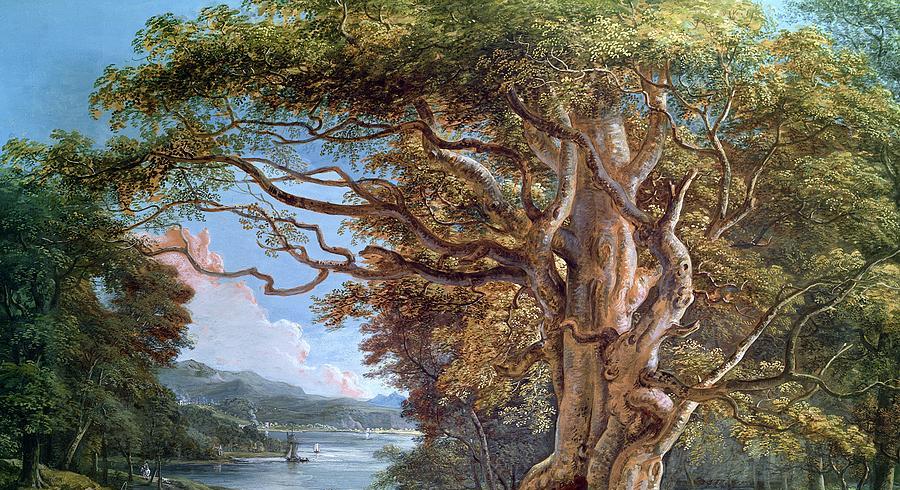
poems 'How to Plant a Tree' by Alan Sugar


Allow for growth; dig wide—but not too deep.
Add soil amender to the raw red clay.
Remove the rope. Take burlap bag away.
Surround the root ball, mulch and go to sleep.

And as the roots unfold and slowly creep,
you’ll dream of branches long that lean and sway.
And after many years, you’ll see—one day,
against the sky, bright leaves that softly sweep.

No matter where you roam, it will remain.
And it will stay and wait for you, alone.
Out there, it will withstand the cold, the rain,
and, in December, winds that cry and moan.
And when you then return, one day, in pain,
you’ll find there shade—a shelter and a home.


Alan Sugar shares his poetry and performance art in Decatur, Georgia where he currently resides. He is also a puppeteer, and he has worked as a special education teacher in the public schools of Atlanta. Currently, Alan works as a writing tutor at Georgia State University Perimeter College, Clarkston Campus. His work has appeared in the Atlanta Review, The Lyric, and The Jewish Literary Journal.


ShareTweetPin
The Society of Classical Poets does not endorse any views expressed in individual poems or commentary.
Read Our Comments Policy Here

RandomPoems

‘He Who Was’: A Poem by Warren Bonham
Beauty

‘Like a Book’: A Spenserian Sonnet by Jeffrey Essmann

October 27, 2025

  Like a Book He reads me like a book, the One Who wrote Me; knows, it seems, each page...

‘The Dyer’s Second Tale—A Medieval Heist’: A Poem by Paul A. Freeman
Geoffrey Chaucer

‘The Dyer’s Second Tale—A Medieval Heist’: A Poem by Paul A. Freeman

May 23, 2025

. The Dyer’s Second Tale---A Medieval Heist Here beginneth the Dyer’s Second Tale . Part I The Third Crusade had...

Next Post
‘Letters We Wrote’ and Other Poetry by Tonya McQuade

'Letters We Wrote' and Other Poetry by Tonya McQuade

‘The Demosthenian Literary Society’ and Other Poetry by Alec Ream

'The Demosthenian Literary Society' and Other Poetry by Alec Ream

poem/freeman/culture

'Old Glory' and Other Poetry by Jeff Nicholson

Comments 23

  1. Amy Foreman says:
    8 years ago

    This is the loveliest sonnet that I have read in quite some time. I have had the pleasure of planting three little orchards in my adult life so far, and your poem sums up the undertaking so well: the relatively small investment on our part, followed eventually by an openhanded, loyal, and grateful return from the thriving tree. Thank you so much, Alan, for reminding me of the beauty of the whole process through your well-written poem.

    Reply
    • C.B. Anderson says:
      8 years ago

      The only flaw in the process that I can detect, Amy, is that he neglected to water it in.

      Reply
      • Amy Foreman says:
        8 years ago

        Maybe it was raining . . . 😉

        Reply
      • Joseph Tessitore says:
        8 years ago

        ‘twas planted near
        a babbling brook;
        the soil was rich,
        the root ball took

        Reply
    • C.B. Anderson says:
      8 years ago

      Unless the rain is torrential, a root ball still needs to be watered in. But if it were raining that hard, that would not be a good time to dig a hole. In line two, I’m sure he meant “soil amendments,” not “soil amender.” In any event, current doctrine regarding the planting of trees is that it’s best not to enrich the planting hole too much, because that will discourage the roots from leaving the amended pocket and engaging with the native soil. Think about it: when has a seedling from a mother/father tree in the woods ever needed enrichment other than that provided naturally from the litter on the forest floor? The slick sides of a dug hole are an impediment to root expansion, especially when the amended soil within the hole is so rich that the roots have no pressing need to travel farther, but as the tree grows, this will become a problem in the future. I, too, have farmed in Arizona, and I know that imported plants need special attention there, mostly because of general aridity and soils that are more hospitable to cactus, succulents and dry-land grasses.

      Reply
      • Joseph Tessitore says:
        8 years ago

        I’ve always thought (kind of intuitively?) that when you dig the hole, you should save the native soil and mix it in with the good stuff from Home Depot, I guess for the same effect.

        Reply
      • Amy Foreman says:
        8 years ago

        I planted my first two little orchards in Missouri, five miles from the Mississippi River, and added no amendment to the holes, yet the trees did very well.

        The orchard holes I prepared in our new homestead in Arizona got lots of attention! We dug them very wide and very deep and threw old, rotting stumps in the bottom, along with chicken manure, ashes, mesquite chips, and any other rotting organic matter we could scrape together, mixed with liberal scoops of our extremely alkaline desert soil. A few years and some drip irrigation into the project, all the dirt around the trees is dark and loamy, and the trees are healthy. Took quite a bit more care than the trees in the Midwest, but our Arizona peaches are the best I’ve ever tasted!

        Reply
      • C.B. Anderson says:
        8 years ago

        Yes, Joe, you’ve got that right, so long as the mixture isn’t so good that the roots refuse to grow beyond it into the unamended native soil.

        And, Amy, it looks like you have learned to deal with alkaline soil. Like your peaches, the best watermelon I ever tasted was one I grew in the foothills of the Santa Catalina Mountains near Tucson, Arizona. Basically, sunshine = sugar.

        Reply
    • Alan Sugar says:
      8 years ago

      Thank you, Amy Foreman. It means so much to me that my simple little poem has brought up, for you, such richness of your own life’s experience. Well, for me, it’s sort of like returning to that same sheltering tree.

      Reply
      • Amy Foreman says:
        8 years ago

        Exactly, Alan. 🙂

        Reply
      • Peyton Evans says:
        8 years ago

        Alan: Your poem is absolutely beautiful. I love the practical description of planting, removing the burlap, followed by waiting. And then a spiritual reward at the end. I am an admirer of yours as I know about you from my dear friend Susan Sugar. I’m so glad to have had this poem shared with me — I will treasure it.

        Reply
  2. Joseph Tessitore says:
    8 years ago

    A very beautiful poem.
    Thank you, Alan.

    Reply
  3. Lu Shan says:
    8 years ago

    Thank you. This poem expresses peacefulness. Patience is peaceful. The ordeals we have are so insignificant that merely taking shade under this tree that is planted in the poem is enough to soothe us. I appreciate this and other poems for upholding that traditional spirit.

    Reply
    • Joseph Tessitore says:
      8 years ago

      And so a beautiful comment.

      Thank you, Lu Shan.

      Reply
  4. James Sale says:
    8 years ago

    A beautiful sonnet – creates a marvellous sense of peace as it reaches its resolution. Well done.

    Reply
  5. David Paul Behrens says:
    8 years ago

    I enjoyed this poem very much. I have often thought of trees to be the pillars of our existence here on earth. Twenty years ago, my wife planted an orange tree in our front yard. So now, every year around late November, we receive thirty to forty juicy oranges from that single tree, for ourselves and our neighbors to enjoy.

    Speaking of trees, here is a poem I wrote about ten years ago:

    Redwoods

    Flowers lean up towards the sun
    And the earth soaks up the rain.
    Sun shines down ’til day is done
    And feels no need to explain.

    Redwoods rise up to the sky,
    Nourished by water and air,
    Without need to wonder why
    Or ponder why they are there.

    Reply
  6. Martin Rizley says:
    8 years ago

    Thank you for posting this lovely poem, which unfolds, like the tree, with grace and beauty.

    Reply
  7. Wilbur Dee Case says:
    8 years ago

    Many things distinguish Mr. Sugar’s “How To Plant a Tree”, among them:

    1. the quiet imperative mood of the first quatrain;

    2. the monosyllabic rhymes;

    3. the simple diction;

    4. the plausible completed future;

    5. the “peaceful”, albeit tinged with melancholy, sestet.

    Continuing, some of the striking verbal techniques include:

    6. unexpected verbal structures, like “amender”, “branches long”, and “you’ll find there shade”;

    7. effective alliteration, as in the first quatrain;

    8. second person singular, “for you, alone”;

    9. assonance, like “remain”, “stay” and “wait”;

    10, and striking imagery, like “against the sky”.

    One of the techniques that particularly appeals to me (though I have been mocked for its usage) are the many periods, commas and dashes; which I feel slows the reading down for greater meditation, as in the work of Dickinson.

    I am having a difficult time trying to place this sonnet in the canon of English poetry. It is like a miniature excerpt from Vergil’s “Geogics”; but what English language poet is so sentimental, and at the same time matter-of-fact, so contemplative, and yet so clear? There is a childlike simplicity to the poem, but I am not reminded of Wordsworth, nor really any of the Romantics. It is the kind of poem I would never write, nor would want to; and yet it possesses an extraordinary haunting quality that I need to be reminded of because of its heart-felt stance. It is another example that shows there are many possibilities awaiting cultivation in English poetry.

    Reply
    • Amy Foreman says:
      8 years ago

      Perhaps we need a new category: Metaphysical Pragmatism.

      Reply
  8. Wilbur Dee Case says:
    8 years ago

    1. First off, the main reason I try to understand the poetic techniques of others is that it improves my own writing. As Mr. MacKenzie once wrote, the best poets are the best readers, which is one reason why I admire Mr. Stone, despite Mr. Burch’s curt besmirch.

    2. Though I must reject them for their historical associations, Ms. Foreman’s two-word phrase for the transparent quality of Mr. Sugar’s “How to Plant a Tree” does bring up some interesting tangents:

    a. Metaphysical—the term Samuel Johnson applied to poets, like Donne; and

    b. Pragmatism—the American philosophical school that included writers, like William James and Charles Sanders Peirce, and I suppose the most transcendental, Josiah Royce.

    3. Mr. Sugar is not a philosopher in the sense that Santayana was, nor does his work follow Lucretius, Dante, or Goethe, three philosophical poets Santayana wrote about.

    4. The quality of the language in “How To Plant a Tree” reminds me more of this author’s “Ancient Melodies”, which, at the suggestion of Mr. Baisthakur, led me to locate it near late 19th century Victorian (not American) verse impulse, or Mr. MacKenzie’s transposition d’ art “On a Bodegón of Zurbarán”. I suspect all of us are, in such cases, picking up merely one of the countless waves of English literature, and surfing in the afterglow of Thomas Gray’s “Elegy” or El Siglo de Oro.

    Reply
  9. David Watt says:
    8 years ago

    A lovely sonnet which captures the soothing and contemplative process of planting a tree. More than this, you demonstrate that we gain more in life through simple, generous acts of faith.
    I’d say we have a similar climate here to Arizona. After planting, ensuring a regular supply of water, even for Australian native plants, is the primary concern.

    Reply
  10. David Hollywood says:
    8 years ago

    A very lovely poem through which to appreciate our efforts in the garden. Many thanks.

    Reply
  11. Jacoby Crane says:
    4 years ago

    Mr. Sugar, could you please contact The Dirigible Balloon at your earliest convenience? They’re trying to thank you for your wonderful poems, but all attempts at replying to your emails keep bouncing back, so an alternative email or contact method would be appreciated. All the best, JC.

    Reply

Leave a Reply Cancel reply

Your email address will not be published. Required fields are marked *


  1. Ganga Unnikrishnan on National Poetry Month Limerick ChallengeSeptember 13, 2026

    Thank you

  2. Ganga Unnikrishnan on National Poetry Month Limerick ChallengeSeptember 13, 2026

    Thank you Roy

  3. Golan Shahar on ‘Professional Mourner’: A Poem by Brian YapkoSeptember 13, 2026

    Wow, Brian! Does this actually exist? Professional mourners?

  4. Martin Briggs on ‘Professional Mourner’: A Poem by Brian YapkoSeptember 13, 2026

    What an original idea, Brian. And very entertaining, without losing sight of the underlying insincerity and money-grabbing which - alas…

  5. Marie Derley on The Society of Classical Poets 2026 Haiku CompetitionSeptember 13, 2026

    blue forget-me-not hidden in the foliage of my memory the cherries are ripe – long before my beloved the robins…

Subscribe to Daily Poems

Enter your email address to subscribe to this blog and receive notifications of new posts by email.

Join 1,737 other subscribers
No Result
View All Result

Resources

       1. A Guide to Writing Poetry

      2. The Best Poems of 2020      

      3. Poetry and Writing Contests

      4. Journals Accepting Formal Verse

Recent Poems

  • ‘Professional Mourner’: A Poem by Brian Yapko
  • A Distillation of Shakespeare’s ‘A Midsummer Night’s Dream’ by Martin Briggs
  • ‘How the Mighty Fell!’: A Poem by Jeff Kemper
  • ‘The One Lone Juror’: A Poem by Joseph S. Salemi
  • ‘Soul of a Prophet’: A Trialog Poem by T.M. Moore
  • ‘Nelson and George’: A Poem by David Filpula
  • ‘When She Arrives’: A Poem by Bhairab Barman
  • ‘On to Better Days’: A Poem by Bruce Dale Wise
  • ‘Serenade’ and Other Poetry by Adam Sedia
  • ‘Self-Exploration’ and Other Poems by Paul Millan
  • ‘Victory’: A Poem by Jonathan Graver
  • ‘The Cristero Centennial’: A Poem by Margaret Coats
  • ‘A Potpourri of Aphoristic Verses’ by C.B. Anderson
  • ‘The Estuary’: A Poem by Jeff Eardley
  • ‘A World Without the Wednesday Child’: A Poem by Kimberly Fore
  • The 2026 Society of Classical Poets International Poetry Competition
  • The 2026 SCP International High School Poetry Competition
  • ‘Realistic Reflections’ and Other Poetry by Anna J. Arredondo
  • ‘China Made’: A Poem by Theresa Werba
  • ‘The Savage Moon’ and Other Poetry by Brian Yapko
  • Poetry Book Review: Love Found, Yearned For, and Lost by James A. Tweedie
  • ‘When Opportunity Knocks’: A Poem by Roy E. Peterson
  • ‘Legend of the Griffin’: A Poem by Iryna Hall
  • ‘Government Issue’ and Other Poems by Joseph S. Salemi
  • ‘Chaucer Announces His Desire to Retire’: A Poem by Paul A. Freeman
  • ‘Advantages of Restaurants’ and Other Poems by Russel Winick
  • ‘Bone China’: A Poem by Mary Gardner
  • ‘On the Death of One Too Young to Die’: A Poem by Jeffrey Essmann
  • ‘This Too Shall Pass’ and Other Poetry by Justin Dasher
  • ‘Humdrum and Harum-Scarum’: A Lecture on Free Verse, by Robert Bridges (1922)

Categories

  • Acrostic
  • Alexandroid
  • Alliterative
  • Art
  • Best Poems
  • Blank Verse
  • Chant Royal
  • Classical Poets Live
  • Clerihew
  • Covid-19
  • Deconstructing Communism
  • Educational
  • Epic
  • Epigrams and Proverbs
  • Essays
    • Interviews with Poets
    • Poetry Reviews
  • Featured
  • From the Society
  • Great Poets
    • Dante Alighieri
    • Edgar Allan Poe
    • Emily Dickinson
    • Geoffrey Chaucer
    • Henry Wadsworth Longfellow
    • Homer
    • John Keats
    • John Milton
    • Robert Frost
    • William Blake
    • William Shakespeare
    • William Wordsworth
  • Human Rights in China
  • Limerick
  • Love Poems
  • Music
  • Pantoum
  • Performing Arts
  • Poetry
    • Beauty
    • Children's Poems
    • Culture
    • Ekphrastic
    • Found Poems
    • High School Poets
    • Humor
    • Riddles
  • Poetry Challenge
  • Poetry Contests
  • Poetry Forms
    • Curtal Sonnet
    • Haiku
  • Poetry Readings
  • Rhupunt
  • Rondeau
  • Rondeau Redoublé
  • Rondel
  • Rubaiyat
  • Sapphic Verse
  • Satire
  • Science
  • Sestina
  • Shape Poems
  • Short Stories
  • Song Lyrics
  • Sonnet
  • Symposium
  • Terrorism
  • Terza Rima
  • The Environment
  • Translation
  • Triolet
  • Video
  • Villanelle

Quick Links

  • About Us
  • Submit Poetry
  • Become a Member
  • Members List
  • Support the Society
  • Advertisement Placement
  • Comments Policy
  • Terms of Use

Welcome Back!

Login to your account below

Forgotten Password?

Retrieve your password

Please enter your username or email address to reset your password.

Log In
No Result
View All Result
  • Poems
    • Beauty
    • Culture
    • Satire
    • Humor
    • Children’s
    • Art
    • Ekphrastic
    • Epic
    • Epigrams and Proverbs
    • Human Rights in China
    • Music
    • Performing Arts
    • Riddles
    • Science
    • Song Lyrics
    • The Environment
    • The Raven
    • Found Poems
    • High School Poets
    • Terrorism
    • Covid-19
  • Poetry Forms
    • Sonnet
    • Haiku
    • Limerick
    • Villanelle
    • Rondeau
    • Pantoum
    • Sestina
    • Triolet
    • Acrostic
    • Alexandroid
    • Alliterative
    • Blank Verse
    • Chant Royal
    • Clerihew
    • Rhupunt
    • Rondeau Redoublé
    • Rondel
    • Rubaiyat
    • Sapphic Verse
    • Shape Poems
    • Terza Rima
  • Great Poets
    • Geoffrey Chaucer
    • Emily Dickinson
    • Homer
    • Henry Wadsworth Longfellow
    • Dante Alighieri
    • John Keats
    • John Milton
    • Edgar Allan Poe
    • William Shakespeare
    • William Wordsworth
    • William Blake
    • Robert Frost
  • Love Poems
  • Contests
  • SCP Academy
    • Educational
    • Teaching Classical Poetry—A Guide for Educators
    • Poetry Forms
    • The SCP Journal
    • Books

© 2025 SCP. WebDesign by CODEC Prime.