• Submit Poetry
  • Support SCP
  • About Us
  • Members
  • Join
Wednesday, May 13, 2026
Society of Classical Poets
  • Poems
    • Beauty
    • Culture
    • Satire
    • Humor
    • Children’s
    • Art
    • Ekphrastic
    • Epic
    • Epigrams and Proverbs
    • Human Rights in China
    • Music
    • Performing Arts
    • Riddles
    • Science
    • Song Lyrics
    • The Environment
    • The Raven
    • Found Poems
    • High School Poets
    • Terrorism
    • Covid-19
  • Poetry Forms
    • Sonnet
    • Haiku
    • Limerick
    • Villanelle
    • Rondeau
    • Pantoum
    • Sestina
    • Triolet
    • Acrostic
    • Alexandroid
    • Alliterative
    • Blank Verse
    • Chant Royal
    • Clerihew
    • Rhupunt
    • Rondeau Redoublé
    • Rondel
    • Rubaiyat
    • Sapphic Verse
    • Shape Poems
    • Terza Rima
  • Great Poets
    • Geoffrey Chaucer
    • Emily Dickinson
    • Homer
    • Henry Wadsworth Longfellow
    • Dante Alighieri
    • John Keats
    • John Milton
    • Edgar Allan Poe
    • William Shakespeare
    • William Wordsworth
    • William Blake
    • Robert Frost
  • Love Poems
  • Contests
  • SCP Academy
    • Educational
    • Teaching Classical Poetry—A Guide for Educators
    • Poetry Forms
    • The SCP Journal
    • Books
No Result
View All Result
Society of Classical Poets
  • Poems
    • Beauty
    • Culture
    • Satire
    • Humor
    • Children’s
    • Art
    • Ekphrastic
    • Epic
    • Epigrams and Proverbs
    • Human Rights in China
    • Music
    • Performing Arts
    • Riddles
    • Science
    • Song Lyrics
    • The Environment
    • The Raven
    • Found Poems
    • High School Poets
    • Terrorism
    • Covid-19
  • Poetry Forms
    • Sonnet
    • Haiku
    • Limerick
    • Villanelle
    • Rondeau
    • Pantoum
    • Sestina
    • Triolet
    • Acrostic
    • Alexandroid
    • Alliterative
    • Blank Verse
    • Chant Royal
    • Clerihew
    • Rhupunt
    • Rondeau Redoublé
    • Rondel
    • Rubaiyat
    • Sapphic Verse
    • Shape Poems
    • Terza Rima
  • Great Poets
    • Geoffrey Chaucer
    • Emily Dickinson
    • Homer
    • Henry Wadsworth Longfellow
    • Dante Alighieri
    • John Keats
    • John Milton
    • Edgar Allan Poe
    • William Shakespeare
    • William Wordsworth
    • William Blake
    • Robert Frost
  • Love Poems
  • Contests
  • SCP Academy
    • Educational
    • Teaching Classical Poetry—A Guide for Educators
    • Poetry Forms
    • The SCP Journal
    • Books
No Result
View All Result
Society of Classical Poets
No Result
View All Result
Home Poetry Beauty

‘Tiger Fire’ by Sally Sandler

January 26, 2019
in Beauty, Culture, Poetry
A A
27
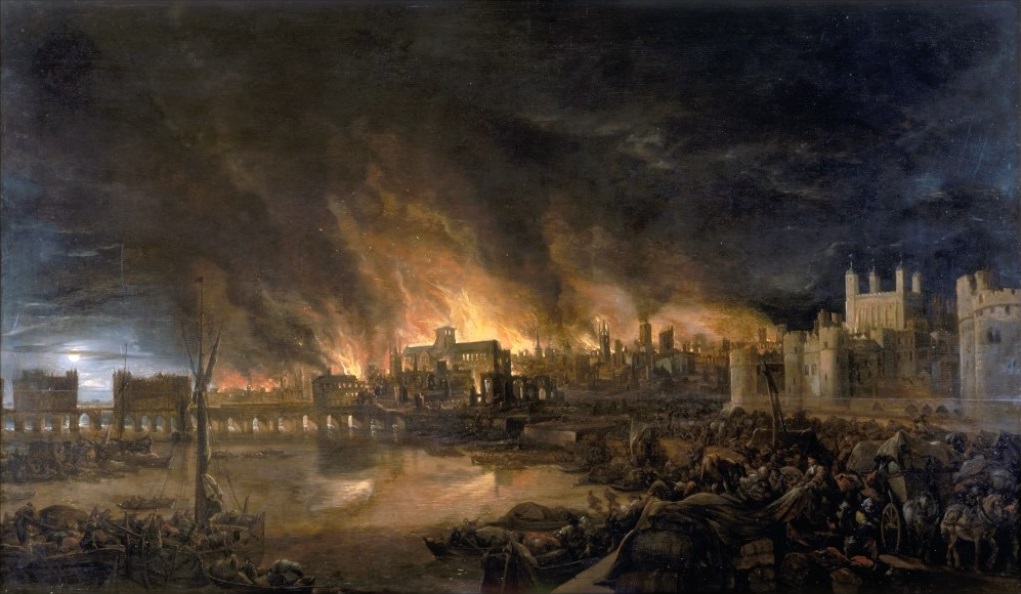
poems 'Tiger Fire' by Sally Sandler


The fire waits with tiger paws
on silent haunches by the hill,
then mounts the rock with clinging claws,
and contemplates the moment it will

pounce—on sagebrush dry as bones,
under a ghostly quiet moon,
slink through tinder, stalking homes,
and spring atop a shingled roof.

In blazing orange black white cape
it roars at scorching desert sky,
dives on prey, devours the take,
smoldering embers in its eye.

We scan the canyons, fear the sight
of fire—the tiger in the night.


Sally Sandler is a writer and graduate of the University of Michigan. She lives in San Diego, California.

 

ShareTweetPin
The Society of Classical Poets does not endorse any views expressed in individual poems or commentary.
Read Our Comments Policy Here

RandomPoems

‘Probing for the Problematic Polyp’ and Other Poetry by Mark F. Stone
Children's Poems

‘Probing for the Problematic Polyp’ and Other Poetry by Mark F. Stone

February 28, 2024

. Probing for the Problematic Polyp Bob was testy yesterday. __A fractious, famished fellow. You would be, too, if all...

‘St. George Updated’ by Susan Jarvis Bryant
Beauty

‘S O S’: A Poem by Susan Jarvis Bryant

October 21, 2024

. S O S Keep the fleecy wolves from bleating. Hold the pack of jackals back. Seize the greedy grubbers...

Next Post
‘Going Along to Get Along’ by Joseph S. Salemi

'Going Along to Get Along' by Joseph S. Salemi

A Translation of ‘The Lake’ by Alphonse de Lamartine

A Translation of 'The Lake' by Alphonse de Lamartine

‘The Wintering-Ground’ by Douglas Thornton (with Audio)

'February' and Other Poetry by Theresa Zappe

Comments 27

  1. James Sale says:
    7 years ago

    I like the execution of this very much – a tetrameter sonnet with some lovely mimetic touches: especially the stanza/line break where ‘pounce’ leaps away from its sentence, enacting the movement of the ‘tiger’ as our eyes jump forward. Very impressive work.

    Reply
    • Sally Ray says:
      7 years ago

      Thank you James!
      Sally Sandler

      Reply
  2. Carole Mertz says:
    7 years ago

    Love this, Sally. Descriptive, with its zinger at the end!

    Reply
    • Sally Sandler says:
      7 years ago

      Thank you, Carole!
      Sally Sandler

      Reply
  3. James A. Tweedie says:
    7 years ago

    I also love this poem. Whether intentional or not, the irregular metrics create a flickering effect, as if tiger-tongues of flame are nibbling at the edges of the verse. Curiously, to my ear at least, the poem is most effective when read out loud when it morphs into what it sounds like a successful, hybrid crossover between formal and free verse (a la Eliot). The sonnet structure adds emphasis to the drama of the closing couplet. This poem demonstrates that bending the “rules” a little can sometimes be a good thing!

    Reply
    • Joseph S. Salemi says:
      7 years ago

      Actually, there is only one instance of metrical irregularity in this poem, and it is in the fourth line. Every other line scans as a recognizable tetrameter. This suggests to me that line four is an error, not an intentional attempt to add irregularity to the poem.

      I’d suggest a revision of line four, perhaps in this manner:

      /and contemplates the time it will/

      When you have a single metrical glitch in an otherwise perfect poem, it stands out like a wart.

      Reply
      • James A. Tweedie says:
        7 years ago

        By irregular metrics I was referring to lines 5, 7, 11, and 12 which lack the weak iambic opening found elsewhere, and also the extra syllable in line 12. My point was that these variations enhanced the poem, which is why I did not feel the need to be specific in making reference to them.

        Reply
    • Sally Sandler says:
      7 years ago

      Thank you, James, that means much to me!
      Sally Sandler

      Reply
    • Sally Sandler says:
      7 years ago

      Thank you for taking the time to respond. It means much to me, as I’m sure you appreciate!

      Reply
    • Sally Sandler says:
      7 years ago

      Thank you, I’m thrilled to anywhere near the mention of Eliot. I appreciate your response!

      Reply
  4. Gleb Zavlanov says:
    7 years ago

    “slink through tinder, stalking homes,
    and spring atop a shingled roof.

    In blazing orange black white cape.”

    I love these lines. They are so simple and yet so evocative.

    I never realized how close a fire resembles a tiger.

    Both are deadly and vicious but also bright, sleek and graceful.

    This is very original.

    Thank you for sharing!

    Reply
    • Sally Sandler says:
      7 years ago

      Thank you for your response!

      Reply
  5. Alan Sugar says:
    7 years ago

    haunches / hills
    slink / tinder
    spring / shingle
    blazing / black
    roars / scorching
    scan / canyons
    fire / tiger
    I don’t know if this qualifies as “fearful symmetry” (William Blake),
    but you’ve got something going here.

    The poem’s sensibilities, for me, seem rooted in the essence of native lore. Arrestingly visual. An almost picture book quality– though not necessarily so “kid-friendly.” Many vivid verbs as well!
    Strangely, perhaps, it also brings to my mind Kipling’s “The Jungle Book.”
    Thank you for this poem.

    Reply
    • Sally Sandler says:
      7 years ago

      I’m happy anywhere in the vicinity of Kipling … thank you so much!

      Reply
    • Joe Spring says:
      7 years ago

      Yes! It is great symmetry! Great imagery and wordplay.

      Reply
  6. Sally Sandler says:
    7 years ago

    Thank you, James!
    Sally Sandler

    Reply
  7. David Watt says:
    7 years ago

    You have created the a vivid and lifelike picture, particularly, through your choice of verbs. I really liked the striking effect of the three colors, ‘orange black white’, in succession.
    I agree with the suggested simple revision to line four, as this was also my thought on first reading your poem. Thank you for this evocative piece.

    Reply
  8. E. V. says:
    7 years ago

    Great poem! It’s a pleasure to read.

    Reply
  9. Mark Stone says:
    7 years ago

    Sally, Hello.

    1. Lines 1 & 2 read as follows:

    The fire waits with tiger paws
    on silent haunches by the hill,

    When I read these lines, I thought of “Fog” by Carl Sandburg, which reads as follows:

    The fog comes
    on little cat feet.
    It sits looking
    over harbor and city
    on silent haunches
    and then moves on.

    So you are in good company.

    2. Line 1 and line 14 both have the word “Fire.” If one were to read each of these lines as having four iambic feet, “fire” in Line 1 would need to have two syllables, and “fire” in line 14 would need to have one syllable. When I read the poem out loud, I actually do say “fire” with two syllables in line 1, and with one syllable in line 14. So it seems to work as is.

    3. Regarding line 4, I agree with Dr. Salemi’s comment about the meter and support his proposed fix.

    4. Line 5 reads as follows:

    under a ghostly quiet moon,

    I wonder if the moon could be “aloof” instead of “quiet.” That would give you a true rhyme with “roof.” Here are a couple ideas:

    under a moon still and aloof,
    under a moon hushed and aloof,

    Other possible rhyme words include “fireproof” and “reproof.” Here’s one possibility:

    pounce—on sagebrush dry as bones,
    immune to hindrance or reproof,
    slink through tinder, stalking homes,
    and spring atop a shingled roof.

    5. Line 9 reads as follows:

    In blazing orange black white cape

    The meter is off for me in this line, but it’s because I pronounce “orange” as “ornge,” i.e., as a one-syllable word. Since no one else mentioned this, perhaps you and they pronounce it with two syllables.

    6. Almost every line has an article (a, an or the) before the noun. Lines 9 and 10 do not. Line 9 has “in… cape” and line 10 has “at… sky.” Leaving out the article sometimes makes a line sound awkward to me, but I may be in the minority on this.

    7. The sonics of the poem are awesome. Alan provides many examples, and I’ll add “clinging claws.”

    8. The strong verbs and colorful adjectives make this a fun poem. I like it.

    Reply
    • Joe Spring says:
      7 years ago

      4. Good input this.

      And the rest, but particularly this.

      Reply
    • James A. Tweedie says:
      7 years ago

      Mark, I also read orange as one syllable but looked it up and found it does, indeed, have two. Language can be quite bendy at times, as you pointed out with the word “fire.” And what reads perfectly well for a person in India, the UK or Australia, can seem out of kilter to a West Coast Yank like myself.

      Reply
      • Monty says:
        7 years ago

        My sudden shock, James, is in the fact that you had to “look up” the word ‘orange’ to verify that it’s got two syllables . . you could’ve verified that just by pausing for a moment and saying the word slowly and clearly to yourself.

        Language can not “be quite bendy at times”: it can only be ‘bended’ . . bended by humans in their sloppy attempts to gain a non-existent syllable when convenience dictates; perfectly exemplified in the fact that some authors will think nothing of expecting a reader to wrongly pronounce the word ‘fire’ as ‘fie-yer’. Therein lies ‘language-bending’ in its purest form . .

        Reply
  10. Mark Stone says:
    7 years ago

    Sally, Hi. I just thought of another option for line 6:

    averse to hindrance or reproof,

    The word “averse” reinforces the notion that the fire is alive and has a mind of its own, I think.

    Reply
  11. Joe Spring says:
    7 years ago

    Hi Sally, I read the poem for my wife and we both really enjoyed it. Thank you!

    Reply
  12. C.B. Anderson says:
    7 years ago

    Sally, YOU are the tiger burning bright. Your poem set my mind ablaze. I wish I knew how to use metaphor and image so effectively. Shine on, Tiger Moon! And come back soon. Joe Salemi’s comment is the one you should pay most attention to. He has guided me in the past, and he’s never led me astray.

    Reply
  13. Joe Tessitore says:
    7 years ago

    For me, this is the perfect example of “one rhyme doesn’t? Big deal!”

    Terrific poem – very well done!

    Reply
  14. Angela says:
    7 years ago

    So descriptive, I could almost feel the flames. I really enjoyed reading this – more than once 🙂

    Reply

Leave a Reply Cancel reply

Your email address will not be published. Required fields are marked *

  1. Margaret Coats on Winners of Friends of Falun Gong 2026 Poetry Competition AnnouncedMay 13, 2026

    May Chen Yan rest in peace. Maura, your winning poem about her achieves the challenging goal of bringing her suffering…

  2. Mary Jane Myers on ‘Reverie’: A Poem by Mary Jane MyersMay 13, 2026

    Chelsea Thank you so very much for your kind comments. Most sincerely Mary Jane

  3. Roy Eugene Peterson on Winners of Friends of Falun Gong 2026 Poetry Competition AnnouncedMay 13, 2026

    Congratulations to all the winners.

  4. Roy Eugene Peterson on ‘Creation of Mom’: A Mother’s Day Poem by Roy E. PetersonMay 13, 2026

    Jan, what special comments that are uplifting and caring about the status of motherhood. Bless you and thank you for…

  5. Jan Mennite on ‘Creation of Mom’: A Mother’s Day Poem by Roy E. PetersonMay 13, 2026

    What a lovely, insightful poem, Roy! In a time when some are trying to cancel Mothers altogether, your poem brings…

Subscribe to Daily Poems

Enter your email address to subscribe to this blog and receive notifications of new posts by email.

Join 1,593 other subscribers

Recent Poems

  • Winners of Friends of Falun Gong 2026 Poetry Competition Announced
  • A Poem on Coach “Black Mike” Castronis from Athens Y Camp, by Alec Ream
  • A Poem on the Zambian National Park Mosi-oa-Tunya, by Paul A. Freeman
  • ‘Creation of Mom’: A Mother’s Day Poem by Roy E. Peterson
  • ‘Spontaneous Conjugal Combustion’ and Other Poems by Susan Jarvis Bryant
  • ‘The Man in the Moon Was a Very Round Man’: A Poem by Lauren V. Leon
  • ‘Fibromytrauma’: A Poem by Golan Shahar
  • ‘A Lonely Sliver’: A Poem by Katie Tencza
  • ‘Higher Gas Prices Are a Small Price to Pay’: An Iran War Poem by Mark F. Stone
  • ‘Always Ahead’: A Poem by Scharlie Meeuws
  • ‘Hamlet’s Lawyer’ and Other Poetry by Brian Yapko
  • ‘On An Old Photograph’: A Poem by Joseph S. Salemi
  • ‘Faust Foresees His End’: A Poem by Martin Briggs
  • ‘À la Carte’ and Other Poetry by C.B. Anderson
  • ‘Where the Sweet Bluebonnets Bloom’: A Poem by Roy E. Peterson
  • ‘The Waters’: A Poem by Margaret Brinton
  • ‘The Pinnacle of Poetry’ and Other Poems by Russel Winick
  • The First American Sonnets: An Essay on David Humphreys, by Margaret Coats
  • ‘The Holy Rollers on Poetry’: A Poem by Joseph S. Salemi
  • Sappho’s ‘Poem 1’ Translated by Bruce Phenix
  • ‘The Cautionary Tale of Phone Addicted Mimi’: A Poem by Paul A. Freeman
  • ‘Look Away’: A Poem for America’s 250th Anniversary, by Roger Crane
  • ‘Sunday Morning in Canada’: A Poem by Jeffrey Essmann
  • ‘Bean’: A Poem by Jan Mennite
  • ‘The Swan’s Song ’: A Poem for Shakespeare’s Birthday, by Susan Jarvis Bryant
  • ‘The Gravedigger’: A Poem by Marie Burdett
  • ‘Waiting for the Perfect Man’: A Poem by Janice Canerdy
  • ‘The George-A-Saurus’ and Other Poetry by Brian Yapko
  • ‘When Asked: What’s Your Favorite Season?’: A Poem by Paul Millan  
  • ‘The Last At-Bat of Lyndon Braun’: A Poem by Michael Pietrack

Categories

  • Acrostic
  • Alexandroid
  • Alliterative
  • Art
  • Best Poems
  • Blank Verse
  • Chant Royal
  • Classical Poets Live
  • Clerihew
  • Covid-19
  • Deconstructing Communism
  • Educational
  • Epic
  • Epigrams and Proverbs
  • Essays
    • Interviews with Poets
    • Poetry Reviews
  • Featured
  • From the Society
  • Great Poets
    • Dante Alighieri
    • Edgar Allan Poe
    • Emily Dickinson
    • Geoffrey Chaucer
    • Henry Wadsworth Longfellow
    • Homer
    • John Keats
    • John Milton
    • Robert Frost
    • William Blake
    • William Shakespeare
    • William Wordsworth
  • Human Rights in China
  • Limerick
  • Love Poems
  • Music
  • Pantoum
  • Performing Arts
  • Poetry
    • Beauty
    • Children's Poems
    • Culture
    • Ekphrastic
    • Found Poems
    • High School Poets
    • Humor
    • Riddles
  • Poetry Challenge
  • Poetry Contests
  • Poetry Forms
    • Curtal Sonnet
    • Haiku
  • Poetry Readings
  • Rhupunt
  • Rondeau
  • Rondeau Redoublé
  • Rondel
  • Rubaiyat
  • Sapphic Verse
  • Satire
  • Science
  • Sestina
  • Shape Poems
  • Short Stories
  • Song Lyrics
  • Sonnet
  • Symposium
  • Terrorism
  • Terza Rima
  • The Environment
  • Translation
  • Triolet
  • Video
  • Villanelle

Quick Links

  • About Us
  • Submit Poetry
  • Become a Member
  • Members List
  • Support the Society
  • Advertisement Placement
  • Comments Policy
  • Terms of Use

Welcome Back!

Login to your account below

Forgotten Password?

Retrieve your password

Please enter your username or email address to reset your password.

Log In
No Result
View All Result
  • Poems
    • Beauty
    • Culture
    • Satire
    • Humor
    • Children’s
    • Art
    • Ekphrastic
    • Epic
    • Epigrams and Proverbs
    • Human Rights in China
    • Music
    • Performing Arts
    • Riddles
    • Science
    • Song Lyrics
    • The Environment
    • The Raven
    • Found Poems
    • High School Poets
    • Terrorism
    • Covid-19
  • Poetry Forms
    • Sonnet
    • Haiku
    • Limerick
    • Villanelle
    • Rondeau
    • Pantoum
    • Sestina
    • Triolet
    • Acrostic
    • Alexandroid
    • Alliterative
    • Blank Verse
    • Chant Royal
    • Clerihew
    • Rhupunt
    • Rondeau Redoublé
    • Rondel
    • Rubaiyat
    • Sapphic Verse
    • Shape Poems
    • Terza Rima
  • Great Poets
    • Geoffrey Chaucer
    • Emily Dickinson
    • Homer
    • Henry Wadsworth Longfellow
    • Dante Alighieri
    • John Keats
    • John Milton
    • Edgar Allan Poe
    • William Shakespeare
    • William Wordsworth
    • William Blake
    • Robert Frost
  • Love Poems
  • Contests
  • SCP Academy
    • Educational
    • Teaching Classical Poetry—A Guide for Educators
    • Poetry Forms
    • The SCP Journal
    • Books

© 2025 SCP. WebDesign by CODEC Prime.