• Submit Poetry
  • Support SCP
  • About Us
  • Members
  • Join
Thursday, July 23, 2026
Society of Classical Poets
  • Poems
    • Beauty
    • Culture
    • Satire
    • Humor
    • Children’s
    • Art
    • Ekphrastic
    • Epic
    • Epigrams and Proverbs
    • Human Rights in China
    • Music
    • Performing Arts
    • Riddles
    • Science
    • Song Lyrics
    • The Environment
    • The Raven
    • Found Poems
    • High School Poets
    • Terrorism
    • Covid-19
  • Poetry Forms
    • Sonnet
    • Haiku
    • Limerick
    • Villanelle
    • Rondeau
    • Pantoum
    • Sestina
    • Triolet
    • Acrostic
    • Alexandroid
    • Alliterative
    • Blank Verse
    • Chant Royal
    • Clerihew
    • Rhupunt
    • Rondeau Redoublé
    • Rondel
    • Rubaiyat
    • Sapphic Verse
    • Shape Poems
    • Terza Rima
  • Great Poets
    • Geoffrey Chaucer
    • Emily Dickinson
    • Homer
    • Henry Wadsworth Longfellow
    • Dante Alighieri
    • John Keats
    • John Milton
    • Edgar Allan Poe
    • William Shakespeare
    • William Wordsworth
    • William Blake
    • Robert Frost
  • Love Poems
  • Contests
  • SCP Academy
    • Educational
    • Teaching Classical Poetry—A Guide for Educators
    • Poetry Forms
    • The SCP Journal
    • Books
No Result
View All Result
Society of Classical Poets
  • Poems
    • Beauty
    • Culture
    • Satire
    • Humor
    • Children’s
    • Art
    • Ekphrastic
    • Epic
    • Epigrams and Proverbs
    • Human Rights in China
    • Music
    • Performing Arts
    • Riddles
    • Science
    • Song Lyrics
    • The Environment
    • The Raven
    • Found Poems
    • High School Poets
    • Terrorism
    • Covid-19
  • Poetry Forms
    • Sonnet
    • Haiku
    • Limerick
    • Villanelle
    • Rondeau
    • Pantoum
    • Sestina
    • Triolet
    • Acrostic
    • Alexandroid
    • Alliterative
    • Blank Verse
    • Chant Royal
    • Clerihew
    • Rhupunt
    • Rondeau Redoublé
    • Rondel
    • Rubaiyat
    • Sapphic Verse
    • Shape Poems
    • Terza Rima
  • Great Poets
    • Geoffrey Chaucer
    • Emily Dickinson
    • Homer
    • Henry Wadsworth Longfellow
    • Dante Alighieri
    • John Keats
    • John Milton
    • Edgar Allan Poe
    • William Shakespeare
    • William Wordsworth
    • William Blake
    • Robert Frost
  • Love Poems
  • Contests
  • SCP Academy
    • Educational
    • Teaching Classical Poetry—A Guide for Educators
    • Poetry Forms
    • The SCP Journal
    • Books
No Result
View All Result
Society of Classical Poets
No Result
View All Result
Home Poetry Beauty

‘The Wise Farmer’: A Poem from the Zen Parable, by Joshua C. Frank

August 16, 2024
in Beauty, Culture, Poetry
A A
20
poems 'The Wise Farmer': A Poem from the Zen Parable, by Joshua C. Frank

.

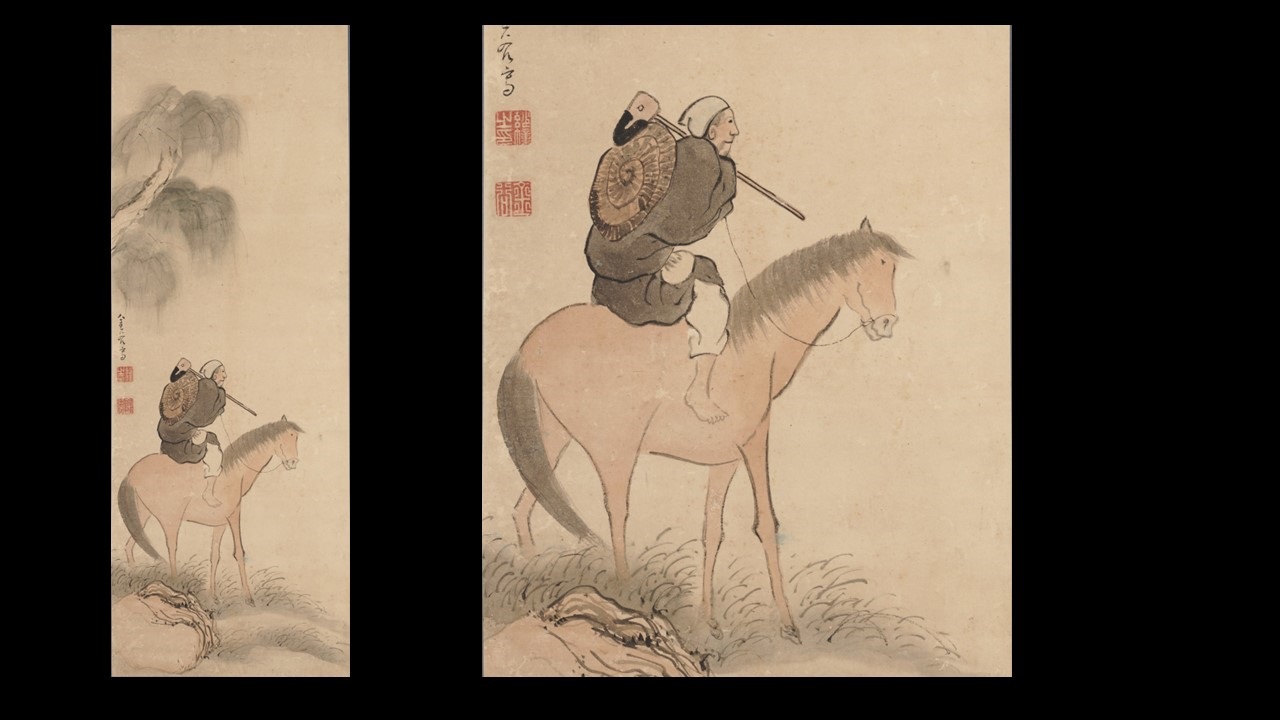
The Wise Farmer

—based on a Zen parable attributed to Alan Watts

A farmer in China was left by his horse.
He took up his plow and continued his course,
And right after sunset, he finished his labors.
When he told it in passing to some of his neighbors,
They marveled and said, “What misfortune you’ve got!”
The farmer replied, “Maybe so, maybe not.”

The horse, after less than a day he’d been gone,
Ran homeward with seven wild horses at dawn,
Which the farmer then gave to his son for the breaking.
His neighbors, who saw the whole scene upon waking,
All marveled and said, “What good fortune you’ve got!”
The farmer replied, “Maybe so, maybe not.”

Thrown off by a horse, his son broke a leg.
His shin-bone was shattered like the shell of an egg!
He’d need many days in his bed for his healing
With nothing to do except stare at the ceiling!
The neighbors all said, “What misfortune you’ve got!”
The farmer replied, “Maybe so, maybe not.”

His son’s leg still broken, the king went to war
And conscripted more young men than ever before.
They came for his son, but they quickly discovered:
He couldn’t go fight.  He still hadn’t recovered!
The neighbors all said, “What good fortune you’ve got!”
The farmer replied, “Maybe so, maybe not.”

So whenever you’re happy, or angry, or sad,
And tempted to label events “good” or “bad,”
Remember that both float away like a feather
And fortune is fickle and changes like weather.
Don’t flip between loving and hating your lot—
Just say to yourself: “Maybe so, maybe not.”

.

.

Joshua C. Frank works in the field of statistics and lives in the American Heartland.  His poetry has also been published in Snakeskin, The Lyric, Sparks of Calliope, Westward Quarterly, New English Review, and many others, and his short fiction has been published in several journals as well.

ShareTweetPin
The Society of Classical Poets does not endorse any views expressed in individual poems or commentary.
Read Our Comments Policy Here

RandomPoems

‘Insomnia’ by Joshua Lefkowitz
Humor

‘Insomnia’ by Joshua Lefkowitz

March 4, 2017

When I struggle for sleep, I dust off a classic and try counting sheep: Trouble is, my sheep show off,...

‘The Interview’ and Other Poetry by Brian Yapko
Culture

‘The Interview’ and Other Poetry by Brian Yapko

December 22, 2024

. The Interview “Respect my grammar rules or else,” K said, “This interview will be extremely short. Or better yet,...

Next Post
‘Holding Dad’s Hands’: Poems by Gigi Ryan

'Holding Dad's Hands': Poems by Gigi Ryan

‘Lunatic’: A Poem by Peter Venable

'Lunatic': A Poem by Peter Venable

‘Lucifer’s Lament’ and Other Poetry by Susan Jarvis Bryant

'Lucifer’s Lament' and Other Poetry by Susan Jarvis Bryant

Comments 20

  1. Roy E. Peterson says:
    2 years ago

    That is such a great parable wonderfully written. There is an excellent philosophical lesson to be learned and appreciated. This one really shines!

    Reply
    • Joshua C. Frank says:
      2 years ago

      Thank you Roy! I wish I could claim credit for the story.

      Reply
  2. Russel Winick says:
    2 years ago

    Josh – I really enjoyed this. Wisdom to shoot for. Thanks for the read.

    Reply
    • Joshua C. Frank says:
      2 years ago

      Thank you, Russel. I, too, would like to be able to live up to the wisdom encapsulated in the parable. Maybe someday…

      Reply
  3. Warren Bonham says:
    2 years ago

    Fantastic message and told very well! I really enjoyed this one.

    Reply
    • Joshua C. Frank says:
      2 years ago

      Thank you, Warren. I really like the message, too; that’s why I had to write this.

      Reply
  4. Susan Jarvis Bryant says:
    2 years ago

    Josh, I love this – for its smooth, rhythmic flow which makes it a joy to read, but mainly for its message – a sagacious message of hope that we could most certainly do with in these dark times we’re living through. It’s all too easy to become despondent when we can’t see the bigger picture. Your poem is a light-shedding ray of golden sunshine. Thank you!

    Reply
    • Joshua C. Frank says:
      2 years ago

      Thank you Susan! It’s precisely because of these dark times that I came to see the wisdom of this message.

      For example, people thought Christians would be free to practice their faith with the fall of Communism in Eastern Europe, but what happened was that consumerism and the leftist media killed their faith to a degree the Communists could only have dreamed. When I read this years ago, I came to the conclusion that Christians were better off under Communism.

      Richard Wurmbrand, a Romanian Christian who spend 14 years in a Communist prison for his faith, certainly came to the same conclusion:

      “I suffer more in the West than I did in Communist lands. … My suffering first of all the longing after the unspeakable beauty of the Underground Church … The Underground Church is a poor and suffering church, but it has few lukewarm members. … Whoever has known the spiritual beauty of the Underground Church cannot be satisfied anymore with the [spiritual] emptiness of some Western churches. … There are endless discussions about theological matters, about rituals, about non essentials.”

      Perhaps we who wish for leftism to end would do well to rethink our desire, lest God grant our wish and make us live under something even worse.

      Reply
  5. Maria says:
    2 years ago

    Joshua not only is this wonderful to read, but straight after reading it this morning I had occasion to put it into practice with an ongoing problem we have had at home since April that seems to evade all attempts to fix.
    So, Maybe so maybe not, is going to be a much needed saying from now on. Even if it doesn’t fix anything it certainly helps.
    So thank you Joshua and very well done.

    Reply
    • Joshua C. Frank says:
      2 years ago

      Thank you Maria! That made my day, because things like what you describe are why I write these poems. I don’t only write to help people undo leftist influence; I also write to help people heal emotionally, because I found the poetry of Georges Brassens helpful when I was 12 and realizing that life is not a Disney movie, and I want to pass that on to others.

      Reply
  6. Gigi Ryan says:
    2 years ago

    Dear Joshua,

    I love this story and the way you shared it in a poem. The farmer’s wise refrain, used as a closing line for each stanza, reiterates his steadiness of mind. And I agree with Susan – this is a message of hope. We are in the middle of the story still and cannot tell how it will end.
    Gigi

    Reply
    • Joshua C. Frank says:
      2 years ago

      Thank you, Gigi. I think the story ends at death, because that’s when a person learns whether he will spend eternity in Heaven or Hell. There’s no “maybe so, maybe not” in either place!

      Reply
  7. Brian A. Yapko says:
    2 years ago

    Josh, this is not only an excellent poem — it’s wise and it’s engaging. There is something special here — the voice of the speaker. What is unique for me about this poem is that I often discern your voice as the speaker in your poetry. In this poem, you have removed yourself entirely as you offer a third-person narration that is completely neutral. You usually make it abundantly clear what your moral position is on the subject matter, but you restrain yourself from doing so here. Which is great! That actually makes the story feel truly like a parable and a piece of wisdom well-imparted.

    Don’t misunderstand me. I’m not saying that you shouldn’t be the speaker of poetry at all, nor am I saying you should not write poetry with a moral. But I can’t help feeling like you spread your wings a little with this one and succeeded admirably in finding the slightly detached voice of a true story-teller. You’ve let the characters and the plot speak for themselves. You’ve added to your set of already daunting skills and, ironically, by restraining yourself you’ve expanded your repertoire. I think you should be very proud of this one.

    Reply
    • Joshua C. Frank says:
      2 years ago

      Thank you, Brian. I’m glad you like it so much. It’s nice to hear that I’ve mastered a new poetic skill, though I find it a bit surprising since the moral is made explicit in stanza 5.

      Reply
      • Brian A. Yapko says:
        2 years ago

        No worries. I’ve sent you an e-mail with more detail on the literary theory behind what I mean. Since my ideas stray a bit from this wonderful poem, I think it’s better as a private chat so that the focus here stays where it belongs. Rest assured, I think this is a wonderful piece — one to be proud of and which I hope gets a lot of circulation.

        Reply
  8. Margaret Coats says:
    2 years ago

    Joshua, you show here what good versifying can add to the “philosophical entertainment” style of Alan Watts. When he tells this tale, the story recedes into the moral. You, however, enhance the story, partly with little details you contribute, but more importantly with the persuasiveness of metrical music. Watts’s farmer has only “maybe” to say in each of four scenes. Your expansion of his comment to “maybe so, maybe not” creates a rhythmic refrain, allowing the farmer a larger part in the play, and lessening that of Watts himself as interpretive speaker in scene five. The philosopher recedes into the background, such that the reader can imagine the farmer himself as single speaker in your parable.

    Your moral position (the author’s) shows itself in the title, calling the farmer “wise.” While the story comes from China, you take only that part of it confirmed by common human experience, namely, the impossibility of seeing good or bad future consequences of an event. This is simply wisdom. Watts, in some retelling formats, goes far into “maybe” as a Buddhist koan of non-duality, indicating the impossibility of distinguishing good from bad at all. You stick to a universal perspective of fortune as fickle and unpredictable.

    Because your refrain is anapestic, it dictated your choice of meter, and you put some fun in the first two lines of stanza 3.

    Thrown OFF by a HORSE [break] the SON broke a LEG
    His SHIN-bone was SHATT[ered] like the SHELL of an EGG

    From the point of view of regularity, line 13 lacks a syllable where I have typed [break], and line 14 has the extra syllable [ered]. These irregularites suit the meaning nicely: a break in line 13, and too many pieces in line 14. Whether or not you intended this explicitly, you get credit for writing it.

    Reply
    • Joshua C. Frank says:
      2 years ago

      Thank you, Margaret. I’m glad you enjoyed it. Clearly I did what I set out to do.

      Reply
  9. Adam Sedia says:
    2 years ago

    A Zen parable, yes, but with what I see as a very Taoist story: wisdom lies in not resisting The Way. As with any good moral lesson, it is crystal-clear, not obscured behind metaphor and the other usual poetic devices. It seems well-suited for children; I will read this to my son and see what he thinks.

    Reply
    • Joshua C. Frank says:
      2 years ago

      Thank you, Adam. I’m honored that you’re reading it to your son. I look forward to hearing what he thinks.

      I don’t know much about Taoism, but what you describe sounds like something it shares with Christianity. Throughout the Bible, we read that all events are God’s will (except for sin; God doesn’t give people the will to sin, but He does give them the power), and that resisting His will is the essence of sin. Yet many Christians (?) today ignore these hard teachings and justify giving their emotions free rein with more vehemence than when they defend Scripture (if they defend Scripture at all). That’s one reason I had to write this.

      The fact that this idea appears in Taoist philosophy (also Stoic, by the way) shows that it can be reasoned from nature.

      Reply
      • Adam Sedia says:
        2 years ago

        I definitely recommend the Tao Te Ching. I consider it more a work of philosophy than of religion. Far from the faux Eastern “mysticism” of hippie-dippy types, it is actually a very practical manual for navigating forces in the world beyond our control. I would even call it proto-libertarian in its outlook at times. And I agree, its principles can be reasoned from nature.

        Reply

Leave a Reply Cancel reply

Your email address will not be published. Required fields are marked *

  1. Brian Yapko on ‘Florence Foster Jenkins’ and Other Poetry by Brian YapkoJuly 23, 2026

    Thank you very much indeed, Adam. I think we can all relate to suffering through a performance that was not…

  2. Margaret Coats on ‘A Poet at the Tower’ and Other Poetry by Michael C. PaulJuly 23, 2026

    jd must be correct about the "Poet at the Tower." Wyatt and Orleans were great poets who spent some time…

  3. Margaret Coats on ‘A Strange Sun’: A Poem by Patricia Rogers CrozierJuly 23, 2026

    The poem seems above all emblematic, representing a nautical river voyage into an area so unfamiliar that legionary sailors find…

  4. Evan Mantyk on ‘The Man from China’: A Poem by Evan MantykJuly 22, 2026

    Thank you, Margaret. It's only 14 lines, which cannot cover all the tactics. An earlier draft included honey traps, where…

  5. Evan Mantyk on ‘The Man from China’: A Poem by Evan MantykJuly 22, 2026

    Thank you, Cynthia. It's a weird irony that these professors are probably going after the Founding Fathers for owning slaves…

Subscribe to Daily Poems

Enter your email address to subscribe to this blog and receive notifications of new posts by email.

Join 1,594 other subscribers

Recent Poems

  • ‘The Reveal of the Rocks’: A Poem by Kyle Fiske
  • ‘Art Work’: A Poem by T.M. Moore
  • ‘A Strange Sun’: A Poem by Patricia Rogers Crozier
  • ‘Shave Off Those Whiskers’: A Poem by Roy E. Peterson
  • ‘The Man from China’: A Poem by Evan Mantyk
  • ‘The Ballad of the Ghost Mountain Boys’: A Poem by Rachel Lott
  • ‘The Threat of Virtue’: A Poem by Zumwalt
  • ‘A Poet at the Tower’ and Other Poetry by Michael C. Paul
  • ‘Florence Foster Jenkins’ and Other Poetry by Brian Yapko
  • Winners and Rankings of The Great American Poetry Competition
  • ‘The Gold Star Mother’: A Poem by Gerard Maritato
  • ‘An American Dash’: A Poem by Linda Ellis
  • ‘The Anonymous Soldier’: A Poem by Lucy Lind
  • ‘For Those We Never Meet’: A Poem by Aneesh Agarwal
  • ‘Ben Franklin’s Copper Fugio Cent’: A Poem by Geoffrey Smagacz
  • Three Brief Poems by Luxorius, Translated by Joseph S. Salemi
  • ‘The American Spirit’: A Poem by Dusty Grein
  • ‘The Ballad of Zebulon Pike’: A Poem by M.D. Skeen
  • ‘We Are the Ones’ and Other Poetry by Cheryl Corey
  • ‘My Pyjamas!’ and Other Poems by Susan Jarvis Bryant
  • ‘A Snowy Egret’: A Poem by Bruce Dale Wise
  • ‘The Swearing-in of Calvin Coolidge’: A Sonnet by Robert W. Crawford
  • ‘Ballad of the Sequoia’: A Poem by Lauren V. Leon
  • ‘The 51st State’: A Poem by James Sale
  • ‘La Uva’ (The Grape): A Poem by Michael Pietrack
  • ‘There’s Blood that Flows Within the Stripes’: A Poem by Lauren V. Leon
  • ‘Birdsong’: A Poem by Jeffrey Essmann
  • ‘The Melody That Lingers On’ and Other Poetry by John McPherson
  • ‘American Dreams’: A Poem by Adam Sedia
  • ‘An American Fabius’: A Poem by John Hernandez

Categories

  • Acrostic
  • Alexandroid
  • Alliterative
  • Art
  • Best Poems
  • Blank Verse
  • Chant Royal
  • Classical Poets Live
  • Clerihew
  • Covid-19
  • Deconstructing Communism
  • Educational
  • Epic
  • Epigrams and Proverbs
  • Essays
    • Interviews with Poets
    • Poetry Reviews
  • Featured
  • From the Society
  • Great Poets
    • Dante Alighieri
    • Edgar Allan Poe
    • Emily Dickinson
    • Geoffrey Chaucer
    • Henry Wadsworth Longfellow
    • Homer
    • John Keats
    • John Milton
    • Robert Frost
    • William Blake
    • William Shakespeare
    • William Wordsworth
  • Human Rights in China
  • Limerick
  • Love Poems
  • Music
  • Pantoum
  • Performing Arts
  • Poetry
    • Beauty
    • Children's Poems
    • Culture
    • Ekphrastic
    • Found Poems
    • High School Poets
    • Humor
    • Riddles
  • Poetry Challenge
  • Poetry Contests
  • Poetry Forms
    • Curtal Sonnet
    • Haiku
  • Poetry Readings
  • Rhupunt
  • Rondeau
  • Rondeau Redoublé
  • Rondel
  • Rubaiyat
  • Sapphic Verse
  • Satire
  • Science
  • Sestina
  • Shape Poems
  • Short Stories
  • Song Lyrics
  • Sonnet
  • Symposium
  • Terrorism
  • Terza Rima
  • The Environment
  • Translation
  • Triolet
  • Video
  • Villanelle

Quick Links

  • About Us
  • Submit Poetry
  • Become a Member
  • Members List
  • Support the Society
  • Advertisement Placement
  • Comments Policy
  • Terms of Use

Welcome Back!

Login to your account below

Forgotten Password?

Retrieve your password

Please enter your username or email address to reset your password.

Log In
No Result
View All Result
  • Poems
    • Beauty
    • Culture
    • Satire
    • Humor
    • Children’s
    • Art
    • Ekphrastic
    • Epic
    • Epigrams and Proverbs
    • Human Rights in China
    • Music
    • Performing Arts
    • Riddles
    • Science
    • Song Lyrics
    • The Environment
    • The Raven
    • Found Poems
    • High School Poets
    • Terrorism
    • Covid-19
  • Poetry Forms
    • Sonnet
    • Haiku
    • Limerick
    • Villanelle
    • Rondeau
    • Pantoum
    • Sestina
    • Triolet
    • Acrostic
    • Alexandroid
    • Alliterative
    • Blank Verse
    • Chant Royal
    • Clerihew
    • Rhupunt
    • Rondeau Redoublé
    • Rondel
    • Rubaiyat
    • Sapphic Verse
    • Shape Poems
    • Terza Rima
  • Great Poets
    • Geoffrey Chaucer
    • Emily Dickinson
    • Homer
    • Henry Wadsworth Longfellow
    • Dante Alighieri
    • John Keats
    • John Milton
    • Edgar Allan Poe
    • William Shakespeare
    • William Wordsworth
    • William Blake
    • Robert Frost
  • Love Poems
  • Contests
  • SCP Academy
    • Educational
    • Teaching Classical Poetry—A Guide for Educators
    • Poetry Forms
    • The SCP Journal
    • Books

© 2025 SCP. WebDesign by CODEC Prime.