• Submit Poetry
  • Support SCP
  • About Us
  • Members
  • Join
Saturday, July 18, 2026
Society of Classical Poets
  • Poems
    • Beauty
    • Culture
    • Satire
    • Humor
    • Children’s
    • Art
    • Ekphrastic
    • Epic
    • Epigrams and Proverbs
    • Human Rights in China
    • Music
    • Performing Arts
    • Riddles
    • Science
    • Song Lyrics
    • The Environment
    • The Raven
    • Found Poems
    • High School Poets
    • Terrorism
    • Covid-19
  • Poetry Forms
    • Sonnet
    • Haiku
    • Limerick
    • Villanelle
    • Rondeau
    • Pantoum
    • Sestina
    • Triolet
    • Acrostic
    • Alexandroid
    • Alliterative
    • Blank Verse
    • Chant Royal
    • Clerihew
    • Rhupunt
    • Rondeau Redoublé
    • Rondel
    • Rubaiyat
    • Sapphic Verse
    • Shape Poems
    • Terza Rima
  • Great Poets
    • Geoffrey Chaucer
    • Emily Dickinson
    • Homer
    • Henry Wadsworth Longfellow
    • Dante Alighieri
    • John Keats
    • John Milton
    • Edgar Allan Poe
    • William Shakespeare
    • William Wordsworth
    • William Blake
    • Robert Frost
  • Love Poems
  • Contests
  • SCP Academy
    • Educational
    • Teaching Classical Poetry—A Guide for Educators
    • Poetry Forms
    • The SCP Journal
    • Books
No Result
View All Result
Society of Classical Poets
  • Poems
    • Beauty
    • Culture
    • Satire
    • Humor
    • Children’s
    • Art
    • Ekphrastic
    • Epic
    • Epigrams and Proverbs
    • Human Rights in China
    • Music
    • Performing Arts
    • Riddles
    • Science
    • Song Lyrics
    • The Environment
    • The Raven
    • Found Poems
    • High School Poets
    • Terrorism
    • Covid-19
  • Poetry Forms
    • Sonnet
    • Haiku
    • Limerick
    • Villanelle
    • Rondeau
    • Pantoum
    • Sestina
    • Triolet
    • Acrostic
    • Alexandroid
    • Alliterative
    • Blank Verse
    • Chant Royal
    • Clerihew
    • Rhupunt
    • Rondeau Redoublé
    • Rondel
    • Rubaiyat
    • Sapphic Verse
    • Shape Poems
    • Terza Rima
  • Great Poets
    • Geoffrey Chaucer
    • Emily Dickinson
    • Homer
    • Henry Wadsworth Longfellow
    • Dante Alighieri
    • John Keats
    • John Milton
    • Edgar Allan Poe
    • William Shakespeare
    • William Wordsworth
    • William Blake
    • Robert Frost
  • Love Poems
  • Contests
  • SCP Academy
    • Educational
    • Teaching Classical Poetry—A Guide for Educators
    • Poetry Forms
    • The SCP Journal
    • Books
No Result
View All Result
Society of Classical Poets
No Result
View All Result
Home Poetry Beauty

‘Ghost Town’ and Other Poetry by Martin Rizley

May 9, 2025
in Beauty, Poetry
A A
10
poems 'Ghost Town' and Other Poetry by Martin Rizley

.

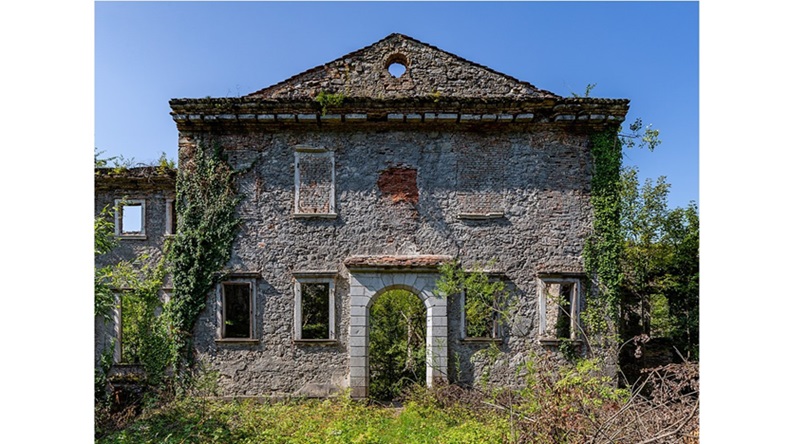
Ghost Town

With phantoms, I have lived for far too long.
Both day and night, I’ve sighed, without a song.
In vacant shells, I’ve tried to make my home
In this ghost town of memories where I roam.

They crowd like tombs around me every day—
These husks of cherished dreams, now passed away,
Which line the dusty street of this dead town
Where I walk blindly, pacing up and down.

I walk in circles, senseless to my need,
As aimless as a blowing tumbleweed,
As round and round I go—each day the same—
Like someone who’s forgotten his own name.

How often, I have entered in once more
The same old rotting ruins, which before,
In olden days, brimmed with life’s joy and spice,
But now are filled with cobwebs, rats and mice,

And broken glass, which on the floor now lies,
Brushed by the sweeping wind that ever sighs
Like some sad, low lament of one bereaved
Or whispers of lost voices, softly sieved.

I’ve clung to shadows, hiding from the day,
My eyes beholding only shades of gray,
Until, deprived of light that I’ve disdained,
My spirit of all color has been drained.

But now, these pallid phantoms make me weary;
Their presence leaves me lonely, and their eerie,
Faint whispers are but echoes of a past
Which, though I wait, will not return at last.

Their nearness leaves me cold on winter nights
And on spring mornings, robs me of delights
That I could know, if I would dare to choose
To leave this place of never-ending blues.

I’ll quit this habitation of the dead!
I’ll flee from all these ghosts that haunt my head,
I’ll leave this town, devoid of life and hope,
Where lone souls grasp at shades and blindly grope.

I’ll leave it to the snakes and centipedes,
The rats and mice and blowing tumbleweeds,
The cloudbursts, blazing sun, and swirling dust,
The snow and icy winter winds that gust.

But at the edge of town, I stop and think,
Where will I go, now that I’m on the brink
Of starting a new life, or so it seems?
What lies beyond this graveyard of lost dreams?

.

.

Second Spring

Can fields long buried under snow
Fill up once more with wildflowers?
Can frozen rivers melt and flow
Which stood like iron countless hours?

Can icy winds turn warm and sweet
With piquant scents? Can dead trees bloom?
Can birds awake with songs to greet
The green earth, freed from winter’s tomb?

Can land, locked hard by killing cold,
Held captive in a sleep of death,
Revive again, thawed by the gold,
Warm sun and spring’s life-giving breath?

If so, then might I also know
A second spring—my youth’s rebirth?
May not a field of flowers grow
Where snow once blanketed the earth?

You are to me my golden sun,
Warmed by your beams, the icy fears
Lodged in my heart all melt and run
Away, that held me fast for years.

Shine on me your beloved beams!
Let flowers bud, and songbirds sing,
Let winter melt in flowing streams,
And come, oh come, my second spring!

.

.

Martin Rizley grew up in Oklahoma and in Texas, and has served in pastoral ministry both in the United States and in Europe. He is currently serving as the pastor of a small evangelical church in the city of Málaga on the southern coast of Spain. 
ShareTweetPin
The Society of Classical Poets does not endorse any views expressed in individual poems or commentary.
Read Our Comments Policy Here

RandomPoems

‘Caravaggio’: A Poem by Lisa J. Roberts
Art

‘Caravaggio’: A Poem by Lisa J. Roberts

January 5, 2026

  Caravaggio Light floods the window, spearing glass and Matthew. Leaning forward now, in conversation, he is called. The bright...

‘Famine de l’âme’ by Anna J. Arredondo
Beauty

‘Gleam by Any Means’ by David Watt

June 29, 2022

. Gleam by Any Means The poem that I seek to write, the piece with flair and form, Which raises...

Next Post
‘Supernova’: A Poem on Ben Shimoni and Other Poetry by Margaret Coats

'Supernova': A Poem on Ben Shimoni and Other Poetry by Margaret Coats

An Ekphrastic Poem on Pearce’s ‘Saint Genevieve’ by Jeffrey Essmann

An Ekphrastic Poem on Pearce's 'Saint Genevieve' by Jeffrey Essmann

‘Back in the U.S.S.R.’ and Other Poetry by Brian Yapko

'Back in the U.S.S.R.' and Other Poetry by Brian Yapko

Comments 10

  1. Roy Eugene Peterson says:
    1 year ago

    I have seen many ghost towns when I was living in Arizona. Your excellent detail captures the essence of them and reminds me of having visited them. “The graveyard of lost dreams” concludes beautifully. Oh, for that second spring!

    Reply
    • Martin Rizley says:
      1 year ago

      Thank you, Roy, for your appreciative comments. I’m glad that you felt the description of the ghost town captured the essence of ghost towns you have visited. Ghost towns have always struck me, above all, as sad places, from which the bustling activity of life has long departed. That’s why it serves here as a metaphor for a mind filled with memories of an unrecoverable past. Thanks again for your response.

      Reply
  2. Joseph S. Salemi says:
    1 year ago

    As I read “Ghost Town” it is not actually about a real place, but simply a metaphor for the speaker’s memories. They fill and crowd his mind, and seem to contain little else but regrets, missed chances, unfulfilled dreams, and “lost voices.” The speaker wants to escape from this dreary host of past failures, and go elsewhere. But the poem ends with a strong sense of mortality, when he says “I’m on the brink / Of starting a new life” followed by “What lies beyond this graveyard of lost dreams?”

    The next poem (“Second Spring”) is likely written to answer the first by calling for a rebirth of hope and energy. But the poem is largely made up of rhetorical questions that seem to suggest the impossibility of this happening. The last two quatrains are addressed to an unknown person (perhaps a loved one, or perhaps God), whom the speaker asserts can bring about the desired renaissance, and yet the hope seems to be forlorn.

    Reply
    • Martin Rizley says:
      1 year ago

      The poems are autobiographical and closely related to each other. They stem from a time in my life nearly three decades ago when I experienced a period of grief followed by a period of renewal. The first poem was written in free verse originally, but I rewrote it only recently as a formal poem with rhyme and meter. The sense of mortality that you notice at the end of the poem arises from the sense I had at the time that the days of my youth had come to an end, and I had no idea what the future held.

      The rhetorical questions in the second poem do not so much express doubt and uncertainty as a sense of wonder and astonished disbelief, as I realized that the former prolonged period of lamentation was giving way to the restoration of youthful enthusiasm and vitality. It was written as a love poem to my wife.

      Reply
  3. Margaret Coats says:
    1 year ago

    “Ghost town of memories” in line 4 immediately suggests to me the ancient Greek “memory palace” technique for recalling large quantities of information. But here, Martin, the mental palace is in ruins. You’ve done a superb job of selecting imagistic details to display this. The memories are not so much departed as turned dreadfully distasteful. The speaker wants to be rid of them, but lacks the resolve to leave, because they hold his identity. “Like someone who’s forgotten his own name” is a disturbing clue to the “loss of identity” threatened here. The loss of name is a loss of self. I can’t help but think of the immensely popular Japanese animated film “Spirited Away.” In Japanese, “spirited away” is a euphemism for death or abandonment or betrayal, especially when it involves a young person. These things are too terrible to speak of, and the term “spirited away” avoids the reality by blaming a spirit of some kind, and leaving the ever-so-slight hope of restoration. In the anime, the heroine’s name is stolen, but she recovers it after grueling adventures, and in fact helps another entirely abandoned person to escape loss of identity by remembering an event that recalls his name.

    The hesitation of your speaker at the end of “Ghost Town” is understandable when we see that the decayed ghost town holds his formerly pleasant but now thoroughly distressing identity. But by leaving he may lose any identity at all. The solution is “Second Spring,” a natural but (from the “Ghost Town” point of view) inconceivable restoration of the person. All the questions demonstrate the immense wonder of the process. Amazing work, and glad you have it to write about!

    Reply
    • Martin Rizley says:
      1 year ago

      Margaret, Thank you for your penetrating analysis of the poem. I found particularly insightful your pointing out the connection between loss of name and loss of identity– especially, how a crisis of personal identity frequently follows the experience of death, abandonment or betrayal. I also found psychologicaly perceptive your explanation of the hesitation to leave the town expressed at the end of the poem– a hesitation arising from a sense of the entanglement of personal identity with the ghost town itself and anxiety over whether leaving will mean the loss of “any identity at all.” Such comments are very helpful in enabling me to understand better what is going on in my own poem!

      Reply
  4. Paul A. Freeman says:
    1 year ago

    I guess we’ve all been trapped in a metaphorical or physical ghost town at one point or another in our lives. The feelings are vividly expressed.

    Not a wishy-washy love poem, but one that carries on from the theme of Ghost town, Second Spring is a poem of hope and redemption. I like it.

    Reply
    • Martin Rizley says:
      1 year ago

      Thank you, Paul, for your feedback.

      Reply
  5. Cynthia L Erlandson says:
    1 year ago

    “Ghost Town” has such depth in its description of both visual scenery and the emotional anguish it embodies. And in fact, “Second Spring” does much the same, encasing its questions in imagery that evokes yearning. Beautiful poems!

    Reply
    • Martin Rizley says:
      1 year ago

      Thank you, Cynthia, for your appreciative comments.

      Reply

Leave a Reply Cancel reply

Your email address will not be published. Required fields are marked *

  1. Joseph S. Salemi on National Poetry Month Limerick ChallengeJuly 18, 2026

    Susan, that is very timely. He that hath ears to hear, let him hear.

  2. Susan Jarvis Bryant on ‘My Pyjamas!’ and Other Poems by Susan Jarvis BryantJuly 18, 2026

    Jan, thank you very much for your encouraging comment. I'm so glad you enjoyed the poems and especially glad they…

  3. James Sale on ‘The 51st State’: A Poem by James SaleJuly 18, 2026

    Not quite a win, Theresa, but thank you for the thought, and congratulations yourself on your "Finalist' status for your…

  4. Susan Jarvis Bryant on National Poetry Month Limerick ChallengeJuly 18, 2026

    A Slippery Victory There once was a prize for the best, Though merit was hardly the test. The winner was…

  5. Susan Jarvis Bryant on National Poetry Month Limerick ChallengeJuly 18, 2026

    Beautifully written and hilarious, Jan! You have inspired me to have a go. Thank you!

Subscribe to Daily Poems

Enter your email address to subscribe to this blog and receive notifications of new posts by email.

Join 1,594 other subscribers

Recent Poems

  • Winners and Rankings of The Great American Poetry Competition
  • ‘The Gold Star Mother’: A Poem by Gerard Maritato
  • ‘An American Dash’: A Poem by Linda Ellis
  • ‘The Anonymous Soldier’: A Poem by Lucy Lind
  • ‘For Those We Never Meet’: A Poem by Aneesh Agarwal
  • ‘Ben Franklin’s Copper Fugio Cent’: A Poem by Geoffrey Smagacz
  • Three Brief Poems by Luxorius, Translated by Joseph S. Salemi
  • ‘The American Spirit’: A Poem by Dusty Grein
  • ‘The Ballad of Zebulon Pike’: A Poem by M.D. Skeen
  • ‘We Are the Ones’ and Other Poetry by Cheryl Corey
  • ‘My Pyjamas!’ and Other Poems by Susan Jarvis Bryant
  • ‘A Snowy Egret’: A Poem by Bruce Dale Wise
  • ‘The Swearing-in of Calvin Coolidge’: A Sonnet by Robert W. Crawford
  • ‘Ballad of the Sequoia’: A Poem by Lauren V. Leon
  • ‘The 51st State’: A Poem by James Sale
  • ‘La Uva’ (The Grape): A Poem by Michael Pietrack
  • ‘There’s Blood that Flows Within the Stripes’: A Poem by Lauren V. Leon
  • ‘Birdsong’: A Poem by Jeffrey Essmann
  • ‘The Melody That Lingers On’ and Other Poetry by John McPherson
  • ‘American Dreams’: A Poem by Adam Sedia
  • ‘An American Fabius’: A Poem by John Hernandez
  • ‘Vernal Clinic’ and Other Poetry by C.B. Anderson
  • ‘Omaha Beach’ and Other Poetry by Bradford Skow
  • ‘Music to Part the Veil’: A Poem by T.M. Moore
  • ‘A Gentleman’s Guide to Losing a War’ and Other Poetry by Arnon Peterson
  • ‘Black Shuck’: A Poem by Martin Briggs
  • ‘When the Last World War II Veteran Passes Away’: A Poem by N.S. Boone
  • ‘A Fallow Year at Worthy Farm’: A Poem by Paul A. Freeman
  • ‘Outstanding in Afghanistan’: A Poem by Jared S. Chang
  • ‘250 More’: A Poem by Miguel Moreno

Categories

  • Acrostic
  • Alexandroid
  • Alliterative
  • Art
  • Best Poems
  • Blank Verse
  • Chant Royal
  • Classical Poets Live
  • Clerihew
  • Covid-19
  • Deconstructing Communism
  • Educational
  • Epic
  • Epigrams and Proverbs
  • Essays
    • Interviews with Poets
    • Poetry Reviews
  • Featured
  • From the Society
  • Great Poets
    • Dante Alighieri
    • Edgar Allan Poe
    • Emily Dickinson
    • Geoffrey Chaucer
    • Henry Wadsworth Longfellow
    • Homer
    • John Keats
    • John Milton
    • Robert Frost
    • William Blake
    • William Shakespeare
    • William Wordsworth
  • Human Rights in China
  • Limerick
  • Love Poems
  • Music
  • Pantoum
  • Performing Arts
  • Poetry
    • Beauty
    • Children's Poems
    • Culture
    • Ekphrastic
    • Found Poems
    • High School Poets
    • Humor
    • Riddles
  • Poetry Challenge
  • Poetry Contests
  • Poetry Forms
    • Curtal Sonnet
    • Haiku
  • Poetry Readings
  • Rhupunt
  • Rondeau
  • Rondeau Redoublé
  • Rondel
  • Rubaiyat
  • Sapphic Verse
  • Satire
  • Science
  • Sestina
  • Shape Poems
  • Short Stories
  • Song Lyrics
  • Sonnet
  • Symposium
  • Terrorism
  • Terza Rima
  • The Environment
  • Translation
  • Triolet
  • Video
  • Villanelle

Quick Links

  • About Us
  • Submit Poetry
  • Become a Member
  • Members List
  • Support the Society
  • Advertisement Placement
  • Comments Policy
  • Terms of Use

Welcome Back!

Login to your account below

Forgotten Password?

Retrieve your password

Please enter your username or email address to reset your password.

Log In
No Result
View All Result
  • Poems
    • Beauty
    • Culture
    • Satire
    • Humor
    • Children’s
    • Art
    • Ekphrastic
    • Epic
    • Epigrams and Proverbs
    • Human Rights in China
    • Music
    • Performing Arts
    • Riddles
    • Science
    • Song Lyrics
    • The Environment
    • The Raven
    • Found Poems
    • High School Poets
    • Terrorism
    • Covid-19
  • Poetry Forms
    • Sonnet
    • Haiku
    • Limerick
    • Villanelle
    • Rondeau
    • Pantoum
    • Sestina
    • Triolet
    • Acrostic
    • Alexandroid
    • Alliterative
    • Blank Verse
    • Chant Royal
    • Clerihew
    • Rhupunt
    • Rondeau Redoublé
    • Rondel
    • Rubaiyat
    • Sapphic Verse
    • Shape Poems
    • Terza Rima
  • Great Poets
    • Geoffrey Chaucer
    • Emily Dickinson
    • Homer
    • Henry Wadsworth Longfellow
    • Dante Alighieri
    • John Keats
    • John Milton
    • Edgar Allan Poe
    • William Shakespeare
    • William Wordsworth
    • William Blake
    • Robert Frost
  • Love Poems
  • Contests
  • SCP Academy
    • Educational
    • Teaching Classical Poetry—A Guide for Educators
    • Poetry Forms
    • The SCP Journal
    • Books

© 2025 SCP. WebDesign by CODEC Prime.