• Submit Poetry
  • Support SCP
  • About Us
  • Members
  • Join
Saturday, September 26, 2026
Society of Classical Poets
  • Poems
    • Beauty
    • Culture
    • Satire
    • Humor
    • Children’s
    • Art
    • Ekphrastic
    • Epic
    • Epigrams and Proverbs
    • Human Rights in China
    • Music
    • Performing Arts
    • Riddles
    • Science
    • Song Lyrics
    • The Environment
    • The Raven
    • Found Poems
    • High School Poets
    • Terrorism
    • Covid-19
  • Poetry Forms
    • Sonnet
    • Haiku
    • Limerick
    • Villanelle
    • Rondeau
    • Pantoum
    • Sestina
    • Triolet
    • Acrostic
    • Alexandroid
    • Alliterative
    • Blank Verse
    • Chant Royal
    • Clerihew
    • Rhupunt
    • Rondeau Redoublé
    • Rondel
    • Rubaiyat
    • Sapphic Verse
    • Shape Poems
    • Terza Rima
  • Great Poets
    • Geoffrey Chaucer
    • Emily Dickinson
    • Homer
    • Henry Wadsworth Longfellow
    • Dante Alighieri
    • John Keats
    • John Milton
    • Edgar Allan Poe
    • William Shakespeare
    • William Wordsworth
    • William Blake
    • Robert Frost
  • Love Poems
  • Contests
  • SCP Academy
    • Educational
    • Teaching Classical Poetry—A Guide for Educators
    • Poetry Forms
    • The SCP Journal
    • Books
No Result
View All Result
Society of Classical Poets
  • Poems
    • Beauty
    • Culture
    • Satire
    • Humor
    • Children’s
    • Art
    • Ekphrastic
    • Epic
    • Epigrams and Proverbs
    • Human Rights in China
    • Music
    • Performing Arts
    • Riddles
    • Science
    • Song Lyrics
    • The Environment
    • The Raven
    • Found Poems
    • High School Poets
    • Terrorism
    • Covid-19
  • Poetry Forms
    • Sonnet
    • Haiku
    • Limerick
    • Villanelle
    • Rondeau
    • Pantoum
    • Sestina
    • Triolet
    • Acrostic
    • Alexandroid
    • Alliterative
    • Blank Verse
    • Chant Royal
    • Clerihew
    • Rhupunt
    • Rondeau Redoublé
    • Rondel
    • Rubaiyat
    • Sapphic Verse
    • Shape Poems
    • Terza Rima
  • Great Poets
    • Geoffrey Chaucer
    • Emily Dickinson
    • Homer
    • Henry Wadsworth Longfellow
    • Dante Alighieri
    • John Keats
    • John Milton
    • Edgar Allan Poe
    • William Shakespeare
    • William Wordsworth
    • William Blake
    • Robert Frost
  • Love Poems
  • Contests
  • SCP Academy
    • Educational
    • Teaching Classical Poetry—A Guide for Educators
    • Poetry Forms
    • The SCP Journal
    • Books
No Result
View All Result
Society of Classical Poets
No Result
View All Result
Home Poetry Beauty

‘How Would We Like Our Existence To Be?’ by Alessio Zanelli

August 23, 2018
in Beauty, Poetry
A A
15
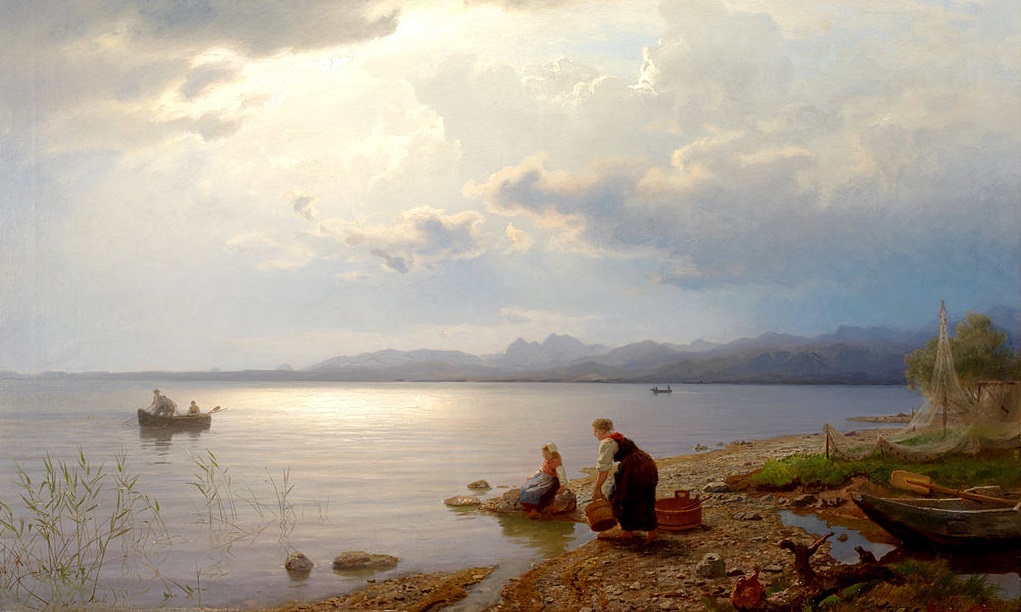
poems 'How Would We Like Our Existence To Be?' by Alessio Zanelli

Meaningful. Active and interesting. Strong.
___Simply not counting the days, as if stray,
______dreary, unworthy, but making them count,
serve, be remembered and blest all along.
___Challenges ought to be faced on the way,
______obstacles scattered for us to surmount.

We would meander through deserts at length,
___probe the abysses of oceans and peaks,
______capture the glitter of stars from the sky.
That would require every bit of our strength,
___surely the best of our skills and mystiques.
______Only such wonders could satiate our eye.


Alessio Zanelli is an Italian poet who writes in English and whose work has appeared in over 150 literary journals from 13 countries. He has published 4 full collections to date, most recently Over Misty Plains (Indigo Dreams, UK, 2012). For more information please visit www.alessiozanelli.it.

ShareTweetPin
The Society of Classical Poets does not endorse any views expressed in individual poems or commentary.
Read Our Comments Policy Here

RandomPoems

‘Season’s Lost’ by C. David Hay
Beauty

‘Season’s Lost’ by C. David Hay

June 27, 2020

  The seasons came and passed again Since last I heard your voice; Many are the ways I'd change If...

‘Big Shots’ by Mike Bryant
Covid-19

‘Big Shots’ by Mike Bryant

July 28, 2021

. You’re glad you’ve nabbed The Covid jab That’s newly fabbed In some large lab Created by The jaundiced eye,...

Next Post
‘I See a Friend’ and Other Poetry by Joseph Quintanilla

'I See a Friend' and Other Poetry by Joseph Quintanilla

‘Writing’s Free’ by Martin King

'Writing's Free' by Martin King

‘A Question of Faith’ by Charles Bauer

'A Question of Faith' by Charles Bauer

Comments 15

  1. James Sale says:
    8 years ago

    Love this poem – strong, decisive, controlled and upbeat. Well done.

    Reply
    • Alessio Zanelli says:
      8 years ago

      Thank you James!

      Reply
  2. Joe Tessitore says:
    8 years ago

    Love it for lots of reasons; message, meter pattern, appearance, accessibility to name a few.

    Well done Alessio!

    Reply
    • Alessio Zanelli says:
      8 years ago

      And thank you Joe!

      Reply
  3. Joseph S. Salemi says:
    8 years ago

    This is excellent dactylic tetrameter — a difficult meter to handle, but Zanelli does it quite nicely. The only small fix I’d suggest is in the last line, where the word “satiate” is being used as if it were a disyllable (SAY- shate). I always take it as a trisyllable (SAY-shee- ate). If Zanelli lives in the UK, he is perhaps using a British pronunciation with which I am unfamiliar.

    In place of “satiate,” I’d use a clear disyallble such as “nourish” or “gladden.”

    Reply
    • Alessio Zanelli says:
      8 years ago

      Hi Joseph,
      thank you for your words.
      I live in Italy (with an English wife…) and in fact the British pronunciation of “satiate” is slightly different, a bit curter, let’s say 2.5 syllables instead of 3 (if that makes sense…).The meaning of “satiate” is perfect for the poem, but I’m seriously thinking of replacing it (with “nourish”, as you suggest, or “surfeit”), to make the meter perfect.
      As to the meter, it can be seen as a tetrameter (three dactyls plus a single stressed syllable) or a trimeter (two dactyls plus a choriamb).
      Ciaooooooo…

      Reply
  4. Amy Foreman says:
    8 years ago

    This is an enjoyable poem, Allesio! Thank you for sharing it with us. Another thought alongside Mr. Salemi’s suggestion is to change the plurals “oceans . . . peaks . . . skills . . . mystiques” to singulars: “ocean, . . . peak, . . . skill, . . . mystique.” I’ve usually heard “mystique” used without an “s,” and the rest of the words would work in their singular forms here as well–perhaps altering “probe the abysses of oceans and peaks,” to “probe the abyss of each ocean and peak.”

    Of course, I’m only suggesting this as a possible consideration, . . . any minor alteration like this comes down to the poet’s personal preference. The poem is very nice as is! . . . Blessings.

    Reply
    • Alessio Zanelli says:
      8 years ago

      Thank you Amy!

      Reply
  5. Mark Stone says:
    8 years ago

    Alessio, Hello. 1. To make S1L1 flow more smoothly, I would change it from three sentences to one sentence. Such as: “Meaningful, interesting, active and strong.” 2. To me, S1L2 would sound more natural if you changed “Simply not…” to “Not simply…” 3. Overall, this poem is very nicely done.

    Reply
    • Monty says:
      8 years ago

      Cheers, Mark.

      When I first read the piece a few days back, the obvious reversal of ‘simply not’ hit me square on the jaw; but I didn’t comment upon it lest I sounded officious.

      Thus, I’m mildly relieved that another human has exposed it; ‘cos I consider it to be a crucial ‘reversal’ in the context of that line.

      Reply
    • Alessio Zanelli says:
      8 years ago

      Hi Mark,
      the first suggestion is really interesting (I’ll think about it), the second could induce the reader to miss the meter, because “simply” is stressed on the first syllable, so that the first foot would no longer be a dactyl, but an amphibrach.
      I know that as to syntax “not simply” is better than “simply not”, but allow me this license for the sake of meter!
      Thank you.
      Ciaooooooo.

      Reply
      • Monty says:
        8 years ago

        I take it, Alessio, that ‘Existence’ is all your own work; without any assistance from your (english) wife. If so, you’ve got a commendable grasp of english for one who’s tongue is not native to that. How did you master the language so well . . just through education? Advanced education? Are both of your parents natural Italians?

        In spoken-english, the difference between ‘simply not’ and ‘not simply’ is massive! Let me try to give an example:

        1/ Imagine two prisoners who’ve been sharing a cell for a few years; and one of them has only 30 days before he’s freed:
        “Only 30 days left: you must be really excited?” . . “Well, I did start counting the days last week, but it seems to make it go slower. So, I’m SIMPLY NOT counting the days now, until it gets to within 3-4 days”.
        See? Instead of counting the days, it becomes NOT counting the days; and a reader could easily interpret it that way.

        2/ Imagine the captain of a sports team being interviewed:
        “You only just managed to qualify for the tournament; how do you think your team will go?” . . “Well, we’re NOT SIMPLY here to make the numbers up; but to try and make it count by winning the tournament.”
        See? The ‘not simply’ carries the reader through to ‘but making it count’ . . the ‘not’ corresponds with the ‘but’.

        Another example: one might say, “Well, if my name’s not on the guest-list: then I’m simply not going”. That means they’re NOT going.

        But one wouldn’t say, “Well, if my name’s not on the guest-list: then I’m not simply going.” Because that would mean that they ARE going, but NOT EASILY (simply): as in they ARE going, but with difficulty.

        I know what you’re saying about the meter; but, as important as meter is . . nothing is more important than the reader’s grasp of diction.

        Reply
  6. Monty says:
    8 years ago

    §

    Reply
  7. Alessio Zanelli says:
    8 years ago

    Hi Monty,
    I am aware of that and, actually, the intended meaning is “(what it takes is) simply, not counting the days”. So it can work also as is, maybe placing a comma after simply (what do you think?). In other words the meaning is: to make life strong, interesting, etc. one, to put it simply, mustn’t be counting the days, but make them count. The concept, if I remember well, is after a quote by Mohammed Ali.
    I am completely self-taught in English (since the mid 1980’s) and when I met my wife (in 2008) I was already very fluent and I had already been published in some 100 literary magazines.
    A language (specially English) is a living thing, changing all the time, so that if, say, an American goes to England and stays there for a decade or so, when he goes back home he may have some little problems in understanding and being understood.
    I’m always trying to learn, because the language spoken “in the street” (slang, jargon, idioms, etc.) is always evolving, and it can be slightly different in every street of the world where it represents the main language.
    Cheers.
    A.

    Reply
    • Monty says:
      8 years ago

      That was a good explanation, Alessio: I now understand your intended meaning of ‘simply not’.

      I still don’t think it’s the best way of putting it, but at least I can now make sense of it.

      But, if that’s how it’s meant to read, then I feel that the word ‘but’ in the 3rd line should be changed to ‘just’.

      If it read ‘not simply’, then the following ‘but’ would be correct (as in my above example: ‘We’re not simply here to take part in the tournament.. but to win it’). The ‘but’ naturally follows the ‘not’.. as in ‘not this . . but that’.
      But if it’s the opposite meaning (your meaning), then it would read: ‘We’re simply not here to win the tournament.. just to enjoy ourselves’.

      Hence, I feel your diction would be better if it read: ‘We’re simply not counting the days . . just making them count’.

      Reply

Leave a Reply Cancel reply

Your email address will not be published. Required fields are marked *


  1. Samuel Gregg on ‘All Flesh Is Grass’: A Poem by Cynthia ErlandsonSeptember 26, 2026

    I agree with the others' praise of how you elaborate the subject/simile. I also want to recognize your deft use…

  2. Levi warren on The Society of Classical Poets 2026 Haiku CompetitionSeptember 26, 2026

    I'm American so I think I'm missing some context here but I'm thinking your poppies "trying to forget" are tired…

  3. Marguerite on Eight Riddles for the 2026 Mid-Autumn Festival, by Evan MantykSeptember 25, 2026

    Hello, Evan! I haven't read the "evolution" article yet, but I've enjoyed all your others, thank you for those. 1.…

  4. Paul Freeman on ‘Swallowtails’ and Other Poetry by Mary Jane MyersSeptember 25, 2026

    Hi, MJ. I liked the way you turned the classic, beautiful butterfly poem on its head, it being you and…

  5. Ariana Rivas Palma on The Society of Classical Poets 2026 Haiku CompetitionSeptember 25, 2026

    (Haiku 1) Iridiscent dusk, Through rainfall's susurrus, Beneath the pale moon. (Haiku 2) Opaline twilight, Where the languid shawods twist,…

Subscribe to Daily Poems

Enter your email address to subscribe to this blog and receive notifications of new posts by email.

Join 1,655 other subscribers
No Result
View All Result

Resources

       1. A Guide to Writing Poetry

      2. The Best Poems of 2020      

      3. Poetry and Writing Contests

      4. Journals Accepting Formal Verse

Recent Poems

  • Eight Riddles for the 2026 Mid-Autumn Festival, by Evan Mantyk
  • ‘Swallowtails’ and Other Poetry by Mary Jane Myers
  • ‘All Flesh Is Grass’: A Poem by Cynthia Erlandson
  • ‘May a Smile Be Your Umbrella’: A Poem by Roy E. Peterson
  • ‘Flexibility’ and Other Poems by Russel Winick
  • ‘Sabin Howard’ and Other Poetry by Bruce Dale Wise
  • ‘Ode to a Dragonfly’ and Other Poetry by Adam Sedia
  • ‘Hobby Horse’: A Poem by A.R. Pereira
  • ‘Big Cat Dance’: A Poem by Paul Erlandson
  • ‘Freedom’s Wring’: A Poem by C.B. Anderson
  • ‘Island of Poets’: A Poem in Sapphic Verse by Margaret Coats
  • ‘Military Quatrains, or the Modern Archilochus’: A Poem by Joseph S. Salemi
  • ‘The Secret Rose’ and Other Poetry by Luke Perera
  • ‘The Family Archive’: A Poem by Robert Thomas
  • ‘Pedagogy’: A Poem by Jonathan Kinsman
  • ‘Who Are the Villains?’ and Other Poetry by Adam Wasem
  • ‘Isle of Romance’: A Poem by Margaret Brinton
  • ‘Professional Mourner’: A Poem by Brian Yapko
  • A Distillation of Shakespeare’s ‘A Midsummer Night’s Dream’ by Martin Briggs
  • ‘How the Mighty Fell!’: A Poem by Jeff Kemper
  • ‘The One Lone Juror’: A Poem by Joseph S. Salemi
  • ‘Soul of a Prophet’: A Trialog Poem by T.M. Moore
  • ‘Nelson and George’: A Poem by David Filpula
  • ‘When She Arrives’: A Poem by Bhairab Barman
  • ‘On to Better Days’: A Poem by Bruce Dale Wise
  • ‘Serenade’ and Other Poetry by Adam Sedia
  • ‘Self-Exploration’ and Other Poems by Paul Millan
  • ‘Victory’: A Poem by Jonathan Graver
  • ‘The Cristero Centennial’: A Poem by Margaret Coats
  • ‘A Potpourri of Aphoristic Verses’ by C.B. Anderson

Categories

  • Acrostic
  • Alexandroid
  • Alliterative
  • Art
  • Best Poems
  • Blank Verse
  • Chant Royal
  • Classical Poets Live
  • Clerihew
  • Covid-19
  • Deconstructing Communism
  • Educational
  • Epic
  • Epigrams and Proverbs
  • Essays
    • Interviews with Poets
    • Poetry Reviews
  • Featured
  • From the Society
  • Great Poets
    • Dante Alighieri
    • Edgar Allan Poe
    • Emily Dickinson
    • Geoffrey Chaucer
    • Henry Wadsworth Longfellow
    • Homer
    • John Keats
    • John Milton
    • Robert Frost
    • William Blake
    • William Shakespeare
    • William Wordsworth
  • Human Rights in China
  • Limerick
  • Love Poems
  • Music
  • Pantoum
  • Performing Arts
  • Poetry
    • Beauty
    • Children's Poems
    • Culture
    • Ekphrastic
    • Found Poems
    • High School Poets
    • Humor
    • Riddles
  • Poetry Challenge
  • Poetry Contests
  • Poetry Forms
    • Curtal Sonnet
    • Haiku
  • Poetry Readings
  • Rhupunt
  • Rondeau
  • Rondeau Redoublé
  • Rondel
  • Rubaiyat
  • Sapphic Verse
  • Satire
  • Science
  • Sestina
  • Shape Poems
  • Short Stories
  • Song Lyrics
  • Sonnet
  • Symposium
  • Terrorism
  • Terza Rima
  • The Environment
  • Translation
  • Triolet
  • Video
  • Villanelle

Quick Links

  • About Us
  • Submit Poetry
  • Become a Member
  • Members List
  • Support the Society
  • Advertisement Placement
  • Comments Policy
  • Terms of Use

Welcome Back!

Login to your account below

Forgotten Password?

Retrieve your password

Please enter your username or email address to reset your password.

Log In
No Result
View All Result
  • Poems
    • Beauty
    • Culture
    • Satire
    • Humor
    • Children’s
    • Art
    • Ekphrastic
    • Epic
    • Epigrams and Proverbs
    • Human Rights in China
    • Music
    • Performing Arts
    • Riddles
    • Science
    • Song Lyrics
    • The Environment
    • The Raven
    • Found Poems
    • High School Poets
    • Terrorism
    • Covid-19
  • Poetry Forms
    • Sonnet
    • Haiku
    • Limerick
    • Villanelle
    • Rondeau
    • Pantoum
    • Sestina
    • Triolet
    • Acrostic
    • Alexandroid
    • Alliterative
    • Blank Verse
    • Chant Royal
    • Clerihew
    • Rhupunt
    • Rondeau Redoublé
    • Rondel
    • Rubaiyat
    • Sapphic Verse
    • Shape Poems
    • Terza Rima
  • Great Poets
    • Geoffrey Chaucer
    • Emily Dickinson
    • Homer
    • Henry Wadsworth Longfellow
    • Dante Alighieri
    • John Keats
    • John Milton
    • Edgar Allan Poe
    • William Shakespeare
    • William Wordsworth
    • William Blake
    • Robert Frost
  • Love Poems
  • Contests
  • SCP Academy
    • Educational
    • Teaching Classical Poetry—A Guide for Educators
    • Poetry Forms
    • The SCP Journal
    • Books

© 2025 SCP. WebDesign by CODEC Prime.