• Submit Poetry
  • Support SCP
  • About Us
  • Members
  • Join
Thursday, June 25, 2026
Society of Classical Poets
  • Poems
    • Beauty
    • Culture
    • Satire
    • Humor
    • Children’s
    • Art
    • Ekphrastic
    • Epic
    • Epigrams and Proverbs
    • Human Rights in China
    • Music
    • Performing Arts
    • Riddles
    • Science
    • Song Lyrics
    • The Environment
    • The Raven
    • Found Poems
    • High School Poets
    • Terrorism
    • Covid-19
  • Poetry Forms
    • Sonnet
    • Haiku
    • Limerick
    • Villanelle
    • Rondeau
    • Pantoum
    • Sestina
    • Triolet
    • Acrostic
    • Alexandroid
    • Alliterative
    • Blank Verse
    • Chant Royal
    • Clerihew
    • Rhupunt
    • Rondeau Redoublé
    • Rondel
    • Rubaiyat
    • Sapphic Verse
    • Shape Poems
    • Terza Rima
  • Great Poets
    • Geoffrey Chaucer
    • Emily Dickinson
    • Homer
    • Henry Wadsworth Longfellow
    • Dante Alighieri
    • John Keats
    • John Milton
    • Edgar Allan Poe
    • William Shakespeare
    • William Wordsworth
    • William Blake
    • Robert Frost
  • Love Poems
  • Contests
  • SCP Academy
    • Educational
    • Teaching Classical Poetry—A Guide for Educators
    • Poetry Forms
    • The SCP Journal
    • Books
No Result
View All Result
Society of Classical Poets
  • Poems
    • Beauty
    • Culture
    • Satire
    • Humor
    • Children’s
    • Art
    • Ekphrastic
    • Epic
    • Epigrams and Proverbs
    • Human Rights in China
    • Music
    • Performing Arts
    • Riddles
    • Science
    • Song Lyrics
    • The Environment
    • The Raven
    • Found Poems
    • High School Poets
    • Terrorism
    • Covid-19
  • Poetry Forms
    • Sonnet
    • Haiku
    • Limerick
    • Villanelle
    • Rondeau
    • Pantoum
    • Sestina
    • Triolet
    • Acrostic
    • Alexandroid
    • Alliterative
    • Blank Verse
    • Chant Royal
    • Clerihew
    • Rhupunt
    • Rondeau Redoublé
    • Rondel
    • Rubaiyat
    • Sapphic Verse
    • Shape Poems
    • Terza Rima
  • Great Poets
    • Geoffrey Chaucer
    • Emily Dickinson
    • Homer
    • Henry Wadsworth Longfellow
    • Dante Alighieri
    • John Keats
    • John Milton
    • Edgar Allan Poe
    • William Shakespeare
    • William Wordsworth
    • William Blake
    • Robert Frost
  • Love Poems
  • Contests
  • SCP Academy
    • Educational
    • Teaching Classical Poetry—A Guide for Educators
    • Poetry Forms
    • The SCP Journal
    • Books
No Result
View All Result
Society of Classical Poets
No Result
View All Result
Home Poetry

Poetry Analysis: ‘Death Be Not Proud’ by John Donne

January 31, 2013
in Poetry
A A
4
poems Poetry Analysis: ‘Death Be Not Proud’ by John Donne

Death Be Not Proud

Death, be not proud, though some have called thee
Mighty and dreadful, for thou art not so;
For those whom thou think’st thou dost overthrow
Die not, poor death, nor yet canst thou kill me.
From rest and sleep, which but thy pictures be,
Much pleasure; then from thee much more must flow,
And soonest our best men with thee do go,
Rest of their bones, and soul’s delivery.
Thou art slave to fate, chance, kings, and desperate men,
And dost with poison, war, and sickness dwell,
And poppy or charms can make us sleep as well
And better than thy stroke; why swell’st thou then?
One short sleep past, we wake eternally,
And death shall be no more, death, thou shalt die.

—John Donne

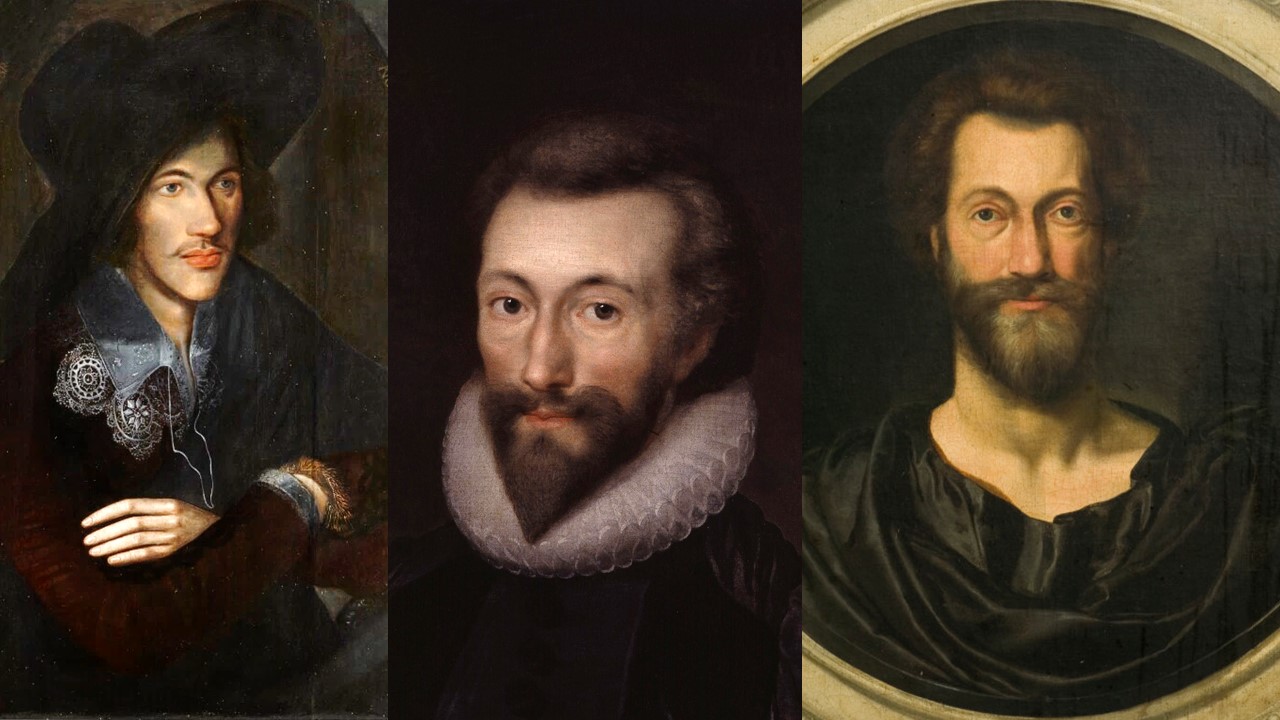
John Donne (born January 22, 1572 – died March 31, 1631) shifted dramatically in his life: The early Donne was the passionate lover and rebel of sense; the later Donne, a man consumed with his own spiritual journey and search for truth.

Donne is known as the first and greatest of metaphysical poets—those of a genre in which “the most heterogeneous ideas are yoked by violence together; nature and art are ransacked for illustrations, comparisons, and allusions,” as essayist and critic Samuel Johnson put it.

Here, Donne has taken a Romantic form and transformed a transcendental struggle of life and death into a quiet ending, one in which death “shall be no more.”

Where Johnson spied cumbersome force, Donne’s style dazzles with soft and calm brilliance, even in the cascade of calumnies against the great “equalizer” Death. “Fate, chance, kings and desperate men” are yoked together, not in bondage but in freedom, in their power to inflict and manipulate death at will. The panorama of life and legacy has overcome death time and again, yet Donne expounds the expansive exploitation of death in one verse.

It is the will of man that triumphs over the cessation of life, the will to believe in what cannot be seen, to dismiss “poor death” as mere “pictures” compared to the substance of life infused with the Spirit.

Death, be not proud, though some have called thee
Mighty and dreadful, for thou art not so;

No bragging rights for Death, according to the poet, who in the first two lines of his sonnet denounces in apostrophe the end of life, “not proud,” “not so.”

“Mighty and dreadful,” two weighty terms, do not belong nor confer any majesty on death. “Thou are not so.” A simple statement, a certain indictment, and the poet has dispensed with Death, who is ponderous, no preposterous for the previous fears His presence has impressed on mankind.

For those whom thou think’st thou dost overthrow?
Die not, poor death, nor yet canst thou kill me.

In this neat conceit, Death himself is fooled, limited by the surface. “Thou think’st thou dost overthrow,” the monarch of destruction is an impoverished exile, removed forever more from the room of imperious prominence. “Poor death” is now the object of pity, the last enemy that will be thrown into the lake of fire.

From rest and sleep, which but thy pictures be,
Much pleasure; then from thee much more must flow,
And soonest our best men with thee do go,
Rest of their bones, and soul’s delivery.

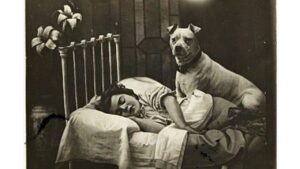
The poet compares death not to a savage desecration, nor a fatal, final battle, but instead an extension of any easy rest, one from which a man receives “much pleasure.” ”Rest and sleep” as “pictures,” the poet condescendingly remarks, bring death into the secondary status of demeaning dimension. Men’s bones receive a welcome respite, and their soul the final delivery from this earth. Death has nothing to brag about, for death is put in comparison with rest, with sleep, with regenerative silence. Death does not catch the prey of frail men, but instead sets men free, and without fail.

Thou art slave to fate, chance, kings, and desperate men,
And dost with poison, war, and sickness dwell,
And poppy or charms can make us sleep as well?
And better than thy stroke; why swell’st thou then?

Here, death as deemed a slave, a unique trope, one, which the poet fashions with wit and wisdom. “Fate” is far greater the force than the end of life which menaces many men. “Chance” is a game, a mere trifle, a toy which men gamble with, whether ending their fortunes or their lives. “Kings” put evil rebels, madmen, and threats to the state, to death. No one escapes the justice, the rule, the righteousness of the king, who even in passing, his dynasty passes on: “The King is dead. Long live the King!” is proclaimed from death to life, where the children of yesteryear become the rulers of today and the progenitors of the future. Death, mere bystander, ushers in the transitions of power.

As for the company of death, the poet outlines simply “poison,” natural or otherwise, which can slay a man in minutes or in hours. Poisons which have ended kings and queens, eradicated vermin and other pestilences, even drugs which prosper and prolong life began as poisons which in improper doses kill, and quickly.

Whether the vain ragings of craven men or glory on the battlefields, “war” covers a range of reigns and rights, ponderings and possibilities. Death is not even a scavenger, but a frustrated element pushed to the limit, expected to do the bidding of the common folk and the ruling elite, the final weapon which man overcomes even in being overcome.  In war, where men die for country, they live forever in the memory of their countrymen, mocking Death who has aided their eternity.

“Sickness” is the necessary pause for men who cannot contain their passions, for the growing race of human beings who run the race with no thought to running out. Sickness is the crucial agent that brings a long and much-needed arrest to those who inflict harm on their bodies, who resist the bounds of natural appetite. Sickness also is the final sign, the moments when a man who departs knows well that his time is short, and so the stultifying stops of pains and coughs at least buy him time to say “good-bye.”

“Poppy or charms can make us sleep as well.” “As well” communicates “in comparison” and “in addition,” gaily sporting with the super-abounding grace of nature’s wonders, which man has contrived to ease his pain and quicken his rest. “Poppy” is a joyful word, a colorful, childlike flower winding away with careless wonder in the wind. “Charms,” whether magical or romantic, are bewitching and bewailing, at least for the one who has fallen beneath their spell. Sometimes, the simple charm of a smiling face suffices more, traced with the soft face of a poppy gladly handed to a loved one. And so, Death is outdone once again!

One short sleep past, we wake eternally,
And death shall be no more, death, thou shalt die.

“Sleep” appears again, but not in conjunction with rest; instead, rest leads to life eternal, where man will no longer need to rest, fashioned as he will be in a body that does not age, that will never flag or fail, Donne decrees. Death is further impoverished, ruined, left desolate. Man in eternal life witnesses death succumbing to himself. “Death shall be no more,” the poet proudly yet dulcetly declares, not even bothering to speak to death. So certain, so final, so enriched with vigor, the poet then whispers, yet loudly of the import of the paradox: “Death, thou shalt die.”

Death dies, or is Death dying? What a wicked end, the poet has mocked, derided, denounced, and diminished death into a cruel joke, a maxim which maximizes the power of the man reborn, trusting in a higher power to infuse him with eternal life, forever inoculating him from the subtleties of war, poison, and sickness all. Fate is fated to disappear, chance has become certainty, kings of limited renown are dethroned, and desperate men now hope. “Death, thou shalt die.” Death is now bereft of pride, like a witless cowboy who has shot himself in the foot, powerless and wounded, and by his own stroke.

Donne indeed has done and dispensed with Death, and mortal man evermore may rejoice!


Arthur Christopher Schaper is an author and teacher who lives in Torrance, CA. He writes several blogs including Schaper’s Corner.

Originally published on The Epoch Times.
 

ShareTweetPin
The Society of Classical Poets does not endorse any views expressed in individual poems or commentary.
Read Our Comments Policy Here

RandomPoems

‘Gift for the Living’ by David Watt
Beauty

‘Gift for the Living’ by David Watt

February 18, 2022

. Gift for the Living The life that he led is a memory now, Subjugated by settled existence, With old...

‘The Beast Once Foretold’ by Evan Mantyk
Culture

‘The Beast Once Foretold’ by Evan Mantyk

June 23, 2018

Written upon reading the book How the Specter of Communism Is Ruling Our World. The beast once foretold for the...

Next Post

An Odysseus Sonnet Sequence by Jessica F. Smith

Photo Exhibit: Shiprock and Mont St. Michel

Photo Exhibit: Shiprock and Mont St. Michel

'Spring's Rhyme' and Other Poetry by Amy McCombs

Comments 4

  1. mooner says:
    8 years ago

    Here Poppy means opium I think
    Death is being compared to a mere rest and it need not be proud for both poppy and charms can bring a man rest and peace

    Reply
    • John Donne says:
      5 years ago

      John Donne has created, no doubt a masterpiece in English literature by writing Riding Westward . Great analysis.

      Reply
  2. F-boy247 says:
    8 years ago

    Good analysis, but it was a huge stretch.

    Reply
  3. Nom Nom says:
    6 years ago

    In general with all the poems on this website, I also want to know more about the authors that wrote them too.

    Reply

Leave a Reply Cancel reply

Your email address will not be published. Required fields are marked *

  1. Adam Sedia on ‘Kaddish for My Father’: A Poem by Brian YapkoJune 24, 2026

    Thank you for sharing this deeply personal poem. I can imagine this work is very close to you. You certainly…

  2. Adam Sedia on ‘Breath of Night’: A Poem by Paulette CalasibettaJune 24, 2026

    The pantoum is the perfect form for this piece: the repetition drives home the unease of a sleepless night. You…

  3. Adam Sedia on ‘The Ministry of Twee’: A Poem by Susan Jarvis BryantJune 24, 2026

    I absolutely loved this one! It is a technical masterpiece, with its internal rhyme and mellifluous use of anapests. But…

  4. Adam Sedia on ‘Then and Now’: A Sonnet by James SaleJune 24, 2026

    This is a powerful poem that packs its punch right from the very first quatrain, describing the legendary dead as…

  5. BDW on ‘The Eagle’: A Poem by Bruce Dale WiseJune 24, 2026

    Mr. Sedia notes that the iambic heptameter is capable stately topics; one example suffices: Ben Lewis Solomon by War di…

Subscribe to Daily Poems

Enter your email address to subscribe to this blog and receive notifications of new posts by email.

Join 1,593 other subscribers

Recent Poems

  • ‘Then and Now’: A Sonnet by James Sale
  • ‘The Ministry of Twee’: A Poem by Susan Jarvis Bryant
  • ‘Breath of Night’: A Poem by Paulette Calasibetta
  • A Song Inspired by Edward Rowland Sill’s ‘Among the Redwoods’, by Gunny Markefka
  • ‘Kaddish for My Father’: A Poem by Brian Yapko
  • ‘Canceled’ and Other Limericks by Joseph Mason
  • ‘The Diamond’: A Marriage Proposal Poem by Adam Sedia
  • ‘The Dancer’ and Other Rondeaux by David Murphy
  • ‘Chastity’: A Sonnet Sequence by Justin Dasher
  • Horace Odes I.11 and III.30, Translated by Mary Jane Myers
  • ‘The Bird with the Ugly Voice’: A Poem by Scharlie Meeuws
  • ‘The Dryads’: A Poem by Patricia Rogers Crozier
  • ‘Stories of Saint Anthony’: Poems by Margaret Coats
  • ‘An Englishman to World Cups Past’: A Poem by Paul A. Freeman
  • ‘Faux Pas’ and Other Poetry by C.B. Anderson
  • ‘Trip to Italy: A Poetry Travel Journal’ by James A. Tweedie
  • ‘Spring Song’: A Poem by Rohini Sunderam
  • ‘The Eagle’: A Poem by Bruce Dale Wise
  • ‘Good Night’ and Other Poetry by Kevin Ahern
  • ‘Mothiavelli’ and Other Poetry by Susan Jarvis Bryant
  • ‘Poetic Justices: The Poetry of United States Supreme Court Justices’: An Essay by Adam Sedia
  • ‘Blur’ and Other Poems by Anna J. Arredondo
  • ‘The Cottage on the Ridge’ and Other Poetry by Martin Rizley
  • Catullus’s Poems 5 and 101, Translated by Mary Jane Myers
  • ‘Undeclared College Major’ and Other Short Poems by Russel Winick
  • ‘The Sowers’: A Poem by Gabriele D’Annunzio, Translated by Joseph S. Salemi
  • ‘Three Kittens Went to Kitten-Garten’: A Poem by Roy E. Peterson
  • ‘The Number 217: A Glimpse of Armageddon’: A Poem by Paul Martin Freeman
  • ‘The Heart of the Wood’: A Poem and Song by Joseph David Greene
  • ‘Twelve Labors More Part II. The Music of the Spheres’: A Poem by Evan Mantyk

Categories

  • Acrostic
  • Alexandroid
  • Alliterative
  • Art
  • Best Poems
  • Blank Verse
  • Chant Royal
  • Classical Poets Live
  • Clerihew
  • Covid-19
  • Deconstructing Communism
  • Educational
  • Epic
  • Epigrams and Proverbs
  • Essays
    • Interviews with Poets
    • Poetry Reviews
  • Featured
  • From the Society
  • Great Poets
    • Dante Alighieri
    • Edgar Allan Poe
    • Emily Dickinson
    • Geoffrey Chaucer
    • Henry Wadsworth Longfellow
    • Homer
    • John Keats
    • John Milton
    • Robert Frost
    • William Blake
    • William Shakespeare
    • William Wordsworth
  • Human Rights in China
  • Limerick
  • Love Poems
  • Music
  • Pantoum
  • Performing Arts
  • Poetry
    • Beauty
    • Children's Poems
    • Culture
    • Ekphrastic
    • Found Poems
    • High School Poets
    • Humor
    • Riddles
  • Poetry Challenge
  • Poetry Contests
  • Poetry Forms
    • Curtal Sonnet
    • Haiku
  • Poetry Readings
  • Rhupunt
  • Rondeau
  • Rondeau Redoublé
  • Rondel
  • Rubaiyat
  • Sapphic Verse
  • Satire
  • Science
  • Sestina
  • Shape Poems
  • Short Stories
  • Song Lyrics
  • Sonnet
  • Symposium
  • Terrorism
  • Terza Rima
  • The Environment
  • Translation
  • Triolet
  • Video
  • Villanelle

Quick Links

  • About Us
  • Submit Poetry
  • Become a Member
  • Members List
  • Support the Society
  • Advertisement Placement
  • Comments Policy
  • Terms of Use

Welcome Back!

Login to your account below

Forgotten Password?

Retrieve your password

Please enter your username or email address to reset your password.

Log In
No Result
View All Result
  • Poems
    • Beauty
    • Culture
    • Satire
    • Humor
    • Children’s
    • Art
    • Ekphrastic
    • Epic
    • Epigrams and Proverbs
    • Human Rights in China
    • Music
    • Performing Arts
    • Riddles
    • Science
    • Song Lyrics
    • The Environment
    • The Raven
    • Found Poems
    • High School Poets
    • Terrorism
    • Covid-19
  • Poetry Forms
    • Sonnet
    • Haiku
    • Limerick
    • Villanelle
    • Rondeau
    • Pantoum
    • Sestina
    • Triolet
    • Acrostic
    • Alexandroid
    • Alliterative
    • Blank Verse
    • Chant Royal
    • Clerihew
    • Rhupunt
    • Rondeau Redoublé
    • Rondel
    • Rubaiyat
    • Sapphic Verse
    • Shape Poems
    • Terza Rima
  • Great Poets
    • Geoffrey Chaucer
    • Emily Dickinson
    • Homer
    • Henry Wadsworth Longfellow
    • Dante Alighieri
    • John Keats
    • John Milton
    • Edgar Allan Poe
    • William Shakespeare
    • William Wordsworth
    • William Blake
    • Robert Frost
  • Love Poems
  • Contests
  • SCP Academy
    • Educational
    • Teaching Classical Poetry—A Guide for Educators
    • Poetry Forms
    • The SCP Journal
    • Books

© 2025 SCP. WebDesign by CODEC Prime.