• Submit Poetry
  • Support SCP
  • About Us
  • Members
  • Join
Tuesday, May 12, 2026
Society of Classical Poets
  • Poems
    • Beauty
    • Culture
    • Satire
    • Humor
    • Children’s
    • Art
    • Ekphrastic
    • Epic
    • Epigrams and Proverbs
    • Human Rights in China
    • Music
    • Performing Arts
    • Riddles
    • Science
    • Song Lyrics
    • The Environment
    • The Raven
    • Found Poems
    • High School Poets
    • Terrorism
    • Covid-19
  • Poetry Forms
    • Sonnet
    • Haiku
    • Limerick
    • Villanelle
    • Rondeau
    • Pantoum
    • Sestina
    • Triolet
    • Acrostic
    • Alexandroid
    • Alliterative
    • Blank Verse
    • Chant Royal
    • Clerihew
    • Rhupunt
    • Rondeau Redoublé
    • Rondel
    • Rubaiyat
    • Sapphic Verse
    • Shape Poems
    • Terza Rima
  • Great Poets
    • Geoffrey Chaucer
    • Emily Dickinson
    • Homer
    • Henry Wadsworth Longfellow
    • Dante Alighieri
    • John Keats
    • John Milton
    • Edgar Allan Poe
    • William Shakespeare
    • William Wordsworth
    • William Blake
    • Robert Frost
  • Love Poems
  • Contests
  • SCP Academy
    • Educational
    • Teaching Classical Poetry—A Guide for Educators
    • Poetry Forms
    • The SCP Journal
    • Books
No Result
View All Result
Society of Classical Poets
  • Poems
    • Beauty
    • Culture
    • Satire
    • Humor
    • Children’s
    • Art
    • Ekphrastic
    • Epic
    • Epigrams and Proverbs
    • Human Rights in China
    • Music
    • Performing Arts
    • Riddles
    • Science
    • Song Lyrics
    • The Environment
    • The Raven
    • Found Poems
    • High School Poets
    • Terrorism
    • Covid-19
  • Poetry Forms
    • Sonnet
    • Haiku
    • Limerick
    • Villanelle
    • Rondeau
    • Pantoum
    • Sestina
    • Triolet
    • Acrostic
    • Alexandroid
    • Alliterative
    • Blank Verse
    • Chant Royal
    • Clerihew
    • Rhupunt
    • Rondeau Redoublé
    • Rondel
    • Rubaiyat
    • Sapphic Verse
    • Shape Poems
    • Terza Rima
  • Great Poets
    • Geoffrey Chaucer
    • Emily Dickinson
    • Homer
    • Henry Wadsworth Longfellow
    • Dante Alighieri
    • John Keats
    • John Milton
    • Edgar Allan Poe
    • William Shakespeare
    • William Wordsworth
    • William Blake
    • Robert Frost
  • Love Poems
  • Contests
  • SCP Academy
    • Educational
    • Teaching Classical Poetry—A Guide for Educators
    • Poetry Forms
    • The SCP Journal
    • Books
No Result
View All Result
Society of Classical Poets
No Result
View All Result
Home Essays

Review: In Hubble’s Shadow by Carol Smallwood, Shanti Arts Publishing, 2017

April 24, 2017
in Essays, Poetry, Poetry Reviews
A A
0
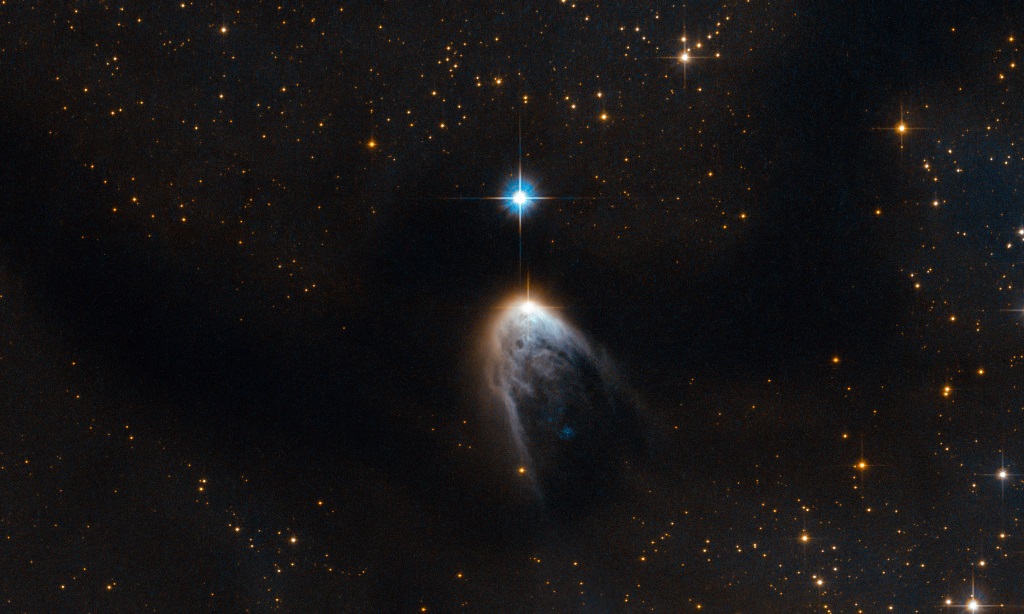
Violent birth announcement from an infant star

Violent birth announcement from an infant star

poems Review: In Hubble's Shadow by Carol Smallwood, Shanti Arts Publishing, 2017

By Alex Phuong

The night sky has served as the inspiration for many poets and writers, from Longfellow’s “The Light of Stars” to “Stars” by Robert Frost, and still does. Profoundly and mysteriously beautiful, Carol Smallwood’s In Hubble’s Shadow is an artistic exploration of mankind’s place in the universe that reminds readers about humility in the face of the finite knowledge of our reality.

In Smallwood’s first section, called “The Universe,” poems explore the nature of time and space. For example, in “A Scattering of Lines,” she explores a universal theme about celestial objects within the universe. Specifically, the last two lines,

Sunlight would reach Earth in a straight line
if it weren’t for the layer of air

reveal the profound design of the universe as well as reality as a whole. Such an idealized depiction of the universe can make readers question the origins of such perfection, and, by extension, the nature of the heavens. Many people continue to speculate where mankind came from, and why everything exists, or whether or not everything is nothing more than a meaningless illusion. Dwelling among such philosophical questions, Smallwood’s poetry is a simple, yet profound, exploration of subjectivity.

The next section, called “The Hearth,” explores the power of home and security. The figurative hearth within these poems asserts that Earth is the only home for mankind, and reminds readers that all people are very minuscule compared to the vastness of the universe. For example, “A Villanelle for Three Dolls,” compares people to insignificant toys in a vast universe. This is the second stanza:

Time and changing circumstances cannot erase
the security of keeping them in full view, a compensation:
three dolls who’ve survived the years are together in one place

The fact that this poem is a villanelle makes the rhyme scheme unique. This stanza is also very symbolic because the dolls represent people, all of whom are creatures by default, and cannot here rival the awe-inspiring nature of the universe. Perhaps all people really are just like dolls because humanity could just be as simple as toys.

The third section of poetry is called “Sea-Change.” Within this section, Smallwood reveals the themes of both constant change and eternal stagnation through her examination of life itself. In, “Live With It,” Smallwood writes:

A few years ago I’d been told to buy a good lutein supply
for macular degeneration due to aging—there’s no going back;
there wasn’t a warning, just jagged lightening in my eye

The overall theme of this poem is coping, as the title suggests. It is appropriately within the section called “Sea-Change” because change is fundamentally the only constant in life. The main figure in this poem has to cope with change and reality, an important skill. Living with any ailment or hardship can be challenging, but overcoming challenges makes people stronger. Perhaps that is why Smallwood included this poetry in a section that relates to the ocean because life itself ebbs and flows like the power of the mighty sea.

Smallwood specializes in pantoums, and published this how-to piece on pantoums. Her command of this Malaysian-derived poetry form is on display in such splendid pieces as “Defining Time.” In the four-stanza poem, I have quoted below the first and last stanzas (of four):

Time’s illusive to understand, define
even with the definitions, planck and light years—
centuries studying, grasping design
a slippery concept to confront human fears.

…

There’s many known poems and quotations,
centuries studying, grasping design
making little sense after all the rotations;
time s illusive to understand, define.

Notice that the first line of the poem becomes the last and the third becomes the third from last. Through the pantoum’s structure, Smallwood has made this poem on time and physics effectively transform into a poem about literature and culture, and subtly drawn parallels between the human experience and the universe.

Smallwood titled the ending of her poetry collection, “Epilogue—Little Is Known.” That powerful title basically sums up all of the themes presented in her book. Some people might be scholars, and others might be intellectually challenged. In spite of the differences that characterize people, the fact is that not much is known about the universe. To this day, abstract questions that befuddled mankind continue to be on the minds of people. The Earth will always metaphorically be “In Hubble’s Shadow” because it is only one small component of the entirely mysterious vastness of the universe.


Carol Smallwood’s over four dozen books include Women on Poetry: Writing, Revising, Publishing and Teaching, on Poets & Writers Magazine list of Best Books for Writers. Water, Earth, Air, Fire, and Picket Fences is a 2014 collection from Lamar University Press; Divining the Prime Meridian, is forthcoming from WordTech Editions. She has appeared in such journals as: Drunken Boat; The Writer’s Chronicle; The Main Street Rag; Jelly Bucket; English Journal. Carol has founded and supports humane societies.

Alex Andy Phuong earned his Bachelor of Arts in English from California State University—Los Angeles in 2015 while also serving as an editor for Statement Magazine. 


ShareTweetPin
The Society of Classical Poets does not endorse any views expressed in individual poems or commentary.
Read Our Comments Policy Here

RandomPoems

A Video Poetry Reading by Adam Sedia
Poetry

A Video Poetry Reading by Adam Sedia

December 17, 2025

Poet Adam Sedia reads his work at the Society of Classical Poets' in-person Poetry Symposium held in Naperville, Illinois on...

‘Darkness’ and Other Poetry by Christine Lawson
Beauty

‘Darkness’ and Other Poetry by Christine Lawson

February 25, 2017

Darkness No longer did they see the need For things called books they used to read. Music—no longer symphonies, But...

Next Post
‘To Compassion’ by Daniel Magdalen

'To Compassion' by Daniel Magdalen

‘To a Red-Winged Black Bird on the Advent of Spring’ and Other Poetry by Reid McGrath

'To a Red-Winged Black Bird on the Advent of Spring' and Other Poetry by Reid McGrath

‘For Our Children’ and Other Poetry by Amy Foreman

'For Our Children' and Other Poetry by Amy Foreman

Leave a Reply Cancel reply

Your email address will not be published. Required fields are marked *

  1. Susan Jarvis Bryant on ‘Spontaneous Conjugal Combustion’ and Other Poems by Susan Jarvis BryantMay 12, 2026

    Yael, it's always lovely to hear from you. I'm thrilled you enjoyed the poems. I did have people in mind…

  2. Susan Jarvis Bryant on ‘Spontaneous Conjugal Combustion’ and Other Poems by Susan Jarvis BryantMay 12, 2026

    James, I'm hoping you enjoyed the villanelle and it hasn't worried you too much. Mike often suffers for my art…

  3. Susan Jarvis Bryant on ‘Spontaneous Conjugal Combustion’ and Other Poems by Susan Jarvis BryantMay 12, 2026

    C.B. I just love the Queen Elizabeth II and Welsh Corgis scene... I would have claimed that one had I…

  4. Susan Jarvis Bryant on ‘Spontaneous Conjugal Combustion’ and Other Poems by Susan Jarvis BryantMay 12, 2026

    Brian, thank you so much for this extremely generous and perceptive reading. I thoroughly appreciate your take on my quirky…

  5. Susan Jarvis Bryant on ‘Spontaneous Conjugal Combustion’ and Other Poems by Susan Jarvis BryantMay 12, 2026

    Awww, what a beautiful comment, Mark. It's lovely to hear of the joys of marital bliss after 53 years. Congratulations!…

Subscribe to Daily Poems

Enter your email address to subscribe to this blog and receive notifications of new posts by email.

Join 1,593 other subscribers

Recent Poems

  • A Poem on Coach “Black Mike” Castronis from Athens Y Camp, by Alec Ream
  • A Poem on the Zambian National Park Mosi-oa-Tunya, by Paul A. Freeman
  • ‘Creation of Mom’: A Mother’s Day Poem by Roy E. Peterson
  • ‘Spontaneous Conjugal Combustion’ and Other Poems by Susan Jarvis Bryant
  • ‘The Man in the Moon Was a Very Round Man’: A Poem by Lauren V. Leon
  • ‘Fibromytrauma’: A Poem by Golan Shahar
  • ‘A Lonely Sliver’: A Poem by Katie Tencza
  • ‘Higher Gas Prices Are a Small Price to Pay’: An Iran War Poem by Mark F. Stone
  • ‘Always Ahead’: A Poem by Scharlie Meeuws
  • ‘Hamlet’s Lawyer’ and Other Poetry by Brian Yapko
  • ‘On An Old Photograph’: A Poem by Joseph S. Salemi
  • ‘Faust Foresees His End’: A Poem by Martin Briggs
  • ‘À la Carte’ and Other Poetry by C.B. Anderson
  • ‘Where the Sweet Bluebonnets Bloom’: A Poem by Roy E. Peterson
  • ‘The Waters’: A Poem by Margaret Brinton
  • ‘The Pinnacle of Poetry’ and Other Poems by Russel Winick
  • The First American Sonnets: An Essay on David Humphreys, by Margaret Coats
  • ‘The Holy Rollers on Poetry’: A Poem by Joseph S. Salemi
  • Sappho’s ‘Poem 1’ Translated by Bruce Phenix
  • ‘The Cautionary Tale of Phone Addicted Mimi’: A Poem by Paul A. Freeman
  • ‘Look Away’: A Poem for America’s 250th Anniversary, by Roger Crane
  • ‘Sunday Morning in Canada’: A Poem by Jeffrey Essmann
  • ‘Bean’: A Poem by Jan Mennite
  • ‘The Swan’s Song ’: A Poem for Shakespeare’s Birthday, by Susan Jarvis Bryant
  • ‘The Gravedigger’: A Poem by Marie Burdett
  • ‘Waiting for the Perfect Man’: A Poem by Janice Canerdy
  • ‘The George-A-Saurus’ and Other Poetry by Brian Yapko
  • ‘When Asked: What’s Your Favorite Season?’: A Poem by Paul Millan  
  • ‘The Last At-Bat of Lyndon Braun’: A Poem by Michael Pietrack
  • ‘The Perpetual Battle’ and Other Poetry by Adam Sedia

Categories

  • Acrostic
  • Alexandroid
  • Alliterative
  • Art
  • Best Poems
  • Blank Verse
  • Chant Royal
  • Classical Poets Live
  • Clerihew
  • Covid-19
  • Deconstructing Communism
  • Educational
  • Epic
  • Epigrams and Proverbs
  • Essays
    • Interviews with Poets
    • Poetry Reviews
  • Featured
  • From the Society
  • Great Poets
    • Dante Alighieri
    • Edgar Allan Poe
    • Emily Dickinson
    • Geoffrey Chaucer
    • Henry Wadsworth Longfellow
    • Homer
    • John Keats
    • John Milton
    • Robert Frost
    • William Blake
    • William Shakespeare
    • William Wordsworth
  • Human Rights in China
  • Limerick
  • Love Poems
  • Music
  • Pantoum
  • Performing Arts
  • Poetry
    • Beauty
    • Children's Poems
    • Culture
    • Ekphrastic
    • Found Poems
    • High School Poets
    • Humor
    • Riddles
  • Poetry Challenge
  • Poetry Contests
  • Poetry Forms
    • Curtal Sonnet
    • Haiku
  • Poetry Readings
  • Rhupunt
  • Rondeau
  • Rondeau Redoublé
  • Rondel
  • Rubaiyat
  • Sapphic Verse
  • Satire
  • Science
  • Sestina
  • Shape Poems
  • Short Stories
  • Song Lyrics
  • Sonnet
  • Symposium
  • Terrorism
  • Terza Rima
  • The Environment
  • Translation
  • Triolet
  • Video
  • Villanelle

Quick Links

  • About Us
  • Submit Poetry
  • Become a Member
  • Members List
  • Support the Society
  • Advertisement Placement
  • Comments Policy
  • Terms of Use

Welcome Back!

Login to your account below

Forgotten Password?

Retrieve your password

Please enter your username or email address to reset your password.

Log In
No Result
View All Result
  • Poems
    • Beauty
    • Culture
    • Satire
    • Humor
    • Children’s
    • Art
    • Ekphrastic
    • Epic
    • Epigrams and Proverbs
    • Human Rights in China
    • Music
    • Performing Arts
    • Riddles
    • Science
    • Song Lyrics
    • The Environment
    • The Raven
    • Found Poems
    • High School Poets
    • Terrorism
    • Covid-19
  • Poetry Forms
    • Sonnet
    • Haiku
    • Limerick
    • Villanelle
    • Rondeau
    • Pantoum
    • Sestina
    • Triolet
    • Acrostic
    • Alexandroid
    • Alliterative
    • Blank Verse
    • Chant Royal
    • Clerihew
    • Rhupunt
    • Rondeau Redoublé
    • Rondel
    • Rubaiyat
    • Sapphic Verse
    • Shape Poems
    • Terza Rima
  • Great Poets
    • Geoffrey Chaucer
    • Emily Dickinson
    • Homer
    • Henry Wadsworth Longfellow
    • Dante Alighieri
    • John Keats
    • John Milton
    • Edgar Allan Poe
    • William Shakespeare
    • William Wordsworth
    • William Blake
    • Robert Frost
  • Love Poems
  • Contests
  • SCP Academy
    • Educational
    • Teaching Classical Poetry—A Guide for Educators
    • Poetry Forms
    • The SCP Journal
    • Books

© 2025 SCP. WebDesign by CODEC Prime.