• Submit Poetry
  • Support SCP
  • About Us
  • Members
  • Join
Tuesday, June 30, 2026
Society of Classical Poets
  • Poems
    • Beauty
    • Culture
    • Satire
    • Humor
    • Children’s
    • Art
    • Ekphrastic
    • Epic
    • Epigrams and Proverbs
    • Human Rights in China
    • Music
    • Performing Arts
    • Riddles
    • Science
    • Song Lyrics
    • The Environment
    • The Raven
    • Found Poems
    • High School Poets
    • Terrorism
    • Covid-19
  • Poetry Forms
    • Sonnet
    • Haiku
    • Limerick
    • Villanelle
    • Rondeau
    • Pantoum
    • Sestina
    • Triolet
    • Acrostic
    • Alexandroid
    • Alliterative
    • Blank Verse
    • Chant Royal
    • Clerihew
    • Rhupunt
    • Rondeau Redoublé
    • Rondel
    • Rubaiyat
    • Sapphic Verse
    • Shape Poems
    • Terza Rima
  • Great Poets
    • Geoffrey Chaucer
    • Emily Dickinson
    • Homer
    • Henry Wadsworth Longfellow
    • Dante Alighieri
    • John Keats
    • John Milton
    • Edgar Allan Poe
    • William Shakespeare
    • William Wordsworth
    • William Blake
    • Robert Frost
  • Love Poems
  • Contests
  • SCP Academy
    • Educational
    • Teaching Classical Poetry—A Guide for Educators
    • Poetry Forms
    • The SCP Journal
    • Books
No Result
View All Result
Society of Classical Poets
  • Poems
    • Beauty
    • Culture
    • Satire
    • Humor
    • Children’s
    • Art
    • Ekphrastic
    • Epic
    • Epigrams and Proverbs
    • Human Rights in China
    • Music
    • Performing Arts
    • Riddles
    • Science
    • Song Lyrics
    • The Environment
    • The Raven
    • Found Poems
    • High School Poets
    • Terrorism
    • Covid-19
  • Poetry Forms
    • Sonnet
    • Haiku
    • Limerick
    • Villanelle
    • Rondeau
    • Pantoum
    • Sestina
    • Triolet
    • Acrostic
    • Alexandroid
    • Alliterative
    • Blank Verse
    • Chant Royal
    • Clerihew
    • Rhupunt
    • Rondeau Redoublé
    • Rondel
    • Rubaiyat
    • Sapphic Verse
    • Shape Poems
    • Terza Rima
  • Great Poets
    • Geoffrey Chaucer
    • Emily Dickinson
    • Homer
    • Henry Wadsworth Longfellow
    • Dante Alighieri
    • John Keats
    • John Milton
    • Edgar Allan Poe
    • William Shakespeare
    • William Wordsworth
    • William Blake
    • Robert Frost
  • Love Poems
  • Contests
  • SCP Academy
    • Educational
    • Teaching Classical Poetry—A Guide for Educators
    • Poetry Forms
    • The SCP Journal
    • Books
No Result
View All Result
Society of Classical Poets
No Result
View All Result
Home Poetry Culture

‘A Rose for Ezra Pound’ by Leland James (+Commentary)

November 6, 2013
in Culture, Essays, Poetry
A A
3
poems 'A Rose for Ezra Pound' by Leland James (+Commentary)

“He strove to resuscitate the dead art/Of poetry; to maintain “the sublime”/In the old sense. Wrong from the start  …” –Ezra Pound, “Hugh Selwyn Mauberly”

“Adolf Hitler was a Jeanne d’Arc, a saint.” –Also Ezra Pound

An immigrant Jew, an old woman,
her tattoo peeking from under
a billowed sleeve, her face in shadow,
behind her the Statue of Liberty: she
holds up an American Beauty.

Juxtapose your rose, make it ersatz
—Williams’ broken glass—or devolve
to  H.D.s “Sea Rose,” and tell me dear Ezra
again how the traditional rose is worn
out, a trite symbol, deserving derision.

Tell me once more how we must make it flash,
poetry new in your image, a dagger’s moustache.


The poetry of Leland James has been published worldwide in over fifty journals and magazines, including The Spoon River Poetry Review, The Society of Classical Poets Journal, The South Carolina Review, New Millennium Writers, Vallum, Orbis, and Aesthetica, Leland was an International Publication Prize winner in the Atlanta Review poetry competition, winner of the Portland Pen Poetry Prize, and runners up for Society of Classical Poets, Fish International and the Welsh Poetry prizes. He received the Franklin-Christoph Merit Award for Poetry in 2008 He lives in a cabin in the woods in northern Michigan with his wife of 40 years. You may see more of his poetry at www.lelandjamespoet.com.

Featured Image: “Perfectly Pink” by Barbara Fox


Commentary by Leland James

“A Rose for Ezra Pound” is in its essence a polemic standing against the Modernists, and by implication the Post-Modernists, who have dominated poetry (particularly American poetry) since the early 1900s when the Modernist movement began. Ezra Pound was the principle spokesman and leader during the movement’s early days. The Modernists, particularly the “Imagist” variety of the Modernist movement, where the movement began, stood against nearly everything The Society of Classical Poets stands for.

“A Rose for Ezra Pound” is full of allusions, many of them meta-poetic, poetry about poetry, a well-established tradition, perhaps most famously employed by Alexander Pope in his “Essay on Criticism” (a poem about meter, published in 1711). The first allusion in “A Rose for Ezra Pound” is quite obvious: “American Beauty” at the end of the first stanza alludes to the American Beauty Rose, and in its context symbolizes the history of America’s sheltering of immigrants, particularly those abused by foreign powers. The old woman in the first stanza is ironically, perhaps sarcastically, holding up a rose for Ezra Pound, a well-known anti-Semite, to see. Even better, perhaps, offering it to him. Mocking him, forgiving him, just setting things straight, all three, you choose.

The rose was often attacked by the modernists, derided as an obsolete symbol that had no place in modern poetry. William Carlos Williams’ poem, “The Rose is Obsolete,” is a glaring example. Hilda Doolittle, who wrote under the pen name H.D.—a, alluded to in the second stanza of “A Rose for Ezra Pound—in her poem “Sea Rose” is another example. The reference to “broken glass” in the second stanza of “A Rose for Ezra Pound” alludes to Williams’ poem “Lines” in which he lifts up a piece of broken glass as an example of how modern poetry should depict and elevate concrete images and things not traditional in poetry; in this case adding an element of the man-made versus nature in modern poetry. The battle cry of the modernists was “Make it new!” The word “ersatz” in the first line of the second stanza of “A Rose for Ezra Pound” alludes to this.

The latter part of “A Rose for Ezra Pound” mocks the modernists by addressing Ezra Pound, the movement’s leader, pointing him back to the first stanza in which the rose is used as a symbol in a modern poem. The intended irony of the rose being employed as a symbol in a modern poem (the Modernists eschewed symbolism) refutes the Modernists’ prohibition against the rose in particular and symbolism in general. An additional irony is that “A Rose for Ezra Pound” is indeed “making it new,” but by using symbolism to refresh not repeat the image of the rose. The trope turns the rose to the purpose of irony and sarcasm instead of romance, while at the same time serving as a symbol of America. William Blake did something similar in “The Sick Rose,” where the sick rose was a metaphor for a turning away from God in general and for the rampant syphilis of his time in particular. Poets have been “making it new” for thousands of years.

The rhyme scheme in “A Rose for Ezra Pound” (the Modernists also eschewed rhyming in general and end-line rhymes in particular) employs slant or imperfect rhyme, exact rhyme, internal rhyme, and end-line rhyme. “Flash” in the final couplet (there is nothing a Modernist would hate more than a couplet) alludes to the Imagist’s desire to render in a poem a perfect, unadorned image, as in a photograph. The final metaphor (the Modernists also eschewed metaphor) is a final barb. It is a complex metaphor equating Ezra Pound to a dagger—in the heart of poetry—with a moustache, in keeping with the time-worn practice of drawing mustaches on posters and pictures. Pound’s own dagger-pointed mustache personalizes the dagger, pointing directly to him.

 

ShareTweetPin
The Society of Classical Poets does not endorse any views expressed in individual poems or commentary.
Read Our Comments Policy Here

RandomPoems

Wanted: A Verse Curriculum and Pedagogy: An Essay by David J. Rothman
Culture

‘Real Poetry’: A Poem by Eric v.d. Luft

December 29, 2025

  Real Poetry Free verse is naught but prose in guise. No one can tell me otherwise. Confessions, images, and...

‘Stars from a Different Sky’ by Robert Walton
Beauty

‘Stars from a Different Sky’ by Robert Walton

January 11, 2014

Sparks from nearby campfires Might be stars of paradise Glimpsed through twilight’s window Too briefly for surmise Of their height...

Next Post

Flower duet - Anna Netrebko & Elina Garanca (Lakmé de Delibes)

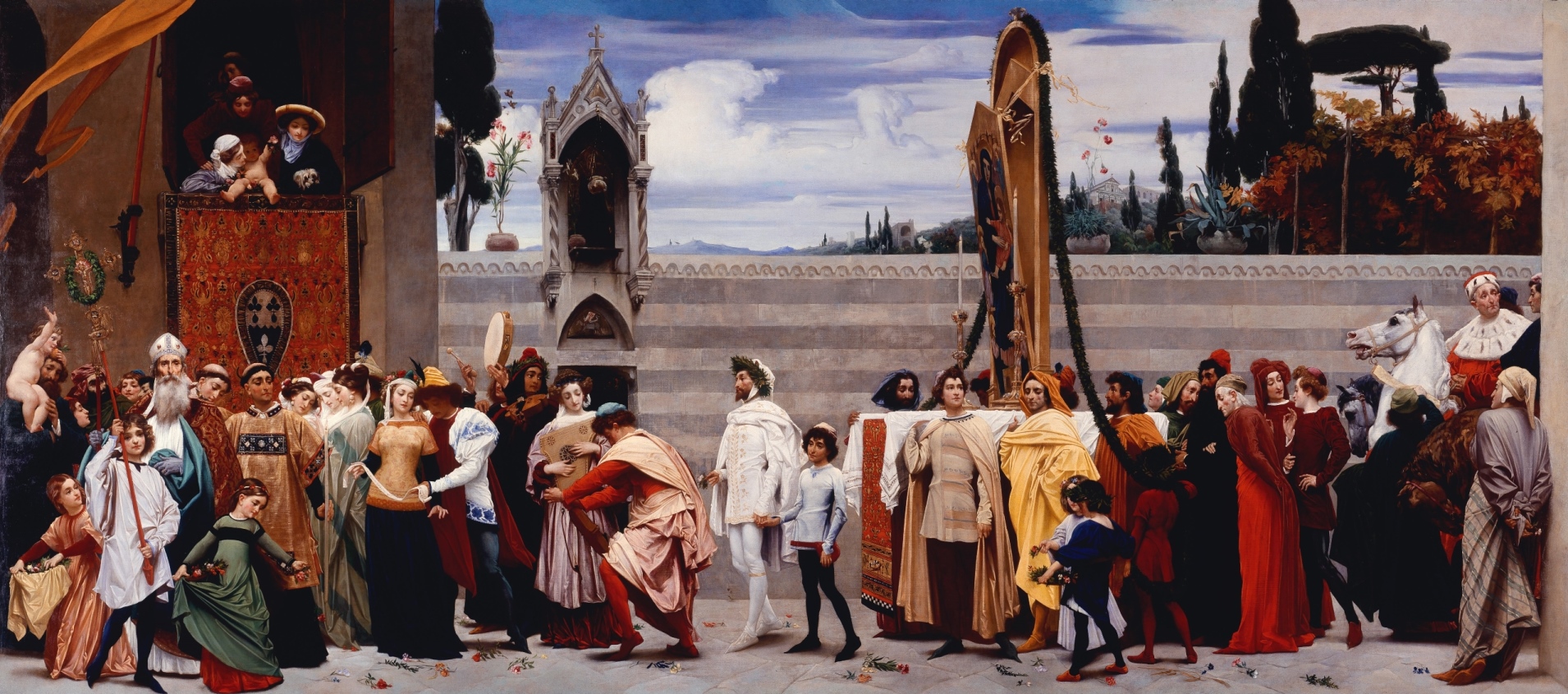
‘On Leighton’s Procession’ by Evan Mantyk

'On Leighton’s Procession' by Evan Mantyk

‘A Sonnet Saluting Lady Snow’ and Other Poetry by Mike Scheidemann

'A Sonnet Saluting Lady Snow' and Other Poetry by Mike Scheidemann

Comments 3

  1. Wilbur Dee Case says:
    13 years ago

    A Rose For Emily
    for Leland James

    Here is a rose for Emily
    compressed inside a book,
    resembling a simile
    beside a gurgling brook.

    With Homer locked up in a room
    she would not dust or sweep,
    how could she take a cloth or broom,
    to air so still and deep?

    Old Doc Heidegger dug out it
    and placed it in a glass,
    where it revived a little bit;
    its petals seen to pass.

    Though Ezra thought the rose was worn
    upon the clothes she wore,
    he never saw her near its thorn,
    nor all the swells it bore.

    Poor Hilda took it to a time
    when it was hardly fresh.
    She could not handle the sublime;
    she had to make it mesh.

    Prosaic Faulkner way down South
    in Dixie dust and dirt
    could only place, by word of mouth,
    it in a torrid hurt.

    But Mister Blake, for goodness sake,
    observed a flying worm
    that flew above it like a snake
    around an era’s squirm.

    And Señor Borges, blind at that,
    gave one to Milton’s ghost;
    while passing through a garden chat,
    he made a simple toast.

    Reply
    • Leland James says:
      13 years ago

      Thanks, Wilbur–Leland James

      Reply
  2. Nic says:
    9 years ago

    The target of this poem is odd, to say the least. I doubt any modern poet so thoroughly enjoyed the classics as Pound, a man who spent the best years of his life immersed in the Latin masters and Medieval troubadour verse. Of any poet in the modernist canon, Pound yields the greatest returns for a learned lover of classicism.

    Reply

Leave a Reply Cancel reply

Your email address will not be published. Required fields are marked *

  1. Paul Freeman on ‘The Roommate’: A Poem by Jeffrey EssmannJune 30, 2026

    I get a feeling of a roommate who is unable to take control of her life, hence the horoscope. As…

  2. Paul Freeman on ‘Not Small At All’ and Other Short Poems by Russel WinickJune 30, 2026

    It's true we only seem to notice when things go wrong and should appreciate more when everything goes tickety-boo. I…

  3. Paul Freeman on ‘Archaic Torso of Apollo’ by Rainer Maria Rilke, Translated by Mary Jane MyersJune 30, 2026

    I'm jealous of his six-pack, MJ. That aside, what a wonderful poem. Thanks for the read.

  4. Paul Freeman on ‘The Council of Infinite Opinions’: A Poem by David LeeJune 30, 2026

    One of my favourite quotes is: "However much you deny the truth, the truth goes on existing." Your poem explores…

  5. Jan Mennite on ‘The Council of Infinite Opinions’: A Poem by David LeeJune 30, 2026

    Maybe if the louder had withdrawn and the wise had filled the floor, we might have reasoned, patient-focused medicine instead…

Subscribe to Daily Poems

Enter your email address to subscribe to this blog and receive notifications of new posts by email.

Join 1,592 other subscribers

Recent Poems

  • ‘Archaic Torso of Apollo’ by Rainer Maria Rilke, Translated by Mary Jane Myers
  • ‘The Council of Infinite Opinions’: A Poem by David Lee
  • Odyssey Audiobook Serialization Begins: First Fully Dramatized Version
  • ‘Not Small At All’ and Other Short Poems by Russel Winick
  • ‘The Roommate’: A Poem by Jeffrey Essmann
  • ‘Pouting Polly’: A Poem by Robert Nachtegall
  • Two Satirical Sonnets by Joseph S. Salemi
  • ‘Then and Now’: A Sonnet by James Sale
  • ‘The Ministry of Twee’: A Poem by Susan Jarvis Bryant
  • ‘Breath of Night’: A Poem by Paulette Calasibetta
  • A Song Inspired by Edward Rowland Sill’s ‘Among the Redwoods’, by Gunny Markefka
  • ‘Kaddish for My Father’: A Poem by Brian Yapko
  • ‘Canceled’ and Other Limericks by Joseph Mason
  • ‘The Diamond’: A Marriage Proposal Poem by Adam Sedia
  • ‘The Dancer’ and Other Rondeaux by David Murphy
  • ‘Chastity’: A Sonnet Sequence by Justin Dasher
  • Horace Odes I.11 and III.30, Translated by Mary Jane Myers
  • ‘The Bird with the Ugly Voice’: A Poem by Scharlie Meeuws
  • ‘The Dryads’: A Poem by Patricia Rogers Crozier
  • ‘Stories of Saint Anthony’: Poems by Margaret Coats
  • ‘An Englishman to World Cups Past’: A Poem by Paul A. Freeman
  • ‘Faux Pas’ and Other Poetry by C.B. Anderson
  • ‘Trip to Italy: A Poetry Travel Journal’ by James A. Tweedie
  • ‘Spring Song’: A Poem by Rohini Sunderam
  • ‘The Eagle’: A Poem by Bruce Dale Wise
  • ‘Good Night’ and Other Poetry by Kevin Ahern
  • ‘Mothiavelli’ and Other Poetry by Susan Jarvis Bryant
  • ‘Poetic Justices: The Poetry of United States Supreme Court Justices’: An Essay by Adam Sedia
  • ‘Blur’ and Other Poems by Anna J. Arredondo
  • ‘The Cottage on the Ridge’ and Other Poetry by Martin Rizley

Categories

  • Acrostic
  • Alexandroid
  • Alliterative
  • Art
  • Best Poems
  • Blank Verse
  • Chant Royal
  • Classical Poets Live
  • Clerihew
  • Covid-19
  • Deconstructing Communism
  • Educational
  • Epic
  • Epigrams and Proverbs
  • Essays
    • Interviews with Poets
    • Poetry Reviews
  • Featured
  • From the Society
  • Great Poets
    • Dante Alighieri
    • Edgar Allan Poe
    • Emily Dickinson
    • Geoffrey Chaucer
    • Henry Wadsworth Longfellow
    • Homer
    • John Keats
    • John Milton
    • Robert Frost
    • William Blake
    • William Shakespeare
    • William Wordsworth
  • Human Rights in China
  • Limerick
  • Love Poems
  • Music
  • Pantoum
  • Performing Arts
  • Poetry
    • Beauty
    • Children's Poems
    • Culture
    • Ekphrastic
    • Found Poems
    • High School Poets
    • Humor
    • Riddles
  • Poetry Challenge
  • Poetry Contests
  • Poetry Forms
    • Curtal Sonnet
    • Haiku
  • Poetry Readings
  • Rhupunt
  • Rondeau
  • Rondeau Redoublé
  • Rondel
  • Rubaiyat
  • Sapphic Verse
  • Satire
  • Science
  • Sestina
  • Shape Poems
  • Short Stories
  • Song Lyrics
  • Sonnet
  • Symposium
  • Terrorism
  • Terza Rima
  • The Environment
  • Translation
  • Triolet
  • Video
  • Villanelle

Quick Links

  • About Us
  • Submit Poetry
  • Become a Member
  • Members List
  • Support the Society
  • Advertisement Placement
  • Comments Policy
  • Terms of Use

Welcome Back!

Login to your account below

Forgotten Password?

Retrieve your password

Please enter your username or email address to reset your password.

Log In
No Result
View All Result
  • Poems
    • Beauty
    • Culture
    • Satire
    • Humor
    • Children’s
    • Art
    • Ekphrastic
    • Epic
    • Epigrams and Proverbs
    • Human Rights in China
    • Music
    • Performing Arts
    • Riddles
    • Science
    • Song Lyrics
    • The Environment
    • The Raven
    • Found Poems
    • High School Poets
    • Terrorism
    • Covid-19
  • Poetry Forms
    • Sonnet
    • Haiku
    • Limerick
    • Villanelle
    • Rondeau
    • Pantoum
    • Sestina
    • Triolet
    • Acrostic
    • Alexandroid
    • Alliterative
    • Blank Verse
    • Chant Royal
    • Clerihew
    • Rhupunt
    • Rondeau Redoublé
    • Rondel
    • Rubaiyat
    • Sapphic Verse
    • Shape Poems
    • Terza Rima
  • Great Poets
    • Geoffrey Chaucer
    • Emily Dickinson
    • Homer
    • Henry Wadsworth Longfellow
    • Dante Alighieri
    • John Keats
    • John Milton
    • Edgar Allan Poe
    • William Shakespeare
    • William Wordsworth
    • William Blake
    • Robert Frost
  • Love Poems
  • Contests
  • SCP Academy
    • Educational
    • Teaching Classical Poetry—A Guide for Educators
    • Poetry Forms
    • The SCP Journal
    • Books

© 2025 SCP. WebDesign by CODEC Prime.