• Submit Poetry
  • Support SCP
  • About Us
  • Members
  • Join
Tuesday, June 30, 2026
Society of Classical Poets
  • Poems
    • Beauty
    • Culture
    • Satire
    • Humor
    • Children’s
    • Art
    • Ekphrastic
    • Epic
    • Epigrams and Proverbs
    • Human Rights in China
    • Music
    • Performing Arts
    • Riddles
    • Science
    • Song Lyrics
    • The Environment
    • The Raven
    • Found Poems
    • High School Poets
    • Terrorism
    • Covid-19
  • Poetry Forms
    • Sonnet
    • Haiku
    • Limerick
    • Villanelle
    • Rondeau
    • Pantoum
    • Sestina
    • Triolet
    • Acrostic
    • Alexandroid
    • Alliterative
    • Blank Verse
    • Chant Royal
    • Clerihew
    • Rhupunt
    • Rondeau Redoublé
    • Rondel
    • Rubaiyat
    • Sapphic Verse
    • Shape Poems
    • Terza Rima
  • Great Poets
    • Geoffrey Chaucer
    • Emily Dickinson
    • Homer
    • Henry Wadsworth Longfellow
    • Dante Alighieri
    • John Keats
    • John Milton
    • Edgar Allan Poe
    • William Shakespeare
    • William Wordsworth
    • William Blake
    • Robert Frost
  • Love Poems
  • Contests
  • SCP Academy
    • Educational
    • Teaching Classical Poetry—A Guide for Educators
    • Poetry Forms
    • The SCP Journal
    • Books
No Result
View All Result
Society of Classical Poets
  • Poems
    • Beauty
    • Culture
    • Satire
    • Humor
    • Children’s
    • Art
    • Ekphrastic
    • Epic
    • Epigrams and Proverbs
    • Human Rights in China
    • Music
    • Performing Arts
    • Riddles
    • Science
    • Song Lyrics
    • The Environment
    • The Raven
    • Found Poems
    • High School Poets
    • Terrorism
    • Covid-19
  • Poetry Forms
    • Sonnet
    • Haiku
    • Limerick
    • Villanelle
    • Rondeau
    • Pantoum
    • Sestina
    • Triolet
    • Acrostic
    • Alexandroid
    • Alliterative
    • Blank Verse
    • Chant Royal
    • Clerihew
    • Rhupunt
    • Rondeau Redoublé
    • Rondel
    • Rubaiyat
    • Sapphic Verse
    • Shape Poems
    • Terza Rima
  • Great Poets
    • Geoffrey Chaucer
    • Emily Dickinson
    • Homer
    • Henry Wadsworth Longfellow
    • Dante Alighieri
    • John Keats
    • John Milton
    • Edgar Allan Poe
    • William Shakespeare
    • William Wordsworth
    • William Blake
    • Robert Frost
  • Love Poems
  • Contests
  • SCP Academy
    • Educational
    • Teaching Classical Poetry—A Guide for Educators
    • Poetry Forms
    • The SCP Journal
    • Books
No Result
View All Result
Society of Classical Poets
No Result
View All Result
Home Poetry Beauty

‘Such Was My Prayer’ and Other Poetry by James Sale

August 29, 2016
in Beauty, Culture, Poetry
A A
8
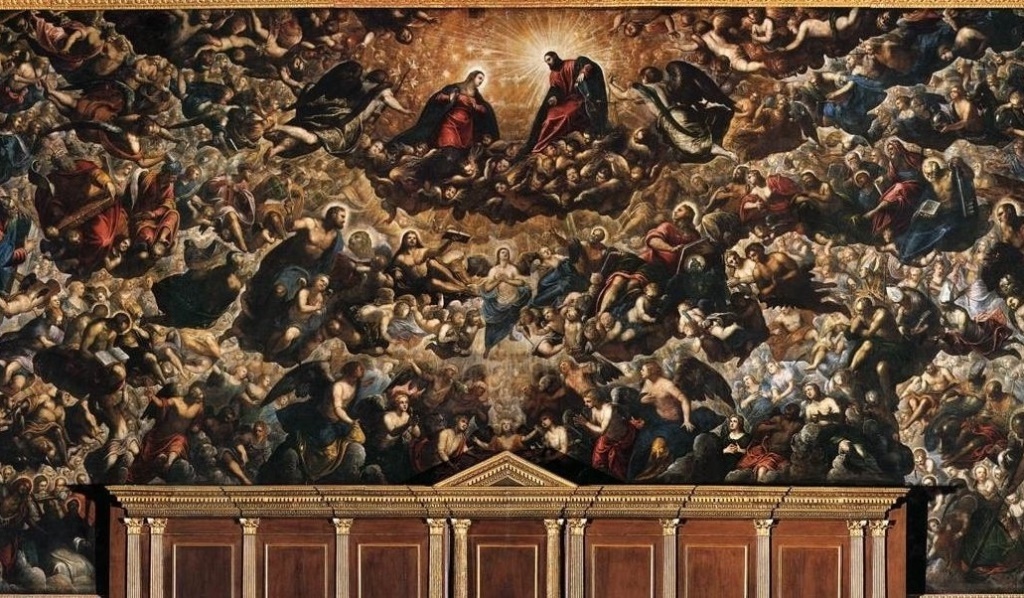
poems 'Such Was My Prayer' and Other Poetry by James Sale

Such Was My Prayer

Such was my prayer. And she, so far away,
Or so it seemed, looked down at me and smiled;
Then to Eternal Light she turned once more.
-Paradiso 31.91-93, Dante

Such was my prayer – she so far away –
And yet so near – as night shifts to day –
My hands outstretched as I implored, explored
Her smile, what it might mean, from where she soared
So far above me: to look induced vertigo
Along with loss, for there I could not go;
Yet had she turned to me, and turned to smile,
That hope wimpling across her face the while;
But then … but then, having deigned to turn,
She turned once more to stare and doing, burn.

And as she did, within herself lit more,
Renewed her radiance, just knelt before
God opening light behind wood’s opaque door.


In Telling This Story

In telling this story I am awake:
Before I slept but in the myth there is
Something, some such power – I weep – for whose sake
All is endured: this living crisis.

In telling this story I am alive:
Before, like one dead and deadened to bliss,
Like one – truly – who has embraced the grave;
And now the narrative that will not miss.

In telling this story I am transformed:
Before a bubble, bloated on a pond
Of slime, an accident, unlikely, spawned;
Yet glory – see! – art fashioned and in hand.

In telling this story I am a god:
Before I felt so human, puny, frail,
As if somehow inside so bad, no good;
But now a joy beyond that cannot fail.


James Sale, FRSA is a leading expert on motivation, and the creator and licensor of Motivational Maps worldwide. James has been writing poetry for over 40 years and has seven collections of poems published, including most recently, Inside the Whale, his metaphor for being in hospital and surviving cancer, which afflicted him in 2011. He can be found at www.jamessale.co.uk and contacted at james@motivational maps.com. He is the winner of Second Prize in the Society’s 2015 Competition.


ShareTweetPin
The Society of Classical Poets does not endorse any views expressed in individual poems or commentary.
Read Our Comments Policy Here

RandomPoems

poetry/Wilson/dog
Beauty

‘So Much Depends upon a Dog’ by André Le Mont Wilson

February 17, 2023

. So Much Depends upon a Dog So much depends upon a dog The earth revolves around the sun. Each...

‘Galahad_2000’: A Poem by Josh Olson
Culture

‘Galahad_2000’: A Poem by Josh Olson

October 23, 2025

  Galahad_2000 Donning his abs and armor, broadsword at his side, _He cleaved his way through orc-infested lands Quest after...

Next Post
‘The Poet’s Purpose’ and Other Poetry by Gleb Zavlanov

'The Poet's Purpose' and Other Poetry by Gleb Zavlanov

2017 Poetry Competition

2017 Poetry Competition

‘…That Cruelest Spring’ by Daniel P. Rattelle

'...That Cruelest Spring' by Daniel P. Rattelle

Comments 8

  1. John Toivonen says:
    10 years ago

    I like how telling the story results in transformation. I believe that the act of writing is an attempt to turn the writer into some type of demi-god or hero. I saw that you published a book entitled Inside the Whale. I suspect that you have read it, but if you are not familiar with the essay, read “Inside the Whale” by George Orwell. It is a critique of the world view of Henry Miller.

    Reply
    • James Sale says:
      9 years ago

      Thank you John – you are right about the transformation, and indeed, as a young Eng Lit student for exams in England when I was 19 I did study Orwell’s Inside the Whale. I am of the view that Orwell was no poet, but that his Fable, Animal Farm, still remains the greatest satire on politics of the C20th – sh sharp, so to the point!

      Reply
  2. John Kolyav says:
    9 years ago

    The endurance required for living in this world is enormous. When reading the poem together with the bio-data I think the poet faced a precarious life. However, the will to face hardships help him to write. Good poetry. Regards!

    Reply
  3. James Sale says:
    9 years ago

    Thank you John – yes, life is a challenge – and in that is the fantastic opportunity that we get and which I feel enormous gratitude for. As GK Chesterton put: ‘gratitude: the highest form of thought’.

    Reply
  4. Joseph Charles MacKenzie says:
    9 years ago

    Thinking more about and getting to know James Sale’s work yields many rewards. “Such Was My Prayer” is all I mean by the Ars Poetica Nova. It is the perfect type of poem, representative of both the new scholarship and new versification. The new scholarship which honors the very best models of the past through loving and meticulous apprenticeship (the first condition of the Ars Poetica Nova), if not the simple richness of the poet’s personal culture, and the new versification that crafts with exquisite care an opening into the world of highest truth, just where, as in this case, we find ourselves reconnecting with Dante’s essential character. This is the new direction. Modernism is low and horizontal. The Ars Poetica Nova spans all dimensions but privileges the vertical. “Such Was My Prayer” typifies the elevation, the rarefied loftiness of the Nouvelle Poesie. For this reason, I find Mr. Sale’s poem not only gorgeous andmemorable, but exciting as well. If Mr. Sale remained in this space alone (where he is evidently quite comfortable and at home), our Anglo-American poetry would live anew.

    Reply
    • James Sale says:
      9 years ago

      Thank you so much Joseph for your comments, especially the words ‘live anew’, which mean so much to me, as so many of my poems are exactly about that topic – living anew in the spiritual depths of life. This is encouragement indeed. I ought also to say for readers of these pages that it may appear – since I have just had published an extremely positive review of your 77 Sonnets – that it may seem as if we are in some mutual admiration society or back-slapping club: you like my work and so I’ll like yours! But for the record, so people are clear, I have never met you, and only encountered your work through SCP. I immediately saw how powerful and significant your poetry is. If you like my poetry that is good too, but it would not affect my reviewing of your work – and I’d like to think, your reviewing of mine. At the end of the day we have to stand on our integrity regarding the discipline that we – and other readers of SCP – love and stand for. Indeed, the fact that people like us are drawn together – and others too on SCP – is highly likely; and if friendships occur, then that too is highly likely, for the obvious reason that there is or are massive values that we share, as well as a profound sense of purpose: to reintroduce the beauty of poetry to the English language – or however we wish to express that. It would be pretty awful if sharing this ambition all those sharing it were fighting like cats and dogs – for a house divided cannot stand. So thank you again – your support is truly appreciated.

      Reply
      • Joseph Charles MacKenzie says:
        9 years ago

        The members of an école have every right to enjoy each other’s work. The public is invited to enjoy their correspondences. This is part of the vibrancy of all major paradigm shifts in the history of letters. The illustrious members of the Hôtel de Rambouillet, and two centuries later those of the Hôtel Lambert, communicated with each other more in public than in private. The letters of the Romantiques were published in everywhere. the epistolary novel enjoyed a resurgence as a result. Poets are said to constitute a brotherhood. The withered old cliques of the academic establishment were incestuous in their mutual support of each other’s mediocrity. Why should not honest men of learning be vocal in their support of true genius? Modernism lies rotting in its grave of shallowness. We are the poets of the new age whose rules are governed by literary, as opposed to political values. We invite the public to share in our excitement.

        Reply
        • James Sale says:
          9 years ago

          Wow – well said!!! OK – I am with you! Like Odysseus, let’s leave the wreck of Troy to find our way home.

          Reply

Leave a Reply Cancel reply

Your email address will not be published. Required fields are marked *

  1. Joseph S. Salemi on ‘Archaic Torso of Apollo’ by Rainer Maria Rilke, Translated by Mary Jane MyersJune 30, 2026

    Brian -- yes, I think "or pulse as starlight flares" would be absolutely right. It gets rid of "quasar" and…

  2. Brian Yapko on ‘Archaic Torso of Apollo’ by Rainer Maria Rilke, Translated by Mary Jane MyersJune 30, 2026

    Mary Jane, this is a wonderful translation of Rilke's original German. I love how you maintained the rhyme-scheme and the…

  3. Zumwalt on ‘Archaic Torso of Apollo’ by Rainer Maria Rilke, Translated by Mary Jane MyersJune 30, 2026

    Wow! Very impressive, and imaginatively creative, translation feat!

  4. James Sale on ‘Then and Now’: A Sonnet by James SaleJune 30, 2026

    Good advice Nathan - totally agree.

  5. Russel Winick on ‘Not Small At All’ and Other Short Poems by Russel WinickJune 29, 2026

    Thanks Margaret. Speaking of Langston Hughes, it’s an endless fascination to me that my (and many other people’s) two favorite…

Subscribe to Daily Poems

Enter your email address to subscribe to this blog and receive notifications of new posts by email.

Join 1,592 other subscribers

Recent Poems

  • ‘Archaic Torso of Apollo’ by Rainer Maria Rilke, Translated by Mary Jane Myers
  • ‘The Council of Infinite Opinions’: A Poem by David Lee
  • Odyssey Audiobook Serialization Begins: First Fully Dramatized Version
  • ‘Not Small At All’ and Other Short Poems by Russel Winick
  • ‘The Roommate’: A Poem by Jeffrey Essmann
  • ‘Pouting Polly’: A Poem by Robert Nachtegall
  • Two Satirical Sonnets by Joseph S. Salemi
  • ‘Then and Now’: A Sonnet by James Sale
  • ‘The Ministry of Twee’: A Poem by Susan Jarvis Bryant
  • ‘Breath of Night’: A Poem by Paulette Calasibetta
  • A Song Inspired by Edward Rowland Sill’s ‘Among the Redwoods’, by Gunny Markefka
  • ‘Kaddish for My Father’: A Poem by Brian Yapko
  • ‘Canceled’ and Other Limericks by Joseph Mason
  • ‘The Diamond’: A Marriage Proposal Poem by Adam Sedia
  • ‘The Dancer’ and Other Rondeaux by David Murphy
  • ‘Chastity’: A Sonnet Sequence by Justin Dasher
  • Horace Odes I.11 and III.30, Translated by Mary Jane Myers
  • ‘The Bird with the Ugly Voice’: A Poem by Scharlie Meeuws
  • ‘The Dryads’: A Poem by Patricia Rogers Crozier
  • ‘Stories of Saint Anthony’: Poems by Margaret Coats
  • ‘An Englishman to World Cups Past’: A Poem by Paul A. Freeman
  • ‘Faux Pas’ and Other Poetry by C.B. Anderson
  • ‘Trip to Italy: A Poetry Travel Journal’ by James A. Tweedie
  • ‘Spring Song’: A Poem by Rohini Sunderam
  • ‘The Eagle’: A Poem by Bruce Dale Wise
  • ‘Good Night’ and Other Poetry by Kevin Ahern
  • ‘Mothiavelli’ and Other Poetry by Susan Jarvis Bryant
  • ‘Poetic Justices: The Poetry of United States Supreme Court Justices’: An Essay by Adam Sedia
  • ‘Blur’ and Other Poems by Anna J. Arredondo
  • ‘The Cottage on the Ridge’ and Other Poetry by Martin Rizley

Categories

  • Acrostic
  • Alexandroid
  • Alliterative
  • Art
  • Best Poems
  • Blank Verse
  • Chant Royal
  • Classical Poets Live
  • Clerihew
  • Covid-19
  • Deconstructing Communism
  • Educational
  • Epic
  • Epigrams and Proverbs
  • Essays
    • Interviews with Poets
    • Poetry Reviews
  • Featured
  • From the Society
  • Great Poets
    • Dante Alighieri
    • Edgar Allan Poe
    • Emily Dickinson
    • Geoffrey Chaucer
    • Henry Wadsworth Longfellow
    • Homer
    • John Keats
    • John Milton
    • Robert Frost
    • William Blake
    • William Shakespeare
    • William Wordsworth
  • Human Rights in China
  • Limerick
  • Love Poems
  • Music
  • Pantoum
  • Performing Arts
  • Poetry
    • Beauty
    • Children's Poems
    • Culture
    • Ekphrastic
    • Found Poems
    • High School Poets
    • Humor
    • Riddles
  • Poetry Challenge
  • Poetry Contests
  • Poetry Forms
    • Curtal Sonnet
    • Haiku
  • Poetry Readings
  • Rhupunt
  • Rondeau
  • Rondeau Redoublé
  • Rondel
  • Rubaiyat
  • Sapphic Verse
  • Satire
  • Science
  • Sestina
  • Shape Poems
  • Short Stories
  • Song Lyrics
  • Sonnet
  • Symposium
  • Terrorism
  • Terza Rima
  • The Environment
  • Translation
  • Triolet
  • Video
  • Villanelle

Quick Links

  • About Us
  • Submit Poetry
  • Become a Member
  • Members List
  • Support the Society
  • Advertisement Placement
  • Comments Policy
  • Terms of Use

Welcome Back!

Login to your account below

Forgotten Password?

Retrieve your password

Please enter your username or email address to reset your password.

Log In
No Result
View All Result
  • Poems
    • Beauty
    • Culture
    • Satire
    • Humor
    • Children’s
    • Art
    • Ekphrastic
    • Epic
    • Epigrams and Proverbs
    • Human Rights in China
    • Music
    • Performing Arts
    • Riddles
    • Science
    • Song Lyrics
    • The Environment
    • The Raven
    • Found Poems
    • High School Poets
    • Terrorism
    • Covid-19
  • Poetry Forms
    • Sonnet
    • Haiku
    • Limerick
    • Villanelle
    • Rondeau
    • Pantoum
    • Sestina
    • Triolet
    • Acrostic
    • Alexandroid
    • Alliterative
    • Blank Verse
    • Chant Royal
    • Clerihew
    • Rhupunt
    • Rondeau Redoublé
    • Rondel
    • Rubaiyat
    • Sapphic Verse
    • Shape Poems
    • Terza Rima
  • Great Poets
    • Geoffrey Chaucer
    • Emily Dickinson
    • Homer
    • Henry Wadsworth Longfellow
    • Dante Alighieri
    • John Keats
    • John Milton
    • Edgar Allan Poe
    • William Shakespeare
    • William Wordsworth
    • William Blake
    • Robert Frost
  • Love Poems
  • Contests
  • SCP Academy
    • Educational
    • Teaching Classical Poetry—A Guide for Educators
    • Poetry Forms
    • The SCP Journal
    • Books

© 2025 SCP. WebDesign by CODEC Prime.