• Submit Poetry
  • Support SCP
  • About Us
  • Members
  • Join
Thursday, August 6, 2026
Society of Classical Poets
  • Poems
    • Beauty
    • Culture
    • Satire
    • Humor
    • Children’s
    • Art
    • Ekphrastic
    • Epic
    • Epigrams and Proverbs
    • Human Rights in China
    • Music
    • Performing Arts
    • Riddles
    • Science
    • Song Lyrics
    • The Environment
    • The Raven
    • Found Poems
    • High School Poets
    • Terrorism
    • Covid-19
  • Poetry Forms
    • Sonnet
    • Haiku
    • Limerick
    • Villanelle
    • Rondeau
    • Pantoum
    • Sestina
    • Triolet
    • Acrostic
    • Alexandroid
    • Alliterative
    • Blank Verse
    • Chant Royal
    • Clerihew
    • Rhupunt
    • Rondeau Redoublé
    • Rondel
    • Rubaiyat
    • Sapphic Verse
    • Shape Poems
    • Terza Rima
  • Great Poets
    • Geoffrey Chaucer
    • Emily Dickinson
    • Homer
    • Henry Wadsworth Longfellow
    • Dante Alighieri
    • John Keats
    • John Milton
    • Edgar Allan Poe
    • William Shakespeare
    • William Wordsworth
    • William Blake
    • Robert Frost
  • Love Poems
  • Contests
  • SCP Academy
    • Educational
    • Teaching Classical Poetry—A Guide for Educators
    • Poetry Forms
    • The SCP Journal
    • Books
No Result
View All Result
Society of Classical Poets
  • Poems
    • Beauty
    • Culture
    • Satire
    • Humor
    • Children’s
    • Art
    • Ekphrastic
    • Epic
    • Epigrams and Proverbs
    • Human Rights in China
    • Music
    • Performing Arts
    • Riddles
    • Science
    • Song Lyrics
    • The Environment
    • The Raven
    • Found Poems
    • High School Poets
    • Terrorism
    • Covid-19
  • Poetry Forms
    • Sonnet
    • Haiku
    • Limerick
    • Villanelle
    • Rondeau
    • Pantoum
    • Sestina
    • Triolet
    • Acrostic
    • Alexandroid
    • Alliterative
    • Blank Verse
    • Chant Royal
    • Clerihew
    • Rhupunt
    • Rondeau Redoublé
    • Rondel
    • Rubaiyat
    • Sapphic Verse
    • Shape Poems
    • Terza Rima
  • Great Poets
    • Geoffrey Chaucer
    • Emily Dickinson
    • Homer
    • Henry Wadsworth Longfellow
    • Dante Alighieri
    • John Keats
    • John Milton
    • Edgar Allan Poe
    • William Shakespeare
    • William Wordsworth
    • William Blake
    • Robert Frost
  • Love Poems
  • Contests
  • SCP Academy
    • Educational
    • Teaching Classical Poetry—A Guide for Educators
    • Poetry Forms
    • The SCP Journal
    • Books
No Result
View All Result
Society of Classical Poets
No Result
View All Result
Home Poetry Beauty

‘Original Smile’ and Other Poetry by Stephen M. Dickey

March 6, 2024
in Beauty, Poetry
A A
10
poems 'Original Smile' and Other Poetry by Stephen M. Dickey

.

Original Smile

Fossil remains show nothing of the first
Facial flourish dimpling a human cheek.
Was it some reflex as a female nursed
Her young one, charmed by its whimpering squeak?
(Or her initial invite to the male?)
Whatever the details of the episode,
The impact must have been too big to fail,
Thus giving birth to joy’s embodied code.
From there that proto-smile, that smile of smiles,
Began to ricochet from face to face,
Here heartfelt, there more forced, or used in wiles . . .
(Our mindreading has hardly kept up pace.)
Even through tears, or lost in reverie,
It’s stowed in us, our muscle memory.

.

.

Plan Gone Down

Your dearly laid plan’s gone down as the laughingstock
Of a cruel cosmos that’s eclipsed it with a wink.
You can degrade in half-life from this dreary knock,
Or just let Time slip its old Mickey in your drink.

.

.

Stephen M. Dickey is a Slavic linguist at the University of Kansas. He has published widely on Slavic verbal categories, and has published translations of Bosnian, Croatian, and Serbian fiction and poetry including Meša Selimović’s Death and the Dervish, Borislav Pekić’s How to Quiet a Vampire, and Miljenko Jergović’s Ruta Tannenbaum. He has published poetry in various journals including Shot Glass Journal, Trinacria, The Lyric, Rat’s Ass Review, Lighten Up Online, Better Than Starbucks, Asses of Parnassus, and Blue Unicorn.

ShareTweetPin
The Society of Classical Poets does not endorse any views expressed in individual poems or commentary.
Read Our Comments Policy Here

RandomPoems

Poetry

‘Grains of Time’ and Other Poetry by Dino Cass

June 5, 2013

Grains of Time Somewhere through the hour glass, slip grains of time, eroding fast. Past and present times collide, revealing...

‘Lucky’ and Other Poetry by Russel Winick
Beauty

‘Lucky’ and Other Poetry by Russel Winick

July 24, 2021

. Lucky It stormed around our house last night, The lightning turned the black sky bright. Tornadoes came to join...

Next Post
poem/woodruff/wef/davos 2023

'Philanthropaths & Puppets': A Poem by Susan Jarvis Bryant

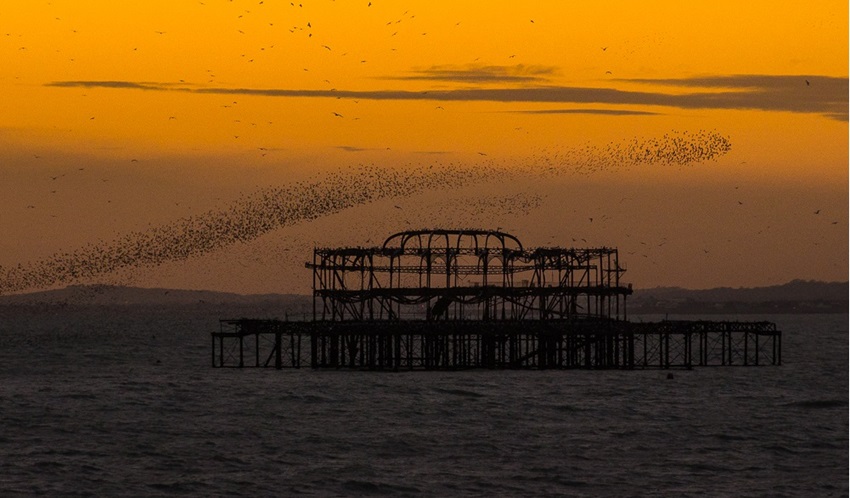
‘A Wing-stroked Spectacle’: A Poem by Daniel Moreschi

'Sunday Morning Flock of Starlings': A Poem by Bruce Dale Wise

‘Home Invasions’: Three Poems by James A. Tweedie

'Home Invasions': Three Poems by James A. Tweedie

Comments 10

  1. Jeremiah Johnson says:
    2 years ago

    I like “facial flourish” “proto smile” and “ricochet from face to face” – and the all around uniqueness of your subject. Feels like it lends new significance and freshness to cultural artifacts like the Mona Lisa 🙂 I’m going to share this one with my students!

    Reply
  2. Joseph S. Salemi says:
    2 years ago

    I agree with Jeremiah on this — there is a sharp use of language here that is the heart of interesting poetry. “Whimpering squeak,” “joy’s embodied code,” “our muscle memory,” and most especially “slip its old Mickey in your drink.” That’s an old Noo Yawk expression that I haven’t heard in years, and it made me laugh.

    Reply
  3. Susan Jarvis Bryant says:
    2 years ago

    Stephen, your beautifully composed, disturbing sonnet swept me up in a sci-fi feel with its crack-the-code ponderings on the evolution of the smile. To me, it says everything about the attitude towards mankind today where smiles boil down to “muscle memory” and nothing more. The closing couplet is powerful and poignant.

    I like the wry humor of “Plan Gone Down” which seems to pair perfectly with “Original Smile”. Thank you!

    Reply
  4. Margaret Coats says:
    2 years ago

    Stephen, I know of a few scientists who consider themselves students of creation, and they say there is nothing more fascinating to think about than origins. And they are the happiest academics I know! Your poem thus has a most intriguing concept, worked out in the entertaining questions of when and how and why the human smile came into being. “Joy’s embodied code” is an excellent description, linking the emotion and the face with a term often employed for DNA. I like “ricochet from face to face” as well, as it brings to mind atomic collisions in the formation of elements. And there’s the fade-out of triple rhymes (lesser or no accent on the last syllable) “reverie” and “memory.” Good way to stow a smile as the poem’s thought concludes.

    Reply
  5. Paul A. Freeman says:
    2 years ago

    I love the play in the title on the rather serious topic of ‘original sin’, then giving us the opposite and leaving us with a genuine smile.

    Plane Goes Down so succinctly encapsulates Man’s attempts to reach for the stars being brought down to earth by the Fates.

    Thanks for the reads, Stephen.

    Reply
  6. Stephen M. Dickey says:
    2 years ago

    Thank you all for your kind comments, they are truly humbling.
    I was wondering whether the Mona Lisa would make an appearance here, but I think Evan made a better pick with this smile, which I have never seen before—it’s got some of that mischief that I was going for.
    Jeremiah, I’m particularly honored you’re going to show it to your students, hopefully that goes well. I feel compelled to say that when you post I get into a chain of associations—your namesake was quite the role model for me growing up.

    Reply
  7. C.B. Anderson says:
    2 years ago

    As you note, Stephen, soft tissue is rarely (if ever) preserved in the fossile record. And I would bet that the first smiles were not so wide as to show teeth.

    The fatalism of the second poem strikes a familiar chord that’s darker than the inevitable harmonies of the first.

    Reply
  8. Daniel Kemper says:
    2 years ago

    The thing I love about this poem is that it brings a severe irony to the fore with a warm and human affection. The irony is that those who study origins of humans, get so deep into bones and codes that they forget about the person.

    Your poem poignantly reminds us of the most important things.

    A comment on the theory (becoming theories) of evolution. They’re all in trouble. Behind the scenes, folks like the inimitable David Berlinski say the contradictions are piling up.

    In my opinion — you heard it here first — the besetting problem of all theories is directionality. Directionality. As soon as they get near anything involving defining what “fittest” means, and all that falls under that umbrella, irreducible contradictions form.

    If they regard change with the same equanimity we see geological change over epochs, or the change of ocean waves over moments, no direction, no predictability beyond a certain window (like weather), then their theories cohere nicely.

    But then they utterly forfeit all possible ability to supplant Christianity.

    Reply
  9. Mike Bryant says:
    2 years ago

    I really love this poem, the evident thought that went into it and the flow of the logic from beginning to end. I also see this as the evolution of the smile as it passes generations but just noted Susan’s highlighting of the word “code.” For me that is the turn of this poem. The discovery of DNA and the rise of computer science have disproven the theory of evolution. Someone wrote that code and it definitely included joy.

    Reply
    • Stephen M. Dickey says:
      2 years ago

      Thanks for the comments, very interesting to read!
      Honestly, I didn’t think the piece would prompt such reflection!
      Best,
      Stephen

      Reply

Leave a Reply Cancel reply

Your email address will not be published. Required fields are marked *


  1. Michael Pietrack on ‘Good and Evil, a True Story’: A Poem by Roy E. PetersonAugust 5, 2026

    Enjoyed it. I’ve heard some propose that Jehovah must not be entirely good and perfect since he created Satan as…

  2. Michael Pietrack on ‘People Forget’: A Poem by James SaleAugust 5, 2026

    Sad. I read this line a few times: People forget: their loved ones go, That dirt retains its own, that…

  3. Cynthia L Erlandson on ‘Who Hears a Robot’s Prayer?’ and Other Poetry by Brian YapkoAugust 5, 2026

    I really can't add anything to what's been said in the comments above, except that when I read the final…

  4. Cynthia L Erlandson on ‘People Forget’: A Poem by James SaleAugust 5, 2026

    As you get the reader thinking about forgetting, we remember these things and see how profound they are. It expands…

  5. Nelson Garner on ‘People Forget’: A Poem by James SaleAugust 5, 2026

    The poem on forgetting does not apply to Christians. We are constantly reminded of the plight of mankind but we…

Subscribe to Daily Poems

Enter your email address to subscribe to this blog and receive notifications of new posts by email.

Join 1,604 other subscribers

Recent Poems

  • ‘People Forget’: A Poem by James Sale
  • ‘Good and Evil, a True Story’: A Poem by Roy E. Peterson
  • ‘The Royal Arse Hortillery’: A Poem on the Spoonerism, by Jeff Eardley
  • ‘Who Hears a Robot’s Prayer?’ and Other Poetry by Brian Yapko
  • The Society of Classical Poets 2026 Haiku Competition
  • Four Love Sonnets by Adam Sedia
  • ‘Rasputina Confers with Her Cohorts’: A Poem by Joseph S. Salemi
  • ‘Warfare by Remote Control’: A Poem by Paul A. Freeman
  • ‘The Passing’: A Poem by Margaret Brinton
  • ‘Of Webs and Whispers’: A Poem by Susan Jarvis Bryant
  • Poetry Book Review: Petrarch’s Canzoniere, Translated by A.M. Juster
  • ‘What Folly Dares’ and Other Love Poems by James A. Tweedie
  • ‘Allegrezza’ and Other Poetry by Rob Griffith
  • ‘The Lessons of Lot’: A Poem by Adam Wasem
  • ‘Prophecy and Divine Intervention in Virgil’s Aeneid’: An Essay by Kaitlyn Brown
  • ‘The Last Voyage of Barnaby Bear’: A Poem by Tashvi Reddy
  • ‘Impressions’ and Other Poems by Russel Winick
  • ‘The Reveal of the Rocks’: A Poem by Kyle Fiske
  • ‘Art Work’: A Poem by T.M. Moore
  • ‘A Strange Sun’: A Poem by Patricia Rogers Crozier
  • ‘Shave Off Those Whiskers’: A Poem by Roy E. Peterson
  • ‘The Man from China’: A Poem by Evan Mantyk
  • ‘The Ballad of the Ghost Mountain Boys’: A Poem by Rachel Lott
  • ‘The Threat of Virtue’: A Poem by Zumwalt
  • ‘A Poet at the Tower’ and Other Poetry by Michael C. Paul
  • ‘Florence Foster Jenkins’ and Other Poetry by Brian Yapko
  • Winners and Rankings of The Great American Poetry Competition
  • ‘The Gold Star Mother’: A Poem by Gerard Maritato
  • ‘An American Dash’: A Poem by Linda Ellis
  • ‘The Anonymous Soldier’: A Poem by Lucy Lind

Categories

  • Acrostic
  • Alexandroid
  • Alliterative
  • Art
  • Best Poems
  • Blank Verse
  • Chant Royal
  • Classical Poets Live
  • Clerihew
  • Covid-19
  • Deconstructing Communism
  • Educational
  • Epic
  • Epigrams and Proverbs
  • Essays
    • Interviews with Poets
    • Poetry Reviews
  • Featured
  • From the Society
  • Great Poets
    • Dante Alighieri
    • Edgar Allan Poe
    • Emily Dickinson
    • Geoffrey Chaucer
    • Henry Wadsworth Longfellow
    • Homer
    • John Keats
    • John Milton
    • Robert Frost
    • William Blake
    • William Shakespeare
    • William Wordsworth
  • Human Rights in China
  • Limerick
  • Love Poems
  • Music
  • Pantoum
  • Performing Arts
  • Poetry
    • Beauty
    • Children's Poems
    • Culture
    • Ekphrastic
    • Found Poems
    • High School Poets
    • Humor
    • Riddles
  • Poetry Challenge
  • Poetry Contests
  • Poetry Forms
    • Curtal Sonnet
    • Haiku
  • Poetry Readings
  • Rhupunt
  • Rondeau
  • Rondeau Redoublé
  • Rondel
  • Rubaiyat
  • Sapphic Verse
  • Satire
  • Science
  • Sestina
  • Shape Poems
  • Short Stories
  • Song Lyrics
  • Sonnet
  • Symposium
  • Terrorism
  • Terza Rima
  • The Environment
  • Translation
  • Triolet
  • Video
  • Villanelle

Quick Links

  • About Us
  • Submit Poetry
  • Become a Member
  • Members List
  • Support the Society
  • Advertisement Placement
  • Comments Policy
  • Terms of Use

Welcome Back!

Login to your account below

Forgotten Password?

Retrieve your password

Please enter your username or email address to reset your password.

Log In
No Result
View All Result
  • Poems
    • Beauty
    • Culture
    • Satire
    • Humor
    • Children’s
    • Art
    • Ekphrastic
    • Epic
    • Epigrams and Proverbs
    • Human Rights in China
    • Music
    • Performing Arts
    • Riddles
    • Science
    • Song Lyrics
    • The Environment
    • The Raven
    • Found Poems
    • High School Poets
    • Terrorism
    • Covid-19
  • Poetry Forms
    • Sonnet
    • Haiku
    • Limerick
    • Villanelle
    • Rondeau
    • Pantoum
    • Sestina
    • Triolet
    • Acrostic
    • Alexandroid
    • Alliterative
    • Blank Verse
    • Chant Royal
    • Clerihew
    • Rhupunt
    • Rondeau Redoublé
    • Rondel
    • Rubaiyat
    • Sapphic Verse
    • Shape Poems
    • Terza Rima
  • Great Poets
    • Geoffrey Chaucer
    • Emily Dickinson
    • Homer
    • Henry Wadsworth Longfellow
    • Dante Alighieri
    • John Keats
    • John Milton
    • Edgar Allan Poe
    • William Shakespeare
    • William Wordsworth
    • William Blake
    • Robert Frost
  • Love Poems
  • Contests
  • SCP Academy
    • Educational
    • Teaching Classical Poetry—A Guide for Educators
    • Poetry Forms
    • The SCP Journal
    • Books

© 2025 SCP. WebDesign by CODEC Prime.