• Submit Poetry
  • Support SCP
  • About Us
  • Members
  • Join
Tuesday, June 30, 2026
Society of Classical Poets
  • Poems
    • Beauty
    • Culture
    • Satire
    • Humor
    • Children’s
    • Art
    • Ekphrastic
    • Epic
    • Epigrams and Proverbs
    • Human Rights in China
    • Music
    • Performing Arts
    • Riddles
    • Science
    • Song Lyrics
    • The Environment
    • The Raven
    • Found Poems
    • High School Poets
    • Terrorism
    • Covid-19
  • Poetry Forms
    • Sonnet
    • Haiku
    • Limerick
    • Villanelle
    • Rondeau
    • Pantoum
    • Sestina
    • Triolet
    • Acrostic
    • Alexandroid
    • Alliterative
    • Blank Verse
    • Chant Royal
    • Clerihew
    • Rhupunt
    • Rondeau Redoublé
    • Rondel
    • Rubaiyat
    • Sapphic Verse
    • Shape Poems
    • Terza Rima
  • Great Poets
    • Geoffrey Chaucer
    • Emily Dickinson
    • Homer
    • Henry Wadsworth Longfellow
    • Dante Alighieri
    • John Keats
    • John Milton
    • Edgar Allan Poe
    • William Shakespeare
    • William Wordsworth
    • William Blake
    • Robert Frost
  • Love Poems
  • Contests
  • SCP Academy
    • Educational
    • Teaching Classical Poetry—A Guide for Educators
    • Poetry Forms
    • The SCP Journal
    • Books
No Result
View All Result
Society of Classical Poets
  • Poems
    • Beauty
    • Culture
    • Satire
    • Humor
    • Children’s
    • Art
    • Ekphrastic
    • Epic
    • Epigrams and Proverbs
    • Human Rights in China
    • Music
    • Performing Arts
    • Riddles
    • Science
    • Song Lyrics
    • The Environment
    • The Raven
    • Found Poems
    • High School Poets
    • Terrorism
    • Covid-19
  • Poetry Forms
    • Sonnet
    • Haiku
    • Limerick
    • Villanelle
    • Rondeau
    • Pantoum
    • Sestina
    • Triolet
    • Acrostic
    • Alexandroid
    • Alliterative
    • Blank Verse
    • Chant Royal
    • Clerihew
    • Rhupunt
    • Rondeau Redoublé
    • Rondel
    • Rubaiyat
    • Sapphic Verse
    • Shape Poems
    • Terza Rima
  • Great Poets
    • Geoffrey Chaucer
    • Emily Dickinson
    • Homer
    • Henry Wadsworth Longfellow
    • Dante Alighieri
    • John Keats
    • John Milton
    • Edgar Allan Poe
    • William Shakespeare
    • William Wordsworth
    • William Blake
    • Robert Frost
  • Love Poems
  • Contests
  • SCP Academy
    • Educational
    • Teaching Classical Poetry—A Guide for Educators
    • Poetry Forms
    • The SCP Journal
    • Books
No Result
View All Result
Society of Classical Poets
No Result
View All Result
Home Poetry Culture

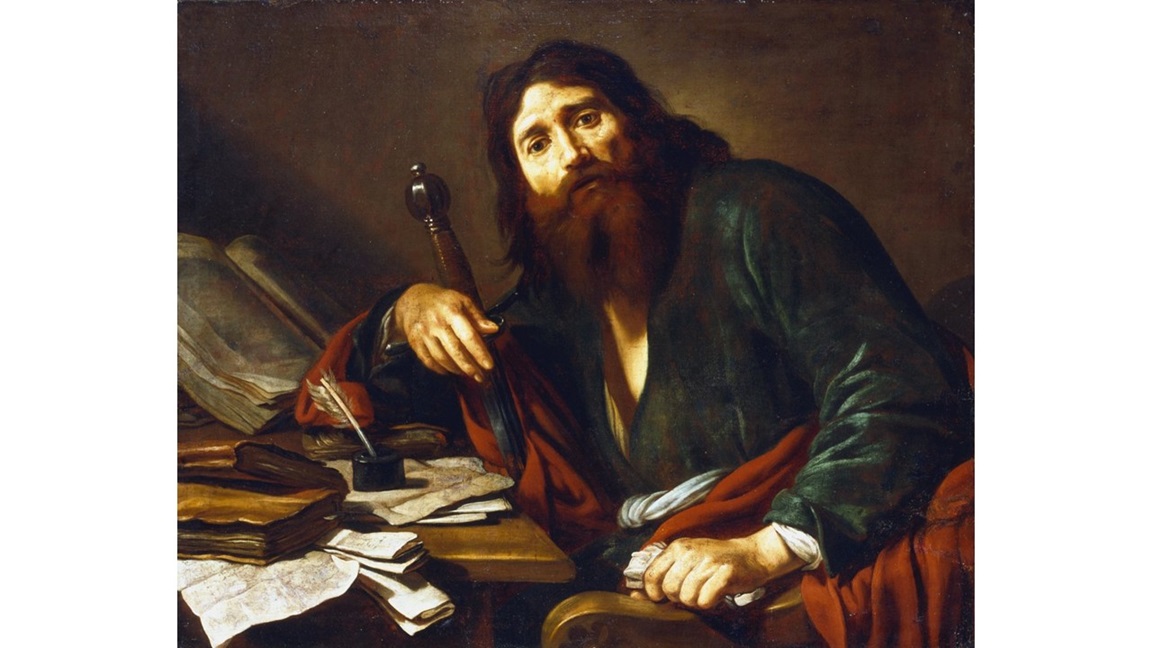
‘The Unknown God’: A Poem by Jeff Kemper

March 23, 2025
in Culture, Poetry
A A
11
poems 'The Unknown God': A Poem by Jeff Kemper

.

The Unknown God

—Paul’s Address at the Areopagus (Acts 17:22-31)

My dear Athenians, this I surveilled
While passing by: you’re quite religious men!
I scanned what you are worshiping, and then
I stopped before an altar that regaled
A god herewith: “This to an unknown god.”
As to this unknown god by whom you’re awed—
Let me unveil this deity you spin.

The God who made the world and all therein,
Who is the Master of both heaven and earth,
Lives not in man-made temples of great worth.
Nor is he served by human hands, wherein
He were by human requisites confined,
For he has granted all of humankind
Their very life and breath and everything.

God made the archetypal man to spring
Into a panoply of nation-states
That to this day on earth proliferates.
This God has set the times and seasoning
And boundaries of terrain on which they dwell,
That they should search for God, and hope may swell
That reaching out to him they’ll find him, too.

Yet he is not beyond our mind’s purview:
“In him we live and move and have our being.”
As some of your own poets are agreeing,
“We all are his offspring.” So, if that’s true,
As God’s own offspring, we ought not condone
The thought of God as gold, silver, or stone—
An image from the mind and craft of man.

Could God remit naivety? He can,
And he commands all everywhere: Repent!
For he has set a future day to vent
His righteous judgment on the world. His plan
Will use a man he has appointed. He
Has given evidence: This appointee
Was raised up from his own fatality.

.

.

Jeff Kemper has been a biology teacher, biblical studies instructor, editor, and painting contractor. He lives in York County, Pennsylvania.

ShareTweetPin
The Society of Classical Poets does not endorse any views expressed in individual poems or commentary.
Read Our Comments Policy Here

RandomPoems

‘Sepulcher’ by Brian Yapko
Beauty

‘Sepulcher’ by Brian Yapko

April 15, 2022

. Sepulcher Jerusalem is built of prayer and quarried stone, From yearning, heartache, sacred scrolls and ancient bone--- The shuls,...

‘Desire’: A Golden Shovel Poem after Langston Hughes’ ‘Dream,’ by Lucia Haase
Beauty

‘Desire’: A Golden Shovel Poem after Langston Hughes’ ‘Dream,’ by Lucia Haase

July 19, 2024

. Desire "Hold fast to dreams for if dreams die life is a broken-winged bird that cannot fly." ---Langston Hughes,...

Next Post
‘Boomerang’ and Other Poetry by James Bontrager

'Boomerang' and Other Poetry by James Bontrager

‘Learning Curves’: A Poem by Susan Jarvis Bryant

'Learning Curves': A Poem by Susan Jarvis Bryant

John Neihardt’s Epic ‘Cycle of the West’: A Video by Andrew Benson Brown

John Neihardt's Epic 'Cycle of the West': A Video by Andrew Benson Brown

Comments 11

  1. Roy Eugene Peterson says:
    1 year ago

    This worthwhile poem is a perfect prequel to Easter that juxtaposes the one who rose from the dead against those who have been imagined and set in stone or gold, there to repose.

    Reply
    • Jeff Kemper says:
      1 year ago

      Roy, that is an interesting connection that hadn’t occurred to me before. Assuming no prior knowledge of the Judeo-Christian God, this address is an apt introduction to the crux (the empty cross) of Christianity. Thanks for the suggestion.

      Reply
  2. Joseph S. Salemi says:
    1 year ago

    Paul didn’t have much success with highly educated Hellenistic Greeks in Athens, or elsewhere. For them he seemed to be preaching “foolishness” and “absurdity.” In Ephesus he was nearly lynched for denigrating the city’s patroness goddess, Diana of Ephesus, and had to skip town quickly. You can experience something similar if you go into Boston and start bad-mouthing the Red Sox.

    Paul didn’t seem to realize that the altar dedicated “to an unknown god” was merely an apotropaic device of protection, set up as a cautionary redundancy in case some minor deity had been overlooked and slighted in the official civic ceremonies.

    As a reader, I have a problem with recognizing who the speaker is in this poem. The first two stanzas are obviously in the voice of Paul. The third is not so clear, since it is more discursive rather than oratorical. The fourth is definitely Paul again, since he speaks of “your own poets” to the Greek audience. But the fifth stanza is confusing — are these the words of Paul to the audience, or are they the comments of the poet? Who is the “man he has appointed”? Is it Paul as an appointed preacher, or perhaps Christ as the one who “was raised up”?

    Reply
    • Jeff Kemper says:
      1 year ago

      What Paul knew or didn’t know was not the point. He was always ready to find an opportunity to give testimony to the truth, and his address here did elicit interest. His duty was to be faithful, not to get results. The latter was up to God.

      The whole poem is a paraphrase of the text in Acts, as indicated, and follows the words of Paul throughout. The phrase, “a man [Jesus] he [God] has appointed,” is from verse 31 and is the previous reference to “this appointee.” Paul did not mention Jesus by name. Nor did most of his listeners understand what he meant. Some of the audience, following their inquisitiveness, did convert, doubtless learning the identity of “this appointee.”

      Reply
  3. Mike Bryant says:
    1 year ago

    “The Unknown God” is very skillfully done. Paul’s Areopagus speech has always appealed to me and you’ve been faithful to the text with artistic flair. You retell Paul’s message and revitalize it through rhythm and rhyme. I think it’s interesting that the speech was so short, and the last lines more like a “teaser” to interest the Greeks in a more thorough look into this Jesus, who was raised up. And… it apparently worked!
    A great tribute!

    Reply
    • Jeff Kemper says:
      1 year ago

      Thanks, Mike. I used to have part of the speech memorized.
      Yes, it did work, or rather, God used it to bring a few converts to the knowledge of the truth.

      Reply
  4. Cynthia Erlandson says:
    1 year ago

    I love the way you’ve put this famous speech into rhyme and meter, Jeff. I’ve just re-read the speech from Acts, and I think you’ve been very accurate in your portrayal of its content, and it looks to me as if you’ve included each of Paul’s ideas.
    I particularly liked that you linked the stanzas together with the last-line-to-first-line rhymes.

    Reply
    • Jeff Kemper says:
      1 year ago

      Thanks, Cynthia, for your interest and comments.

      Reply
  5. Margaret Coats says:
    1 year ago

    Jeff, yours is a splendid choice of material for versifying, as the Areopagus speech took place at a significant moment in history, and quotes verses by a once-popular poet. Thanks to Paul, the lines by Aratos have resonated through millennia. As they are part of Holy Scripture, I would say they’re as divinely inspired as the rest of God’s word. What a marvel to think a pagan poet could produce such!

    Your Pauline style seems to be just what the Apostle might have used: an easy colloquial manner unafraid of learned vocabulary. He wanted to impress the Athenians and win them over, if they could respond to God’s grace. I like your thoughtful use of “seasoning” in line 18, and even more, your carefully placed subjunctive “He were” in line 12, to demonstrate the non-existent “as if” condition of God’s confinement by human requisites.

    Reply
    • Jeff Kemper says:
      1 year ago

      Thanks, Margaret. I appreciate your observations. And yes, I agree that pagan quotes in Scripture are indeed inspired as is the rest of Scripture.

      Reply
  6. James B says:
    1 year ago

    Great ending to a worthy topic.

    Reply

Leave a Reply Cancel reply

Your email address will not be published. Required fields are marked *

  1. Jan Mennite on ‘The Council of Infinite Opinions’: A Poem by David LeeJune 30, 2026

    Maybe if the louder had withdrawn and the wise had filled the floor, we might have reasoned, patient-focused medicine instead…

  2. Joseph S. Salemi on ‘Archaic Torso of Apollo’ by Rainer Maria Rilke, Translated by Mary Jane MyersJune 30, 2026

    Brian -- yes, I think "or pulse as starlight flares" would be absolutely right. It gets rid of "quasar" and…

  3. Brian Yapko on ‘Archaic Torso of Apollo’ by Rainer Maria Rilke, Translated by Mary Jane MyersJune 30, 2026

    Mary Jane, this is a wonderful translation of Rilke's original German. I love how you maintained the rhyme-scheme and the…

  4. Zumwalt on ‘Archaic Torso of Apollo’ by Rainer Maria Rilke, Translated by Mary Jane MyersJune 30, 2026

    Wow! Very impressive, and imaginatively creative, translation feat!

  5. James Sale on ‘Then and Now’: A Sonnet by James SaleJune 30, 2026

    Good advice Nathan - totally agree.

Subscribe to Daily Poems

Enter your email address to subscribe to this blog and receive notifications of new posts by email.

Join 1,592 other subscribers

Recent Poems

  • ‘Archaic Torso of Apollo’ by Rainer Maria Rilke, Translated by Mary Jane Myers
  • ‘The Council of Infinite Opinions’: A Poem by David Lee
  • Odyssey Audiobook Serialization Begins: First Fully Dramatized Version
  • ‘Not Small At All’ and Other Short Poems by Russel Winick
  • ‘The Roommate’: A Poem by Jeffrey Essmann
  • ‘Pouting Polly’: A Poem by Robert Nachtegall
  • Two Satirical Sonnets by Joseph S. Salemi
  • ‘Then and Now’: A Sonnet by James Sale
  • ‘The Ministry of Twee’: A Poem by Susan Jarvis Bryant
  • ‘Breath of Night’: A Poem by Paulette Calasibetta
  • A Song Inspired by Edward Rowland Sill’s ‘Among the Redwoods’, by Gunny Markefka
  • ‘Kaddish for My Father’: A Poem by Brian Yapko
  • ‘Canceled’ and Other Limericks by Joseph Mason
  • ‘The Diamond’: A Marriage Proposal Poem by Adam Sedia
  • ‘The Dancer’ and Other Rondeaux by David Murphy
  • ‘Chastity’: A Sonnet Sequence by Justin Dasher
  • Horace Odes I.11 and III.30, Translated by Mary Jane Myers
  • ‘The Bird with the Ugly Voice’: A Poem by Scharlie Meeuws
  • ‘The Dryads’: A Poem by Patricia Rogers Crozier
  • ‘Stories of Saint Anthony’: Poems by Margaret Coats
  • ‘An Englishman to World Cups Past’: A Poem by Paul A. Freeman
  • ‘Faux Pas’ and Other Poetry by C.B. Anderson
  • ‘Trip to Italy: A Poetry Travel Journal’ by James A. Tweedie
  • ‘Spring Song’: A Poem by Rohini Sunderam
  • ‘The Eagle’: A Poem by Bruce Dale Wise
  • ‘Good Night’ and Other Poetry by Kevin Ahern
  • ‘Mothiavelli’ and Other Poetry by Susan Jarvis Bryant
  • ‘Poetic Justices: The Poetry of United States Supreme Court Justices’: An Essay by Adam Sedia
  • ‘Blur’ and Other Poems by Anna J. Arredondo
  • ‘The Cottage on the Ridge’ and Other Poetry by Martin Rizley

Categories

  • Acrostic
  • Alexandroid
  • Alliterative
  • Art
  • Best Poems
  • Blank Verse
  • Chant Royal
  • Classical Poets Live
  • Clerihew
  • Covid-19
  • Deconstructing Communism
  • Educational
  • Epic
  • Epigrams and Proverbs
  • Essays
    • Interviews with Poets
    • Poetry Reviews
  • Featured
  • From the Society
  • Great Poets
    • Dante Alighieri
    • Edgar Allan Poe
    • Emily Dickinson
    • Geoffrey Chaucer
    • Henry Wadsworth Longfellow
    • Homer
    • John Keats
    • John Milton
    • Robert Frost
    • William Blake
    • William Shakespeare
    • William Wordsworth
  • Human Rights in China
  • Limerick
  • Love Poems
  • Music
  • Pantoum
  • Performing Arts
  • Poetry
    • Beauty
    • Children's Poems
    • Culture
    • Ekphrastic
    • Found Poems
    • High School Poets
    • Humor
    • Riddles
  • Poetry Challenge
  • Poetry Contests
  • Poetry Forms
    • Curtal Sonnet
    • Haiku
  • Poetry Readings
  • Rhupunt
  • Rondeau
  • Rondeau Redoublé
  • Rondel
  • Rubaiyat
  • Sapphic Verse
  • Satire
  • Science
  • Sestina
  • Shape Poems
  • Short Stories
  • Song Lyrics
  • Sonnet
  • Symposium
  • Terrorism
  • Terza Rima
  • The Environment
  • Translation
  • Triolet
  • Video
  • Villanelle

Quick Links

  • About Us
  • Submit Poetry
  • Become a Member
  • Members List
  • Support the Society
  • Advertisement Placement
  • Comments Policy
  • Terms of Use

Welcome Back!

Login to your account below

Forgotten Password?

Retrieve your password

Please enter your username or email address to reset your password.

Log In
No Result
View All Result
  • Poems
    • Beauty
    • Culture
    • Satire
    • Humor
    • Children’s
    • Art
    • Ekphrastic
    • Epic
    • Epigrams and Proverbs
    • Human Rights in China
    • Music
    • Performing Arts
    • Riddles
    • Science
    • Song Lyrics
    • The Environment
    • The Raven
    • Found Poems
    • High School Poets
    • Terrorism
    • Covid-19
  • Poetry Forms
    • Sonnet
    • Haiku
    • Limerick
    • Villanelle
    • Rondeau
    • Pantoum
    • Sestina
    • Triolet
    • Acrostic
    • Alexandroid
    • Alliterative
    • Blank Verse
    • Chant Royal
    • Clerihew
    • Rhupunt
    • Rondeau Redoublé
    • Rondel
    • Rubaiyat
    • Sapphic Verse
    • Shape Poems
    • Terza Rima
  • Great Poets
    • Geoffrey Chaucer
    • Emily Dickinson
    • Homer
    • Henry Wadsworth Longfellow
    • Dante Alighieri
    • John Keats
    • John Milton
    • Edgar Allan Poe
    • William Shakespeare
    • William Wordsworth
    • William Blake
    • Robert Frost
  • Love Poems
  • Contests
  • SCP Academy
    • Educational
    • Teaching Classical Poetry—A Guide for Educators
    • Poetry Forms
    • The SCP Journal
    • Books

© 2025 SCP. WebDesign by CODEC Prime.