• Submit Poetry
  • Support SCP
  • About Us
  • Members
  • Join
Tuesday, August 25, 2026
Society of Classical Poets
  • Poems
    • Beauty
    • Culture
    • Satire
    • Humor
    • Children’s
    • Art
    • Ekphrastic
    • Epic
    • Epigrams and Proverbs
    • Human Rights in China
    • Music
    • Performing Arts
    • Riddles
    • Science
    • Song Lyrics
    • The Environment
    • The Raven
    • Found Poems
    • High School Poets
    • Terrorism
    • Covid-19
  • Poetry Forms
    • Sonnet
    • Haiku
    • Limerick
    • Villanelle
    • Rondeau
    • Pantoum
    • Sestina
    • Triolet
    • Acrostic
    • Alexandroid
    • Alliterative
    • Blank Verse
    • Chant Royal
    • Clerihew
    • Rhupunt
    • Rondeau Redoublé
    • Rondel
    • Rubaiyat
    • Sapphic Verse
    • Shape Poems
    • Terza Rima
  • Great Poets
    • Geoffrey Chaucer
    • Emily Dickinson
    • Homer
    • Henry Wadsworth Longfellow
    • Dante Alighieri
    • John Keats
    • John Milton
    • Edgar Allan Poe
    • William Shakespeare
    • William Wordsworth
    • William Blake
    • Robert Frost
  • Love Poems
  • Contests
  • SCP Academy
    • Educational
    • Teaching Classical Poetry—A Guide for Educators
    • Poetry Forms
    • The SCP Journal
    • Books
No Result
View All Result
Society of Classical Poets
  • Poems
    • Beauty
    • Culture
    • Satire
    • Humor
    • Children’s
    • Art
    • Ekphrastic
    • Epic
    • Epigrams and Proverbs
    • Human Rights in China
    • Music
    • Performing Arts
    • Riddles
    • Science
    • Song Lyrics
    • The Environment
    • The Raven
    • Found Poems
    • High School Poets
    • Terrorism
    • Covid-19
  • Poetry Forms
    • Sonnet
    • Haiku
    • Limerick
    • Villanelle
    • Rondeau
    • Pantoum
    • Sestina
    • Triolet
    • Acrostic
    • Alexandroid
    • Alliterative
    • Blank Verse
    • Chant Royal
    • Clerihew
    • Rhupunt
    • Rondeau Redoublé
    • Rondel
    • Rubaiyat
    • Sapphic Verse
    • Shape Poems
    • Terza Rima
  • Great Poets
    • Geoffrey Chaucer
    • Emily Dickinson
    • Homer
    • Henry Wadsworth Longfellow
    • Dante Alighieri
    • John Keats
    • John Milton
    • Edgar Allan Poe
    • William Shakespeare
    • William Wordsworth
    • William Blake
    • Robert Frost
  • Love Poems
  • Contests
  • SCP Academy
    • Educational
    • Teaching Classical Poetry—A Guide for Educators
    • Poetry Forms
    • The SCP Journal
    • Books
No Result
View All Result
Society of Classical Poets
No Result
View All Result
Home Poetry Beauty

‘Poetry before Writing’ and Other Poetry by Phillip Whidden

August 26, 2017
in Beauty, Culture, Poetry
A A
5
poems 'Poetry before Writing' and Other Poetry by Phillip Whidden

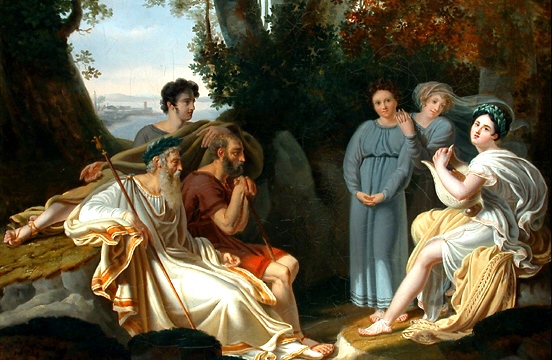
Poetry before Writing

“Greece down through the fifth century has aptly been described as a ‘song culture’.” ~ Michael Schmidt in The First Poets, 10, quoting Leslie Kurke, “The Strangeness of ‘Song Culture’:  archaic Greek poetry”

In ancient Greece the mainlands and the isles
Held deeply in their peoples’ fireside souls
The singing.  Long before the columned aisles
Were raised and long before poetic scrolls
Were written, closed, and opened up for song,
The culture was a culture of the throat.
The words were memorized.  The lines were strong.
The lines did not need papyrus to float
Them old and perfect through the night-time air
Or through the fields of harvest and the rooms
Of weddings.  Altars knew the sacred flair
Of singing words and singing sealed the tombs.
_  The alphabet and writing were not missed.
__    In death, and life, and love the singing kissed.


The Poetic Kind of True

“The stories begin in kinds of truth.  As events recede in time, they grow not smaller but larger in language.  The ancestor who fought locally becomes a hero in a battle which assumes the scale of the epic.” ~ Michael Schmidt, The First Poets, 9

The poet makes life truer, makes it large
As it is meant to be.  The poet makes
Our history higher.  This provides the charge
That it deserves.  The Everest language shakes
The past as if volcanic, lava’s spew
Writ hotter in an earthquake realm of love
Or war.  The poet’s panoramic view
Is like the three dimensional above
The landscape of the long ago.  The lens
Is clearer, or at least it seems to be.
Its focus peels away the small to cleanse
Or shows the small with male intensity.
_  The epic eyes of poetry are blue,
__     As vast as Greek skies, truer than the true.


Before the Internet in the Ancient World

“Hellenistic culture was of necessity a culture of the book . . . :  the age of the reader had arrived, and a poet was often a man speaking to a man, not to men.” ~ Michael Schmidt, The First Poets, 13

The audience grew smaller in the room.
Where once were men, now only just one man
Unrolled a book in sunlight.  In a gloom
Of loneliness a candle held the span
Of largest minds and universes.  Pen,
Papyrus and some ink set forth a mind
In afternoons and nights.  Now thinking men
Could sit in peristyles alone and find
The cosmos of the poets, ink distilled
Philosophy, and ivory knowledge peeled,
A torch-lit space with soul-like letters filled
With treasures that the reader now unsealed.
_  A man from distant pasts or distant lands
 _  _  Spoke silently.  He spoke in new-found hands.


Phillip Whidden is a poet published in America, England, Scotland (and elsewhere) in book form, online, and in journals.  He has also had an article on Wilfred Owen’s “Dulce et Decorum est” published in The New Edinburgh Review. www.phillipwhidden.com

ShareTweetPin
The Society of Classical Poets does not endorse any views expressed in individual poems or commentary.
Read Our Comments Policy Here

RandomPoems

‘How Long the Night’ Translation and More by Michael R. Burch
Beauty

‘Love’ by Leonard Dabydeen

July 12, 2018

Where a lamppost spreads a white spot light Nursing silent night with canny purr, A racoon crosses there in sudden...

‘To a Most Tempting Pancake’: A Poem by Scharlie Meeuws
Beauty

‘To a Most Tempting Pancake’: A Poem by Scharlie Meeuws

August 26, 2025

. To a Most Tempting Pancake “Quae mollis est, amanda est.” (What is soft, is to be loved) ---Libri Matutini...

Next Post
‘Flushing with Anger in a Rest Room’ by Frank De Canio    

'Flushing with Anger in a Rest Room' by Frank De Canio    

‘Despair’ by James A. Tweedie

'Despair' by James A. Tweedie

‘Britannia’ by Jane Blanchard

'Britannia' by Jane Blanchard

Comments 5

  1. Sultana Raza says:
    9 years ago

    Beautiful words. Deep concepts. Couldn’t agree more. If only Europeans were more appreciative of the country which lit up their culture. There was more to antiquity than meets the eye, as for example, the Antikythera Mechanism.

    Reply
    • Phillip Whidden says:
      9 years ago

      I really appreciate your comments (this one and earlier ones about others of my poems) Sultana Raza. Probably you know more about how much modern Europeans appreciate the ancients of Greece and their accomplishments. I get the impression that most educated and cultured Europeans do have quite a bit of such appreciation, but perhaps other Europeans do not. Thank you very much for calling my attention to the Antikythera Mechanism, which I had never heard of before. I’ve read about it now and am very impressed. Ironically, it seems that many ancients did not know about such devices, either, since it disappeared from European culture.

      Your praise of my poems is warmly received. Thanks.

      Reply
    • Phillip Whidden says:
      9 years ago

      Today I wrote a new sonnet which depends heavily on the ancient device, the Antikythera Mechanism, for its “argument.” Thank you very much for that gift and inspiration.

      Reply
  2. Laura Wetterlin says:
    9 years ago

    “The culture was a culture of the throat”. Double entendres at its finest. This poem gave me such a sentimental historic vision. As a singer, the romantic picture you painted was truly moving.

    Reply
    • Phillip Whidden says:
      9 years ago

      Yes, Laura, as a singer you would naturally have gravitated towards this poem and its message. It is true that the vision in the sonnet is sentimental–to the extent that it doesn’t include even a slight nod to negative facts that might have been involved in this new method of communicating poetry, but focuses only on pleasant factors. It seems to me that the singer herself (as in Sappho) or himself (Homer, etc.) would, arguably at least, have lost out because of poetry being passed on in scrolls–lost out because there would no longer have been the direct contact between the singing poet and the audience seated around her or him. Furthermore, poetry was stripped of the music that used to accompany poetry in the more ancient past. Still, if the poet were clear thinking enough, she or he would welcome the fact that the words themselves at least would survive after the vocalist was long gone. That is very positive. Again, this is a bit too positive a view of the situation. We can perfectly well assume that the vast majority of poetry that was written down was later lost through the usual forms of attrition in history. For instance, we know that plays by the great Greek playwrights have been lost and that much of Sappho’s own poetry is no more.

      I have slightly rewritten line 8 of the sonnet today. Here is the new version:

      Poetry before Writing

      “Greece down through the fifth century has aptly been
      described as a ‘song culture’.”
      ~ Michael Schmidt in The First Poets, 10, quoting Leslie
      Kurke, “The Strangeness of ‘Song Culture’: archaic Greek poetry’”

      In ancient Greece the mainlands and the isles
      Held deeply in their peoples’ fireside souls
      The singing. Long before the columned aisles
      Were raised and long before poetic scrolls
      Were written, closed, and opened up for song,
      The culture was a culture of the throat.
      The words were memorized. The lines were strong.
      The lines did not need vellum, rolled, to float
      Them old and perfect through the night-time air
      Or through the fields of harvest and the rooms
      Of weddings. Altars knew the sacred flair
      Of singing words and singing sealed the tombs.
      The alphabet and writing were not missed.
      In death, and life, and love the singing kissed.

      Reply

Leave a Reply Cancel reply

Your email address will not be published. Required fields are marked *


  1. Margaret Coats on ‘Star Festival’: A Poem by Margaret CoatsAugust 25, 2026

    Thank you so much, Nicole. I'm glad you love these *starry* images! With this complicated ancient story referring to actual…

  2. Jan Mennite on ‘Act III’ and Other Poetry by C.B. AndersonAugust 24, 2026

    Why? They're honest, relatable, great reads. I'm glad to get to read them.

  3. Joseph S. Salemi on ‘Humdrum and Harum-Scarum’: A Lecture on Free Verse, by Robert Bridges (1922)August 24, 2026

    Mark, with all due respect -- worrying about what the great majority of people like and want is not part…

  4. Paul Freeman on The Society of Classical Poets 2026 Haiku CompetitionAugust 24, 2026

    Sun-Moon alignment; A total solar eclipse. The birds are gobsmacked. Desert butterfly. Chubby thorax held aloft by fragile wing beats.…

  5. Margaret Coats on ‘Act III’ and Other Poetry by C.B. AndersonAugust 24, 2026

    My future debts were paid in full, they say, Before I was required to join the play. Intriguing logic attributed…

Subscribe to Daily Poems

Enter your email address to subscribe to this blog and receive notifications of new posts by email.

Join 1,622 other subscribers

Recent Poems

  • ‘This Too Shall Pass’ and Other Poetry by Justin Dasher
  • ‘Humdrum and Harum-Scarum’: A Lecture on Free Verse, by Robert Bridges (1922)
  • ‘Unrest On the Floodplain’: A Poem by Bhikkhu Nyanasobhano
  • ‘Latitude and Loss’: A Poem by Martin Briggs
  • ‘Act III’ and Other Poetry by C.B. Anderson
  • ‘God’s Funeral’: A Poem by James Sale
  • ‘Star Festival’: A Poem by Margaret Coats
  • ‘Song of the Frog Princess’: A Poem by Scharlie Meeuws
  • ‘The Odyssey: Nolan and Solot Compared’: An Essay by Michael Curtis
  • ‘Solitude’ and Other Poems by Mary Jane Myers
  • ‘The River Not Taken’ and Other Poetry by Brian Yapko
  • ‘Totentanz’: A Poem by James A. Tweedie
  • ‘In God Is Our Trust’: A Poem by Roy E. Peterson
  • ‘Confession’: A Poem by Jeffrey Essmann
  • ‘Religious Poetry, and Religionist Poetry’: An Essay by Joseph S. Salemi
  • The Zingers of Adam Sedia: A Review by Theresa Werba
  • ‘A Paradox’: A Poem by Shamik Banerjee
  • ‘A Prayer of Aristotle’: A Poem by Margaret Coats
  • ‘The Sparrow’: A Poem by Michael Pietrack
  • ‘Chemo Refusal’ and Other Poetry by Golan Shahar
  • ‘Deliverance’ and Other Poetry by Peter Venable
  • ‘Rain’ and Other Poems by Russel Winick
  • ‘The Story of a Plague’ and Other Poetry by Michael Robinson
  • ‘Javert Derailed’: A Poem by Zanna Barton
  • ‘People Forget’: A Poem by James Sale
  • ‘Good and Evil’: A Poem by Roy E. Peterson
  • ‘The Royal Arse Hortillery’: A Poem on the Spoonerism, by Jeff Eardley
  • ‘Who Hears a Robot’s Prayer?’ and Other Poetry by Brian Yapko
  • The Society of Classical Poets 2026 Haiku Competition
  • Four Love Sonnets by Adam Sedia

Categories

  • Acrostic
  • Alexandroid
  • Alliterative
  • Art
  • Best Poems
  • Blank Verse
  • Chant Royal
  • Classical Poets Live
  • Clerihew
  • Covid-19
  • Deconstructing Communism
  • Educational
  • Epic
  • Epigrams and Proverbs
  • Essays
    • Interviews with Poets
    • Poetry Reviews
  • Featured
  • From the Society
  • Great Poets
    • Dante Alighieri
    • Edgar Allan Poe
    • Emily Dickinson
    • Geoffrey Chaucer
    • Henry Wadsworth Longfellow
    • Homer
    • John Keats
    • John Milton
    • Robert Frost
    • William Blake
    • William Shakespeare
    • William Wordsworth
  • Human Rights in China
  • Limerick
  • Love Poems
  • Music
  • Pantoum
  • Performing Arts
  • Poetry
    • Beauty
    • Children's Poems
    • Culture
    • Ekphrastic
    • Found Poems
    • High School Poets
    • Humor
    • Riddles
  • Poetry Challenge
  • Poetry Contests
  • Poetry Forms
    • Curtal Sonnet
    • Haiku
  • Poetry Readings
  • Rhupunt
  • Rondeau
  • Rondeau Redoublé
  • Rondel
  • Rubaiyat
  • Sapphic Verse
  • Satire
  • Science
  • Sestina
  • Shape Poems
  • Short Stories
  • Song Lyrics
  • Sonnet
  • Symposium
  • Terrorism
  • Terza Rima
  • The Environment
  • Translation
  • Triolet
  • Video
  • Villanelle

Quick Links

  • About Us
  • Submit Poetry
  • Become a Member
  • Members List
  • Support the Society
  • Advertisement Placement
  • Comments Policy
  • Terms of Use

Welcome Back!

Login to your account below

Forgotten Password?

Retrieve your password

Please enter your username or email address to reset your password.

Log In
No Result
View All Result
  • Poems
    • Beauty
    • Culture
    • Satire
    • Humor
    • Children’s
    • Art
    • Ekphrastic
    • Epic
    • Epigrams and Proverbs
    • Human Rights in China
    • Music
    • Performing Arts
    • Riddles
    • Science
    • Song Lyrics
    • The Environment
    • The Raven
    • Found Poems
    • High School Poets
    • Terrorism
    • Covid-19
  • Poetry Forms
    • Sonnet
    • Haiku
    • Limerick
    • Villanelle
    • Rondeau
    • Pantoum
    • Sestina
    • Triolet
    • Acrostic
    • Alexandroid
    • Alliterative
    • Blank Verse
    • Chant Royal
    • Clerihew
    • Rhupunt
    • Rondeau Redoublé
    • Rondel
    • Rubaiyat
    • Sapphic Verse
    • Shape Poems
    • Terza Rima
  • Great Poets
    • Geoffrey Chaucer
    • Emily Dickinson
    • Homer
    • Henry Wadsworth Longfellow
    • Dante Alighieri
    • John Keats
    • John Milton
    • Edgar Allan Poe
    • William Shakespeare
    • William Wordsworth
    • William Blake
    • Robert Frost
  • Love Poems
  • Contests
  • SCP Academy
    • Educational
    • Teaching Classical Poetry—A Guide for Educators
    • Poetry Forms
    • The SCP Journal
    • Books

© 2025 SCP. WebDesign by CODEC Prime.