


By Con Chapman
Boston may no longer be the Hub of the Universe, but its Standard Metropolitan Statistical Area remains the undisputed capital of America in at least one respect—home of suicidal poetesses.
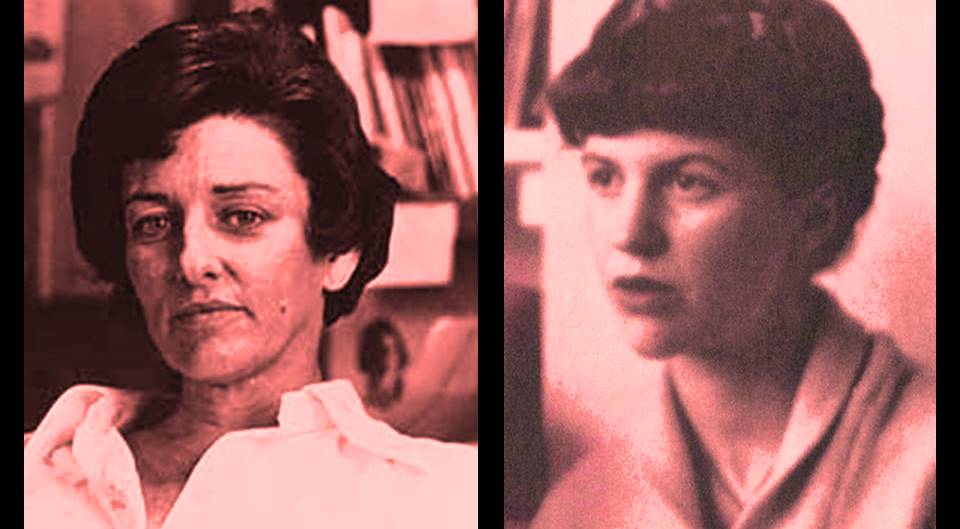
The western suburbs, where I live, form American poetry’s Bermuda Triangle. Sylvia Plath, raised in Wellesley, took her life by gas from her oven. Anne Sexton, born in Newton, locked herself in her garage in Weston with the car running.
We may be number one, but we are not alone. Psychologists have confirmed by extensive research that female poets commit suicide at a greater rate than other women, writers generally and male poets.[i]
Separating cause from effect is difficult, since poetry may attract those whose creativity is a cousin to mental illness. Further, the professionals who decide which poetry succeeds—critics, editors, and publishers—may by their choices implicitly promote the expectation that the only good poets, male and female, are the unstable ones. When Anne Sexton heard of Plath’s suicide she is reported to have said “Good career move.”
The link between suicide and confessional poetry is important for reasons other than the aesthetic. Suicide is the leading cause of death among young people aged 15 to 24; girls are more likely to attempt suicide, although boys are four times more successful. Faced with these grim facts, it makes sense to survey the current state of writing instruction to make sure we aren’t making a bad problem worse.
In American high schools today, you will find a curious imbalance between creative writing and non-fiction. At the Boston Latin School, America’s oldest public school, traditional history papers haven’t been assigned for nearly two decades. Student literary magazines abound while publications devoted to students’ non-fiction are rare.
Into this void has flowed a treacly concoction that rarely rises above the level of a schoolgirl’s diary. Teens are encouraged to write in the style of the mixed genre known as “creative non-fiction,” an oxymoron to writers of a certain age. Long on self-regard and short on research, it is unclear how such writing is supposed to prepare students for the real world. Teachers may prefer self-centered creative writing to academic non-fiction since it is easier to grade.
While writing is often touted as a therapeutic activity, not all writing is equal in this regard, and there is evidence that the sort of introspective verse that adolescents tend to produce can do more harm than good. Some studies have found that, among the young, writing concrete narratives produces a more positive self-image than short, self-absorbed works, while others have shown that expressive writing about traumatic experiences increases depression and suicidal tendencies. In other words, by encouraging young girls and boys to write about nothing but their feelings and troubles, we may be adding fuel to adolescent fires.
What adults should do, as is often the case, is to encourage kids to think about something other than themselves. And perhaps to begin their study of poetry with Longfellow’s “The Midnight Ride of Paul Revere” rather than Sexton’s “Wanting to Die.”
Con Chapman is a Boston-area writer whose work has appeared in The Atlantic, The Christian Science Monitor, The Boston Globe and The Boston Herald, among other print publications. He is the author of “poetry is kind of important,” a book of humor about poetry, and “The Girl With the Cullender on Her Head,” a collection of light verse. He is currently writing a biography of Johnny Hodges, Duke Ellington’s alto sax player, for Oxford University Press.
[i] Kaufman, James C., “The Cost of the Muse: Poets Die Young. Death Studies, November 2002; Ludwig, Arnold M., The Price of Greatness: Resolving the Creativity and Madness Controversy. New York: Guilford Press, 1995; Kaufman, J.C., & Baer, J. (2002). I bask in dreams of suicide: Mental Illness and Poetry. Review of General Psychology, 6, 271-286.

















Is ‘oxymoron’ a code name for a type of drug popular among young writers of self-absorbed, ‘creative’ nonfiction? Oh. Wait. No. That is oxycodone…the drug used by adult writers of self-help fiction.
It is important to feed the mind with real food, not the negative, cynical, narcissistic droolings of our contemporary society. The comment by Anne Sexton on Plath’s suicide – ‘good career move’ – is indicative of someone so profoundly sick and mentally ill (to think that one’s poetic reputation is more important than life; Mark Chapman shot John Lennon so that he could be important too – should we study him, except as a case of pathology?) that the idea that we should be studying their poetry is laughable – except that, tragically, we do. As my 4 articles on the Muse and Poetry on this website makes, I hope, clear: poetry leads to health, not mental illness. Before the C20th and the advent of modernism, the only (English) poets I can think of who were even depressives were Smart and Cowper – but they were hardly glorying in the misery the way the moderns do, and neither was a major poet.
Very true. I stopped subscribing to Poetry a few years ago because it had become largely, if not exclusively, devoted to the poetry of sickness. One wonders whether Homer could get the Iliad published today.
Yes, me too – I stopped subscribing many years ago to the plethora of so-called poetry magazines that simply were exercises in vanity and negativity. Very good article about an important topic.
Poetry must sometimes deal with the depressing, the corrupt, and even the pathological: think of Edgar Allan Poe, Baudelaire, Villon, or a really hard-core satirist like Juvenal.
Should it wallow in narcissistic angst and self-pity? Of course not. The problem in poetry today is not so much sickness and depression as it is the near universal tendency to self-display and confessionalism combined with politically correct posturing.
Yes, I agree with you ‘deal with’ – where would be without Dante, and the ultimate pathologies, or Macbeth, one of the greatest studies of evil ever penned? But as you point out, wallowing in narcissistic angst and self-pity, abandoning form – for what? – is a very different proposition, and the results, alas, are sadly debilitating for anybody who imbibes them for too long.
Succinct and yet sweet; or perhaps bittersweet: as the underlying specters haunting this essay are the countless souls who have been jeopardized and are being jeopardized and who will be jeopardized in our deluded modern school system. Young English students everywhere should be forced to read some sort of essay like this.
When assigned to present on a short-story by Flannery O’Connor in one of my sordid college classes, I found it my wise-guy duty to recall an anecdote which I had read in some interview of her. (I believe it was called “On Writing.”) When asked if our colleges scared away too many writers, she wittily replied: “They don’t scare away enough of them.”
Like O’Connor’s riposte, I am also reminded of Mr. Salemi’s words published on this very site:
“The po-biz world is indeed rather nasty and ugly. It’s populated by all sorts of careerists, phonies, hangers-on, incompetents, and grant-scroungers. Then there are all the delicate little snowflakes, the political bullies, and the angry partisans of group identity. Shelley once fatuously called poets ‘the unacknowledged legislators of the world.’ All I can say in response is that I’m very glad they are unacknowledged. Having poets in any kind of position of authority would be as horrific as Jurassic Park. ”
Plato had something similar to say.
I wish we would all learn Form and Meter before we learned how to be “creative” with our emotions. I wish we would be required to recite poetry and recite famous speeches in our English classes or in our Public Speaking classes. I wish I had a professor who spent real time in the real world instead of squandering it on going after grants or further “education.” All of the authors Salemi listed above undoubtedly knew how to write in Form and Meter–and recite it by heart–by the time they were probably ten, or earlier. They did not need creative writing classes.
Wannabee poets are in positions of authority throughout our entire school system. We live in a society where they have young kids “jump rope” without rope; and so no wonder our instructors are not going to be stringent about grading or teaching real, hard, and yet understandable poetry. It’s easier to be abstract, and yet it also is–as Chapman’s essay evinces–deadly.
Furthermore, sitting on the computer, surrounded by Wi-fi, “scrounging for grants,” searching for mediums on which to get published, while perhaps sometimes necessary, seems to induce in one, or at least me, a squalid and phlegmatic sense of self-degradation. The money is not worth the time. This is an artificial life.
While Pirsig wasn’t the healthiest man alive, he had some keen observations on the Classical versus Romantic Man. We must all be Classical Poets in the sense that we are well-rounded. Take some time off from poetry. Never stop reading it, but stop writing it. Step away for a second. Have a kid. Get a job. Sail a boat. Till the land. Your poetry will probably be better for it. (I still like to believe that Homer was an old man babbling by a well or helping thresh the wheat rather than some square academic holed up in some study.)
With all of this tangential and pretentious ranting being said, I originally was reminded of a sonnet by A.M. Juster which I found pertinent to Chapman’s essay. Like it or not: here it is:
NO
No, not this time. I cannot celebrate
a man’s discarded life, and will not try;
these knee-jerk elegies perpetuate
the nightshade lies of Plath. Why glorify
descent into a solipsistic hell?
Stop. Softly curse the waste. Don’t elevate
his suffering to genius. Never tell
me he will live on. Never call it fate.
Attend the service. Mourn. Pray. Comfort those
he lacerated. Keep him in your heart,
but use that grief to teach. When you compose
a line, it is a message, not just art.
Be furious with me, but I refuse
to praise him. No, we have too much to lose.
Another favorite O’Connor quote: “There’s many a best-seller that could have been prevented by a good English teacher.”
Phenomenal title to your piece, as well.
Thanks.
I would respectfully disagree with much of what you have to say as it implies causality. There is a danger in ruminating obsessively, yes, but that’s also why elegies are written. As for form, it has its place.
I would encourage you, if you are truly interested in issues of mental health, to investigate the topic further and to get involved in getting people in contact with appropriate services when needed.
Three reasons to seriously consider before moving to Boston.
Are you from out West?
Are you going to be with little income?
Are you a writer – esp a poet?
If any of the three is probable you might want to reconsider. If all three, God help you!
Again, as I am very new to this site, let me just say “Bravo!” on this piece. It’s incredible to find a community of folks who have maintained the ability to think, comment and conclude without a reduction to rudeness. I had begun to think that well-written commentary was a lost art.
I wrote something about this topic some months ago on my blog. Trying not to be self-serving, but in case anyone is interested: https://mysocalledcivilization.wordpress.com/2017/09/23/the-day-the-poetry-died/
In the US over half the gun deaths are suicides and over half the suicides involve guns. Having immediate means is bad. If you are looking after yourself, see that it would at least take you a few hours and a bit of effort and human interaction. I have heard from several men and women who store their guns in someone else’s home for this reason.
By the way! The best essay writing service – https://www.easyessay.pro/
And Happy New Year!