• Submit Poetry
  • Support SCP
  • About Us
  • Members
  • Join
Saturday, September 5, 2026
Society of Classical Poets
  • Poems
    • Beauty
    • Culture
    • Satire
    • Humor
    • Children’s
    • Art
    • Ekphrastic
    • Epic
    • Epigrams and Proverbs
    • Human Rights in China
    • Music
    • Performing Arts
    • Riddles
    • Science
    • Song Lyrics
    • The Environment
    • The Raven
    • Found Poems
    • High School Poets
    • Terrorism
    • Covid-19
  • Poetry Forms
    • Sonnet
    • Haiku
    • Limerick
    • Villanelle
    • Rondeau
    • Pantoum
    • Sestina
    • Triolet
    • Acrostic
    • Alexandroid
    • Alliterative
    • Blank Verse
    • Chant Royal
    • Clerihew
    • Rhupunt
    • Rondeau Redoublé
    • Rondel
    • Rubaiyat
    • Sapphic Verse
    • Shape Poems
    • Terza Rima
  • Great Poets
    • Geoffrey Chaucer
    • Emily Dickinson
    • Homer
    • Henry Wadsworth Longfellow
    • Dante Alighieri
    • John Keats
    • John Milton
    • Edgar Allan Poe
    • William Shakespeare
    • William Wordsworth
    • William Blake
    • Robert Frost
  • Love Poems
  • Contests
  • SCP Academy
    • Educational
    • Teaching Classical Poetry—A Guide for Educators
    • Poetry Forms
    • The SCP Journal
    • Books
No Result
View All Result
Society of Classical Poets
  • Poems
    • Beauty
    • Culture
    • Satire
    • Humor
    • Children’s
    • Art
    • Ekphrastic
    • Epic
    • Epigrams and Proverbs
    • Human Rights in China
    • Music
    • Performing Arts
    • Riddles
    • Science
    • Song Lyrics
    • The Environment
    • The Raven
    • Found Poems
    • High School Poets
    • Terrorism
    • Covid-19
  • Poetry Forms
    • Sonnet
    • Haiku
    • Limerick
    • Villanelle
    • Rondeau
    • Pantoum
    • Sestina
    • Triolet
    • Acrostic
    • Alexandroid
    • Alliterative
    • Blank Verse
    • Chant Royal
    • Clerihew
    • Rhupunt
    • Rondeau Redoublé
    • Rondel
    • Rubaiyat
    • Sapphic Verse
    • Shape Poems
    • Terza Rima
  • Great Poets
    • Geoffrey Chaucer
    • Emily Dickinson
    • Homer
    • Henry Wadsworth Longfellow
    • Dante Alighieri
    • John Keats
    • John Milton
    • Edgar Allan Poe
    • William Shakespeare
    • William Wordsworth
    • William Blake
    • Robert Frost
  • Love Poems
  • Contests
  • SCP Academy
    • Educational
    • Teaching Classical Poetry—A Guide for Educators
    • Poetry Forms
    • The SCP Journal
    • Books
No Result
View All Result
Society of Classical Poets
No Result
View All Result
Home Poetry Beauty

‘The Cymbal Player’ and Other Poetry by Martin Elster

March 4, 2018
in Beauty, Culture, Humor, Poetry
A A
24
poems 'The Cymbal Player' and Other Poetry by Martin Elster

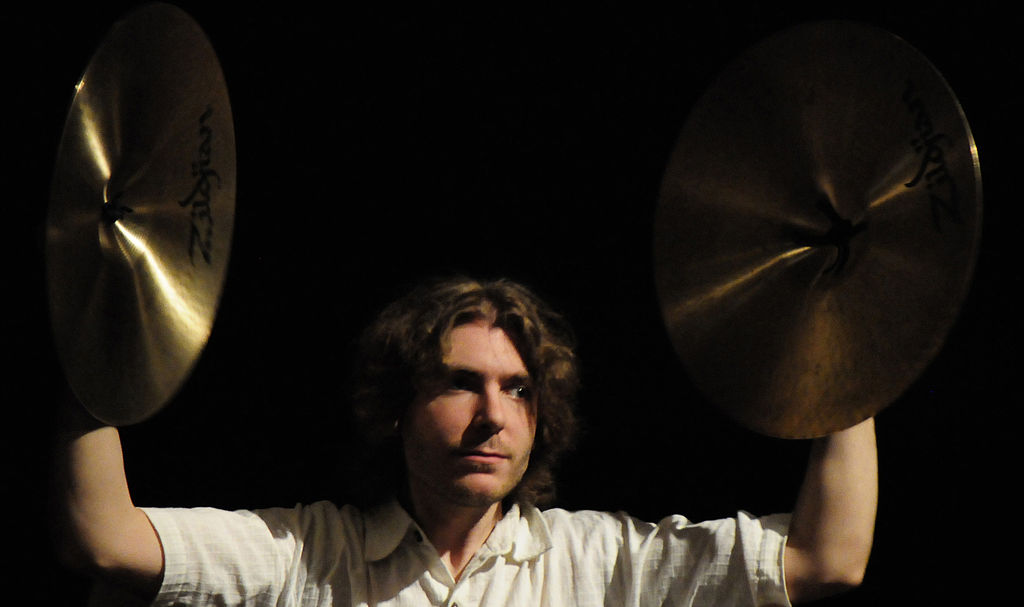
The Cymbal Player

As bows and fingers quiver strings,
as lungs and lips whip up the air,
as notes soar on great falcon wings,

one player, seated in his chair
like a finch hid in a maple tree,
as if the creature wouldn’t dare

trill out above the symphony
(perhaps in fear of being caught
by a raptor high above the lea),

begins to rise like an afterthought
amid the pianissimos
and, like a hunter’s rifle shot

as bright as ninety-nine rainbows
of overtones, he spreads, then hits
two plates together. The ether glows

like sunlight through the woods. He sits
back down. And yet the clang still rings
and darts and dances, flutters, flits

and, for the merest moment, clings,
then fades away like all brief things.


The Purple Sun

Holy cow! We’re holding hands,
reaching across our fenceless lands
and even (an outlandish notion!)
across unfathomed sheets of ocean.

Go and snigger, go and smirk,
spread rumors that I’ve gone berserk,
yet there’s no harm in fantasizing,
hoping when we see the rising
in the west of a purple sun,
a grander age will have begun.

A falcon pounces on a pigeon,
a zealot murders for “religion,”
a hunter fells the heartiest moose,
and there are rapists on the loose.
An asteroid could wipe out life
as neatly as a nutjob’s knife
will slit the throat of a supporter
of peace and harmony and order.

Yet when we see that purple sun
a grander age will have begun
and we shall clasp each other’s hands
across all borders and all lands.
Oh, we shall hold each other’s hands
across our vast and fenceless lands.

We people are Earth’s mayhem masters.
While quakes and floods and such disasters
come like plagues of rabid rats
to terrorize us, autocrats
faster than a lightning flash
turn hope to ash, fling bombs that smash
the edifices of our dreams,
stifle our panic-stricken screams
and deafen dolphin, dog, and deer.

But if we hold out on this sphere,
we’ll see a purple coin appear;
we’ll watch it climb the sky and crest
the cool-blue mountains in the west
and (shall I say it?) link our hands
across all borders and all lands
and even (an outlandish notion!)
across unfathomed sheets of ocean,
beaming, laughing, lost in the glee
of being a community.


Martin Elster, author of There’s a Dog in the Heavens!, is also a composer and serves as percussionist for the Hartford Symphony Orchestra. His poems have appeared in such journals as Astropoetica, The Flea, The Martian Wave, The Rotary Dial, and in the anthologies Taking Turns: Sonnets from Eratosphere, The 2012 Rhysling Anthology, and New Sun Rising: Stories for Japan. Martin’s poem, “Walking With the Birds and the Bones Through Fairview Cemetery” received first place in the Thomas Gray Anniversary Poetry Competition 2014, and “Talcott Mountain” was nominated for a Pushcart Prize by The Chimaera.

ShareTweetPin
The Society of Classical Poets does not endorse any views expressed in individual poems or commentary.
Read Our Comments Policy Here

RandomPoems

‘Meddling’: A Poem by Mary Jane Myers
Culture

‘Meddling’: A Poem by Mary Jane Myers

September 2, 2025

. Meddling A pair of cardinals build a Maytime nest outside my home, deep in a boxwood tree. My window...

‘The Birthday of a Bride’: A Good Friday Poem by Martin Rizley
Poetry

‘The Birthday of a Bride’: A Good Friday Poem by Martin Rizley

April 4, 2026

  The Birthday of a Bride A woman, when she enters into labor on the day She brings at last...

Next Post
‘Barney-Hill Moss Revisited’ by Sam Gilliland

'Barney-Hill Moss Revisited' by Sam Gilliland

‘The Neologist’ by Arthur Lamar Mitchell

'The Neologist' by Arthur Lamar Mitchell

‘Political Correctness’ by Margaret Coats

'Political Correctness' by Margaret Coats

Comments 24

  1. James A. Tweedie says:
    9 years ago

    Re The Cymbal Player: It manages to be both audibly and autobiographically descriptive at the same time. Its effect is as lovely as music.

    And what an intriguing rhyme scheme:

    ababcb/cdcded/efefgf/gg

    (or the final three g’s could be interpreted as a return to “a,” bringing the scheme full circle–which is, of course, the shape of a cymbal! )

    Is this rhyming pattern (and the three-line stanzas) original or are there other examples?

    Reply
    • C.B. Anderson says:
      9 years ago

      The rhyme scheme here is basically terza rima. There are different ways to end it, but, yes, in this case, the ending returns to the beginning, which is a nice touch, not required by the form, and separated by such a distance that the reader can see it but probably not hear it.

      Reply
      • James A. Tweedie says:
        9 years ago

        Thank you, C.B. for the the reference to terza rima. There is so much to learn. Perhaps I shall seek out other new forms and try them out.

        Reply
      • martin says:
        9 years ago

        Hi C.B.,

        I don’t often break a word between lines with hyphens. The one time I did, some fellow poets advised me to change it, so I found two shorter words so I wouldn’t need the hyphen. I actually like that poem better. But I have seen many poets us hyphens use that way so, as you said, there is precedent for it. The way you are using it in the your excerpt works fine, partly because the meter is dimeter, so there is a natural flow from one line to the next, without a pause, as there is in, for example, trimeter or pentameter.

        Speaking of initial caps, I used to use them consistently, but a few years ago decided to type my poems in a more modern style. In terms of appearance on the page, I think initial caps visually balance the end rhymes, especially when they are full rhymes (as apposed to slants).

        Reply
    • martin says:
      9 years ago

      Hi James,

      Many thanks for your kind words about “The Cymbal Player.” I’m happy you enjoyed it. Hearing that it sounds musical to your ears is great to hear!

      Thanks for asking about the rhyme scheme which, as C.B Anderson mentioned, is terza rima. I love your analogy of the rhymes coming full circle and the roundness of a cymbal.

      Reply
  2. Steven Shaffer says:
    9 years ago

    I liked them both. I’m interested in your thought process re: lower case throughout for The Cymbal Player — fan of e e cummings?

    Reply
    • C.B. Anderson says:
      9 years ago

      Steven,

      You will have to wait for the author’s own explanation, but I have pondered this matter a lot. Nowadays I almost always use caps at the head of a line, but it’s just a convention that does nothing for the poem but reinforce the sense of formalism and tradition. I most often use lower-case line headings when I enjamb a word at the end of a line, with a hyphen to link the word fragment to the fragment beginning the next line. For example, in the first stanza of my poem “Faith and Fortitude”:

      We shy at worms
      and are afraid
      of septic germs,
      while in our thoughts,
      however tox-
      ic, we are staid-
      ly orthodox.

      The Argonauts
      of ancient Greece,
      impatient for
      the Golden Fleece,
      against all odds
      would wade ashore
      with pagan gods.

      Thus avoiding, in the first stanza, the awkward non-words of “Ic” and “Ly.” Many formalist poets would likely shun the practice of splitting words and counsel against it, but sometimes one needs a word with the right meaning and the required end rhyme, even if the rhyme is embedded in a longer word. I won’t apologize for this bizarre practice, because it has been done before by poets of considerable renown and because my own transgressive poem has been published twice. None of this has anything to do with e e cummings.

      Reply
    • martin says:
      9 years ago

      Hi Steven,

      Thanks for stopping by. I appreciate it. You asked why I use lower case throughout for the “Cymbal Player.” I love E.E. cummings. But, actually, if you look at my poem carefully, you will notice that it’s composed of 4 sentences, each on starting with a capital letter. None of those sentences begins at the beginning of a line, so no line starts with a capital! The first sentence is 13 1/2 lines long. The rest of the poem has 3 shorter sentences. In other words, I use standard punctuation. Nothing unusual.

      Reply
      • Andrew Ramirez says:
        9 years ago

        Bravo!

        Reply
  3. Michael Dashiell says:
    9 years ago

    2 excellent, high quality poems.

    Reply
    • martin says:
      9 years ago

      Thanks, Michael!

      Reply
  4. David Paul Behrens says:
    9 years ago

    The sun may very well be purple by the time mankind comes to its senses and we all live in peace and harmony. Interesting poem. Well done.

    Reply
    • martin says:
      9 years ago

      Hi David,

      “The sun may very well be purple by the time mankind comes to its senses and we all live in peace and harmony. Interesting poem. Well done.”

      Thanks for stopping by, and I’m glad you found the poem interesting. Your interpretation is bang on and perfectly elucidates what I was going for. One other detail that may be worth noting is that no one ever sees the sun rising in the west, another clue (in the poem) that we may have a very long wait, indeed, before the beings on this planet become noticeably healthier, more in balance, and by and large happy. And isn’t happiness basically what life is for? If not, then what?

      Thanks again, David.

      Reply
      • James A. Tweedie says:
        9 years ago

        Not to take away from the apocalyptic image, but twice I have watched the sun set in the east. Each time I was standing on a high mountain ridge at the end of a hot summer day. Because of an atmospheric inversion layer, the image of the sun setting in the west was reflected to the east where, as a mirror image, it appeared to be setting in both directions simultaneously. Two creepy, unearthly, and yet profoundly spiritual experiences I will never forget.

        Reply
  5. martin says:
    9 years ago

    Thanks, everyone, for your thought-provoking comments and discussion.

    Reply
  6. martin says:
    9 years ago

    I would have loved to see that sunrise, James. It must have been a remarkable sight. Thanks for sharing that memory. So maybe the sun can, in a way, rise in the west (or set in the east).

    Reply
  7. martin says:
    9 years ago

    I would have loved to see that sunrise, James. It must have been a remarkable sight. Thanks for sharing that memory. So maybe the sun can, in a way, rise in the west (or set in the east). The atmosphere can do lots of tricks with light!

    Reply
  8. Dave Whippman says:
    9 years ago

    I like “The Cymbal Player.” It’s quite a complicated form to work in and you managed very well, giving us an intriguing piece.

    Reply
    • martin says:
      9 years ago

      Thanks, David. I’m pleased that you found the “The Cymbal Player” intriguing. I also appreciate you mentioning the form.

      Reply
  9. Charles Southerland says:
    9 years ago

    Nice work, Martin.

    Reply
    • martin says:
      9 years ago

      Hi Charlie,

      It’s nice to see you here. Thanks for stopping by!

      Best,

      Martin

      Reply
  10. martin says:
    9 years ago

    Thanks very much, Andrew.

    Reply
  11. David Hollywood says:
    8 years ago

    I really enjoyed the build up, tension and anticipation and then the retreat and disappearance of The Cymbal Player. Very affecting. Thank you.

    Reply
    • martin says:
      8 years ago

      David H. — Thanks for stopping by and letting me know you enjoyed the poem. Much appreciated.

      Reply

Leave a Reply Cancel reply

Your email address will not be published. Required fields are marked *


  1. jd on ‘Morning Glory’: A Poem by T.M. MooreSeptember 5, 2026

    I loved this poem when I first read it and I still do. One of the things I like best…

  2. Paul Freeman on ‘Chaucer Announces His Desire to Retire’: A Poem by Paul A. FreemanSeptember 5, 2026

    Thanks, MJ. Appreciated. Able was I ere I saw Elba. Another use for 'ere', in the sentence above that reads…

  3. James A. Tweedie on ‘A Potpourri of Aphoristic Verses’ by C.B. AndersonSeptember 5, 2026

    As a P.S. I prefer to rhyme "potpourri" with "hot glory".

  4. James A. Tweedie on ‘A Potpourri of Aphoristic Verses’ by C.B. AndersonSeptember 5, 2026

    Nobody is as clear and terse As C.B.s aphoristic verse. Like Shakespeare’s poor Polonius Such pithiness inspires us. So borrow…

  5. Alice V. Brock on The Society of Classical Poets 2026 Haiku CompetitionSeptember 5, 2026

    Making corrections in my second entry, Fly Away Hard sticks, soft feathers Busy robin feeding all Wings spread - fly…

Subscribe to Daily Poems

Enter your email address to subscribe to this blog and receive notifications of new posts by email.

Join 1,635 other subscribers

Recent Poems

  • ‘Victory’: A Poem by Jonathan Graver
  • ‘The Cristero Centennial’: A Poem by Margaret Coats
  • ‘A Potpourri of Aphoristic Verses’ by C.B. Anderson
  • ‘The Estuary’: A Poem by Jeff Eardley
  • ‘A World Without the Wednesday Child’: A Poem by Kimberly Fore
  • The 2026 Society of Classical Poets International Poetry Competition
  • The 2026 SCP International High School Poetry Competition
  • ‘Realistic Reflections’ and Other Poetry by Anna J. Arredondo
  • ‘China Made’: A Poem by Theresa Werba
  • ‘The Savage Moon’ and Other Poetry by Brian Yapko
  • Poetry Book Review: Love Found, Yearned For, and Lost by James A. Tweedie
  • ‘When Opportunity Knocks’: A Poem by Roy E. Peterson
  • ‘Legend of the Griffin’: A Poem by Iryna Hall
  • ‘Government Issue’ and Other Poems by Joseph S. Salemi
  • ‘Chaucer Announces His Desire to Retire’: A Poem by Paul A. Freeman
  • ‘Advantages of Restaurants’ and Other Poems by Russel Winick
  • ‘Bone China’: A Poem by Mary Gardner
  • ‘On the Death of One Too Young to Die’: A Poem by Jeffrey Essmann
  • ‘This Too Shall Pass’ and Other Poetry by Justin Dasher
  • ‘Humdrum and Harum-Scarum’: A Lecture on Free Verse, by Robert Bridges (1922)
  • ‘Unrest On the Floodplain’: A Poem by Bhikkhu Nyanasobhano
  • ‘Latitude and Loss’: A Poem by Martin Briggs
  • ‘Act III’ and Other Poetry by C.B. Anderson
  • ‘God’s Funeral’: A Poem by James Sale
  • ‘Star Festival’: A Poem by Margaret Coats
  • ‘Song of the Frog Princess’: A Poem by Scharlie Meeuws
  • ‘The Odyssey: Nolan and Solot Compared’: An Essay by Michael Curtis
  • ‘Solitude’ and Other Poems by Mary Jane Myers
  • ‘The River Not Taken’ and Other Poetry by Brian Yapko
  • ‘Totentanz’: A Poem by James A. Tweedie

Categories

  • Acrostic
  • Alexandroid
  • Alliterative
  • Art
  • Best Poems
  • Blank Verse
  • Chant Royal
  • Classical Poets Live
  • Clerihew
  • Covid-19
  • Deconstructing Communism
  • Educational
  • Epic
  • Epigrams and Proverbs
  • Essays
    • Interviews with Poets
    • Poetry Reviews
  • Featured
  • From the Society
  • Great Poets
    • Dante Alighieri
    • Edgar Allan Poe
    • Emily Dickinson
    • Geoffrey Chaucer
    • Henry Wadsworth Longfellow
    • Homer
    • John Keats
    • John Milton
    • Robert Frost
    • William Blake
    • William Shakespeare
    • William Wordsworth
  • Human Rights in China
  • Limerick
  • Love Poems
  • Music
  • Pantoum
  • Performing Arts
  • Poetry
    • Beauty
    • Children's Poems
    • Culture
    • Ekphrastic
    • Found Poems
    • High School Poets
    • Humor
    • Riddles
  • Poetry Challenge
  • Poetry Contests
  • Poetry Forms
    • Curtal Sonnet
    • Haiku
  • Poetry Readings
  • Rhupunt
  • Rondeau
  • Rondeau Redoublé
  • Rondel
  • Rubaiyat
  • Sapphic Verse
  • Satire
  • Science
  • Sestina
  • Shape Poems
  • Short Stories
  • Song Lyrics
  • Sonnet
  • Symposium
  • Terrorism
  • Terza Rima
  • The Environment
  • Translation
  • Triolet
  • Video
  • Villanelle

Quick Links

  • About Us
  • Submit Poetry
  • Become a Member
  • Members List
  • Support the Society
  • Advertisement Placement
  • Comments Policy
  • Terms of Use

Welcome Back!

Login to your account below

Forgotten Password?

Retrieve your password

Please enter your username or email address to reset your password.

Log In
No Result
View All Result
  • Poems
    • Beauty
    • Culture
    • Satire
    • Humor
    • Children’s
    • Art
    • Ekphrastic
    • Epic
    • Epigrams and Proverbs
    • Human Rights in China
    • Music
    • Performing Arts
    • Riddles
    • Science
    • Song Lyrics
    • The Environment
    • The Raven
    • Found Poems
    • High School Poets
    • Terrorism
    • Covid-19
  • Poetry Forms
    • Sonnet
    • Haiku
    • Limerick
    • Villanelle
    • Rondeau
    • Pantoum
    • Sestina
    • Triolet
    • Acrostic
    • Alexandroid
    • Alliterative
    • Blank Verse
    • Chant Royal
    • Clerihew
    • Rhupunt
    • Rondeau Redoublé
    • Rondel
    • Rubaiyat
    • Sapphic Verse
    • Shape Poems
    • Terza Rima
  • Great Poets
    • Geoffrey Chaucer
    • Emily Dickinson
    • Homer
    • Henry Wadsworth Longfellow
    • Dante Alighieri
    • John Keats
    • John Milton
    • Edgar Allan Poe
    • William Shakespeare
    • William Wordsworth
    • William Blake
    • Robert Frost
  • Love Poems
  • Contests
  • SCP Academy
    • Educational
    • Teaching Classical Poetry—A Guide for Educators
    • Poetry Forms
    • The SCP Journal
    • Books

© 2025 SCP. WebDesign by CODEC Prime.