• Submit Poetry
  • Support SCP
  • About Us
  • Members
  • Join
Wednesday, December 17, 2025
Society of Classical Poets
  • Poems
    • Beauty
    • Culture
    • Satire
    • Humor
    • Children’s
    • Art
    • Ekphrastic
    • Epic
    • Epigrams and Proverbs
    • Human Rights in China
    • Music
    • Performing Arts
    • Riddles
    • Science
    • Song Lyrics
    • The Environment
    • The Raven
    • Found Poems
    • High School Poets
    • Terrorism
    • Covid-19
  • Poetry Forms
    • Sonnet
    • Haiku
    • Limerick
    • Villanelle
    • Rondeau
    • Pantoum
    • Sestina
    • Triolet
    • Acrostic
    • Alexandroid
    • Alliterative
    • Blank Verse
    • Chant Royal
    • Clerihew
    • Rhupunt
    • Rondeau Redoublé
    • Rondel
    • Rubaiyat
    • Sapphic Verse
    • Shape Poems
    • Terza Rima
  • Great Poets
    • Geoffrey Chaucer
    • Emily Dickinson
    • Homer
    • Henry Wadsworth Longfellow
    • Dante Alighieri
    • John Keats
    • John Milton
    • Edgar Allan Poe
    • William Shakespeare
    • William Wordsworth
    • William Blake
    • Robert Frost
  • Love Poems
  • Contests
  • SCP Academy
    • Educational
    • Teaching Classical Poetry—A Guide for Educators
    • Poetry Forms
    • The SCP Journal
    • Books
No Result
View All Result
Society of Classical Poets
  • Poems
    • Beauty
    • Culture
    • Satire
    • Humor
    • Children’s
    • Art
    • Ekphrastic
    • Epic
    • Epigrams and Proverbs
    • Human Rights in China
    • Music
    • Performing Arts
    • Riddles
    • Science
    • Song Lyrics
    • The Environment
    • The Raven
    • Found Poems
    • High School Poets
    • Terrorism
    • Covid-19
  • Poetry Forms
    • Sonnet
    • Haiku
    • Limerick
    • Villanelle
    • Rondeau
    • Pantoum
    • Sestina
    • Triolet
    • Acrostic
    • Alexandroid
    • Alliterative
    • Blank Verse
    • Chant Royal
    • Clerihew
    • Rhupunt
    • Rondeau Redoublé
    • Rondel
    • Rubaiyat
    • Sapphic Verse
    • Shape Poems
    • Terza Rima
  • Great Poets
    • Geoffrey Chaucer
    • Emily Dickinson
    • Homer
    • Henry Wadsworth Longfellow
    • Dante Alighieri
    • John Keats
    • John Milton
    • Edgar Allan Poe
    • William Shakespeare
    • William Wordsworth
    • William Blake
    • Robert Frost
  • Love Poems
  • Contests
  • SCP Academy
    • Educational
    • Teaching Classical Poetry—A Guide for Educators
    • Poetry Forms
    • The SCP Journal
    • Books
No Result
View All Result
Society of Classical Poets
No Result
View All Result
Home Poetry Beauty

‘Heroes, Victims, and Poseidon’ and Other Poetry by Phillip Whidden

April 13, 2018
in Beauty, Culture, Poetry
A A
5
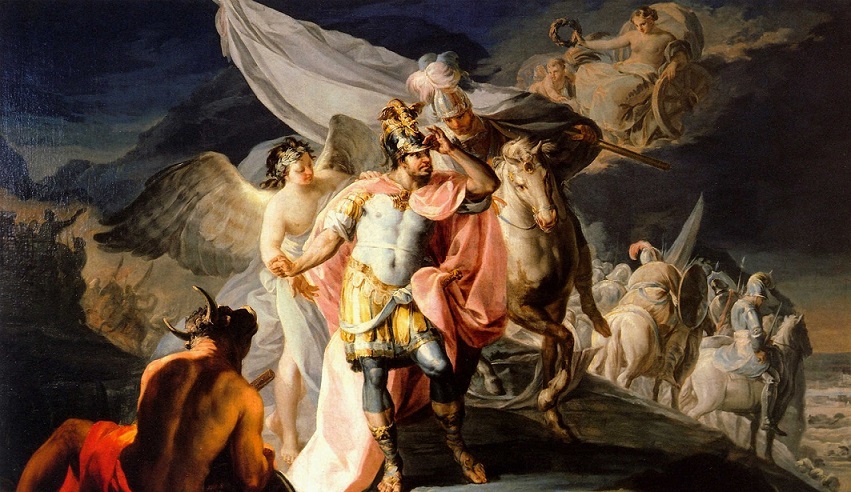
poems 'Heroes, Victims, and Poseidon' and Other Poetry by Phillip Whidden


Heroes, Victims, and Poseidon

The metre of ancient Greek poetry succeeds in “achieving a length and complexity that are unusual in the heroic verse of other literatures.” ~ Michael Grant, The Rise of the Greeks, 325, as quoted in Michael Schmidt, The First Poets, 16.

The heroes are heroic much because
Of Greek. The feet of ancient Greek stepped strong
In beat. Performance and its poets’ laws
Required short, lonnnng, short, lonnnng, short, lonnnng, short, lonnnng,
Across the stage of theatre and stage
Of voice and singing. Syllables are more
Duration than a stress and so a rage,
A love, great hate, a passion fill the shore
Below the city with a god whose power
Sucks back the waves and sends them crashing in
To mangle beauty, no matter the power
Of innocence’s horses. This is sin
For everyone except the god. The length
Of syllables reveals the harsh god’s strength.


Helmeted Brain and Tectonic Plates

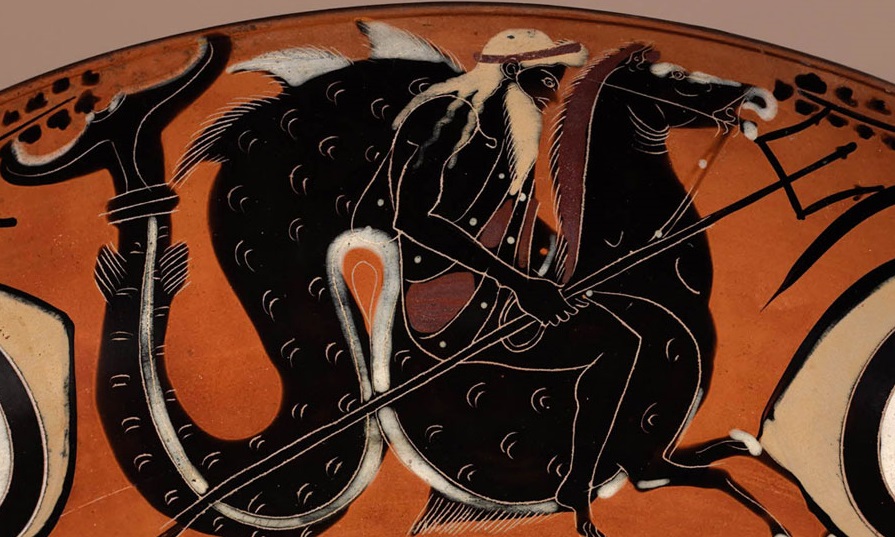
poems 'Heroes, Victims, and Poseidon' and Other Poetry by Phillip Whidden

Athena and Poseidon do not meet inside
My mind and doubtless not inside my heart.
They face each other off: she virgin bride
Of wisdom, he who gives the earth a start
With shockwaves from the depths of troubled seas.
She looks calm like logic in a marble mind.
His trident shakes because he disagrees
With normal order. Violence combined
With cataclysm is his contention.
Her rationality is like a shield
With spear. She counters with comprehension.
She thinks. She reasons that she will not yield.
And yet they both are part of the divine.
The Greeks knew both deserved a holy shrine.


Phillip Whidden is a poet published in America, England, Scotland (and elsewhere) in book form, online, and in journals.  He has also had an article on Wilfred Owen’s “Dulce et Decorum est” published in The New Edinburgh Review. www.phillipwhidden.com

ShareTweetPin
The Society of Classical Poets does not endorse any views expressed in individual poems or commentary.
Read Our Comments Policy Here
Next Post
‘War Is Natural’ and Other Poetry by David Paul Behrens

'War Is Natural' and Other Poetry by David Paul Behrens

‘Itinerant Poet’ by Leonard Dabydeen

'Itinerant Poet' by Leonard Dabydeen

‘Lament for Hymns, We Cease to Die’ by David Hollywood

'Lament for Hymns, We Cease to Die' by David Hollywood

Comments 5

  1. Charles Southerland says:
    8 years ago

    Dear Mr. Whidden, perhaps if you had chosen the Sapphic Stanza instead of sonnets to elucidate your intent, things would come into focus with what your intent was. Sappho or Catullus would be a good start, don’t you think? If you need an example or two, I can provide a couple of mine, if need be. : )

    Reply
    • James A. Tweedie says:
      8 years ago

      Charles, While sapphic would be an effective (and amusing) alternate form for the first sonnet I believe the second would have been diminished by it. It is lovely just the way it is. I enjoyed the craft in each poem. I enjoyed the stories that were told and I enjoyed the visual imagery that supported the otherwise abstract and esoteric subjects. I also wish to commend the craft that went into writing them. Thank you, Mr. Whidden.

      Reply
  2. Charles Southerland says:
    8 years ago

    James, I had no issue with the sonnets at all. They are finely wrought. What I had a problem with was Mr. Whidden’s charge of metre of the ancients which is really far from the metre of a sonnet. He missed an opportunity to display qualitative metre and quantitative metre. Most people don’t attempt sapphic stanzas, much less know what they are. It takes a while to get the hang of it in English. Swinburne was pretty competent at writing them.

    The metre of ancient Greek poetry succeeds in “achieving a length and complexity that are unusual in the heroic verse of other literatures.” ~ Michael Grant, The Rise of the Greeks, 325, as quoted in Michael Schmidt, The First Poets, 16.

    Reply
    • James A. Tweedie says:
      8 years ago

      Poets write of love and life, pain and beauty;
      Some prefer the sonnet form, others Sapphic.
      Sometimes limericks seem best; sometimes Haiku.
      Each in its season.

      Reply
    • Phillip Whidden says:
      2 years ago

      Thank you for edging me towards broader knowledge. I believe that at the time you reacted to these sonnets I shallowly/narrowly did not know about the two different approaches to meter, qualitative and quantitative.

      Reply

Leave a Reply Cancel reply

Your email address will not be published. Required fields are marked *

  1. Joseph S. Salemi on ‘Advice to a Cigar Aficionado’ and Other Poems by Joseph S. SalemiDecember 17, 2025

    Well, you know me, Kip -- I really don't give a damn about reader response. I just hammer away at…

  2. Joseph S. Salemi on ‘Advice to a Cigar Aficionado’ and Other Poems by Joseph S. SalemiDecember 17, 2025

    Thanks, Adam. I'm sure the Cuban cigars were much better prior to 1959. But you know what they say about…

  3. Russel Winick on ‘No Doubt Someone Was Very Busy’ and Other Poems by Russel WinickDecember 17, 2025

    A coincidence, perhaps? Thanks Adam, for your kind words.

  4. Mary Jane Myers on ‘Canzone at Evening’ by Francesco Petrarch, Translated by Margaret CoatsDecember 17, 2025

    Margaret Bravissima! I am fascinated by the rich complexity of the original poem, and by the excellence of your rendition…

  5. Paul Freeman on A Video Poetry Reading by Adam SediaDecember 17, 2025

    After a villanelle (a form I struggle with) like that, no wonder you took poetry more seriously. It's brilliant.

Receive Poems in Your Email

Enter your email address to subscribe to this blog and receive notifications of new posts by email.

Join 1,624 other subscribers
Facebook Twitter Youtube

Archive

Categories

Quick Links

  • About Us
  • Submit Poetry
  • Become a Member
  • Members List
  • Support the Society
  • Advertisement Placement
  • Comments Policy
  • Terms of Use

Welcome Back!

Login to your account below

Forgotten Password?

Retrieve your password

Please enter your username or email address to reset your password.

Log In
No Result
View All Result
  • Poems
    • Beauty
    • Culture
    • Satire
    • Humor
    • Children’s
    • Art
    • Ekphrastic
    • Epic
    • Epigrams and Proverbs
    • Human Rights in China
    • Music
    • Performing Arts
    • Riddles
    • Science
    • Song Lyrics
    • The Environment
    • The Raven
    • Found Poems
    • High School Poets
    • Terrorism
    • Covid-19
  • Poetry Forms
    • Sonnet
    • Haiku
    • Limerick
    • Villanelle
    • Rondeau
    • Pantoum
    • Sestina
    • Triolet
    • Acrostic
    • Alexandroid
    • Alliterative
    • Blank Verse
    • Chant Royal
    • Clerihew
    • Rhupunt
    • Rondeau Redoublé
    • Rondel
    • Rubaiyat
    • Sapphic Verse
    • Shape Poems
    • Terza Rima
  • Great Poets
    • Geoffrey Chaucer
    • Emily Dickinson
    • Homer
    • Henry Wadsworth Longfellow
    • Dante Alighieri
    • John Keats
    • John Milton
    • Edgar Allan Poe
    • William Shakespeare
    • William Wordsworth
    • William Blake
    • Robert Frost
  • Love Poems
  • Contests
  • SCP Academy
    • Educational
    • Teaching Classical Poetry—A Guide for Educators
    • Poetry Forms
    • The SCP Journal
    • Books

© 2025 SCP. WebDesign by CODEC Prime.

This website uses cookies. By continuing to use this website you are giving consent to cookies being used. Visit our Privacy and Cookie Policy.