• Submit Poetry
  • Support SCP
  • About Us
  • Members
  • Join
Tuesday, May 12, 2026
Society of Classical Poets
  • Poems
    • Beauty
    • Culture
    • Satire
    • Humor
    • Children’s
    • Art
    • Ekphrastic
    • Epic
    • Epigrams and Proverbs
    • Human Rights in China
    • Music
    • Performing Arts
    • Riddles
    • Science
    • Song Lyrics
    • The Environment
    • The Raven
    • Found Poems
    • High School Poets
    • Terrorism
    • Covid-19
  • Poetry Forms
    • Sonnet
    • Haiku
    • Limerick
    • Villanelle
    • Rondeau
    • Pantoum
    • Sestina
    • Triolet
    • Acrostic
    • Alexandroid
    • Alliterative
    • Blank Verse
    • Chant Royal
    • Clerihew
    • Rhupunt
    • Rondeau Redoublé
    • Rondel
    • Rubaiyat
    • Sapphic Verse
    • Shape Poems
    • Terza Rima
  • Great Poets
    • Geoffrey Chaucer
    • Emily Dickinson
    • Homer
    • Henry Wadsworth Longfellow
    • Dante Alighieri
    • John Keats
    • John Milton
    • Edgar Allan Poe
    • William Shakespeare
    • William Wordsworth
    • William Blake
    • Robert Frost
  • Love Poems
  • Contests
  • SCP Academy
    • Educational
    • Teaching Classical Poetry—A Guide for Educators
    • Poetry Forms
    • The SCP Journal
    • Books
No Result
View All Result
Society of Classical Poets
  • Poems
    • Beauty
    • Culture
    • Satire
    • Humor
    • Children’s
    • Art
    • Ekphrastic
    • Epic
    • Epigrams and Proverbs
    • Human Rights in China
    • Music
    • Performing Arts
    • Riddles
    • Science
    • Song Lyrics
    • The Environment
    • The Raven
    • Found Poems
    • High School Poets
    • Terrorism
    • Covid-19
  • Poetry Forms
    • Sonnet
    • Haiku
    • Limerick
    • Villanelle
    • Rondeau
    • Pantoum
    • Sestina
    • Triolet
    • Acrostic
    • Alexandroid
    • Alliterative
    • Blank Verse
    • Chant Royal
    • Clerihew
    • Rhupunt
    • Rondeau Redoublé
    • Rondel
    • Rubaiyat
    • Sapphic Verse
    • Shape Poems
    • Terza Rima
  • Great Poets
    • Geoffrey Chaucer
    • Emily Dickinson
    • Homer
    • Henry Wadsworth Longfellow
    • Dante Alighieri
    • John Keats
    • John Milton
    • Edgar Allan Poe
    • William Shakespeare
    • William Wordsworth
    • William Blake
    • Robert Frost
  • Love Poems
  • Contests
  • SCP Academy
    • Educational
    • Teaching Classical Poetry—A Guide for Educators
    • Poetry Forms
    • The SCP Journal
    • Books
No Result
View All Result
Society of Classical Poets
No Result
View All Result
Home Poetry Beauty

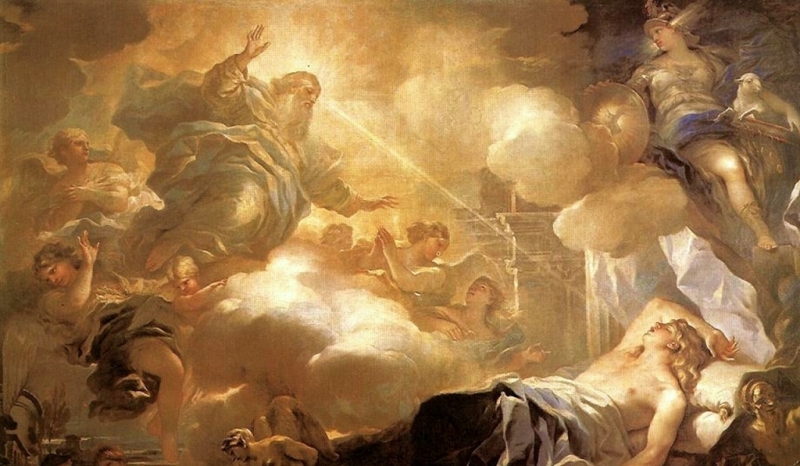
Ecclesiastes 1, Recast in Classical Poetry, by T.M. Moore

October 23, 2019
in Beauty, Culture, Poetry, Terza Rima
A A
16
CREATOR: gd-jpeg v1.0 (using IJG JPEG v62), quality = 100

CREATOR: gd-jpeg v1.0 (using IJG JPEG v62), quality = 100

Wind and Vanity

after Ecclesiastes 1

My name is Solomon, and you may know
me as the king of Israel, David’s son,
a man of wisdom unsurpassed. And so

I was. And yet I write to you as one
emerging from some near-insanity
and folly. I have seen, beneath the sun—

where all is only matter, time, and free
will—that the best of man’s intentions and
exertions are but pride and vanity.

What profit from his labors has a man
when all is said and done? What difference does
he make? What does he leave behind? How can

he hope to be remembered, though he was
intent on carving out a legacy?
The generations come and go, because

death comes to all; the hungry grave will be
our common fate. And yet, the earth abides.
The sun comes up each day perpetually;

and then it sets, returning like the tides,
to where it rises once again. The wind
blows to the south, then turns and harshly rides

up to the north. It travels without end
upon its moaning circuit. Likewise, all
the rivers flow down to the sea, and lend

their issue to its vast, dark depths. Withal,
the sea is never full; the rivers cease
not flowing, whether great or small,

but hasten to the sea again, release
their substance, and return. And what of man?
Do all his pondering and work increase

his understanding of this life? Or can
they show the meaning of existence? Do
they save us from this vanity we stand

in? Everything is full of labor. Who
can understand it? We can never see
enough, or hear enough, or ever do

enough to make sense of this life. Thus we
are never satisfied, and happiness
eludes us. What has been is what will be;

and what was done—though it confound, oppress,
deceive, or disappoint us—will be done
again, to our enjoyment or distress.

For there is nothing new beneath the sun,
within that wall constructed by the mind
of man apart from God. Can anyone

insist that anything is new? Or find
out something not already done or shown?
Since ancient times it has been there, behind

the veil of history, waiting to be known.
No one remembers former things; nor will
the future thank you for the seeds you’ve sown

beneath the sun. You may obsess until
you die about your legacy, but who
will care? Or who for you a tear will spill?

As king, and young, I knew not what to do
to rule my people well. And so I set
my heart to seek out matters wise and true,

to learn by wisdom all I could, and let
God’s Word illuminate my way—to guide
my thinking and my plans. That is, I set

my mind to seek the truth of God, and side
with Him no matter what, to live under
the heavens, not the sun, and to abide

there in God’s presence, filled with awe and wonder.
Indeed, this is a difficult affair.
But God has set us to it, lest we blunder

in all our folly, turn aside, and dare
the heavens to challenge our presumptive ways.
Now I have seen the works done everywhere

beneath the sun, the heights of pride, the maze
of self-deceit, and all the vanity
and lies by which men prosecute their days.

It is all folly. But we cannot see
the crooked path we walk, because it seems
straight to us. Straight, though, it will never be

while crookedness and lies define our schemes
and set our course. Beneath the sun, we feed
on wind, and all our fondest hopes and dreams

elude our grasp, and disappoint, and breed
despair and anger. What we lack, we can
not find; we fail to meet life’s deepest need.

So I communed within my heart: “Can man
know wisdom, knowing folly? I have gained
much wisdom—knowledge, too—more wisdom than

all kings who in Jerusalem have reigned
before me. I have understood all learning!”
Along with this, then, I sought to be trained

in folly and in madness. For there were, burning
in me, strong desires and lusts, which proved to be
my ruin, nearly. All the while, my yearning

to gain more wisdom grew. I came to see
that this was merely grasping for relief
from folly, groping vainly to be free.

For in much wisdom, there is much of grief.
With knowledge, sorrows break in like a thief.


T.M. Moore’s poetry has appeared in numerous journals, and he has published five volumes of verse through his ministry’s imprint, Waxed Tablet Publications. He is Principal of The Fellowship of Ailbe, he and his wife, Susie, reside in Essex Junction, VT.


ShareTweetPin
The Society of Classical Poets does not endorse any views expressed in individual poems or commentary.
Read Our Comments Policy Here

RandomPoems

‘Yin and Yang’ by Jane Blanchard
Humor

‘Yin and Yang’ by Jane Blanchard

June 27, 2014

“Hello, again!” the sun does say when rising on a morn in May. “Thanks for the break,” replies the moon....

‘Grave New Globe’: A Poem by Susan Jarvis Bryant
Covid-19

‘Grave New Globe’: A Poem by Susan Jarvis Bryant

December 15, 2025

  Grave New Globe   I. Lair ---a pantoum You said that owning nothing was a blessing. You whipped our...

Next Post
‘In Memory of the Lake’ by James Christy

'In Memory of the Lake' by James Christy

‘Campaign of 1940-1952’ and Other Poetry by Christopher Fried

'Campaign of 1940-1952' and Other Poetry by Christopher Fried

poem/kemper/culture

'Destiny in Blue' by David Watt

Comments 16

  1. Peter Hartley says:
    7 years ago

    Very long, consistent with the sorrowful and melancholy tenor of the original, consistently cleverly constructed tercet stanzas in a poem that is consistently brilliant throughout. Very well done indeed!

    Reply
  2. Amy Foreman says:
    7 years ago

    Another T.M. Moore poem in my inbox! What a delight to read these carefully-crafted phrases fashioned into masterful, meaningful, and sublime poetry by the man I’ve come to regard as the George Herbert of our time.

    “. . . within that wall constructed by the mind/of man apart from God.” –This is beyond good poetry. This is truth.

    Reply
  3. James Tweedie says:
    7 years ago

    T.M. This is, perhaps, more of a paraphrase than a translation, but, like any good paraphrase, it interprets and draws out the truth of the original in new, creative and compelling ways.

    The original was written as poetry, but in a form that does not translate well into English verse. You have turned the words back into a readily accessible poetic form that is every bit as lovely as the original Hebrew must have sounded to the author’s contemporaries when it was first written.

    And not only have you re-framed it into verse, but you have done so with a masterful eloquence that is vividly descriptive. For example:

    The sun comes up each day perpetually;
    and then it sets, returning like the tides,
    to where it rises once again.

    There is beauty here, but, as Amy points out, there is also truth in your words. This combination of truth and beauty not only makes this poetic translation/paraphrase shine, but illuminate as well.

    Reply
  4. David Paul Behrens says:
    7 years ago

    Ecclesiastes is my favorite book in the Old Testament. This is outstanding!

    Reply
  5. C.B. Anderson says:
    7 years ago

    If terza rima was good enough for Dante, then it should be good enough for you, and in this execution of that venerable form you have not come close to shaming yourself. Here:

    The rivers cease/
    not flowing, whether great or small,
    but hasten to the sea again, release
    their substance, and return.

    is brilliant, and I expect much more from you in the future. You are one of the reasons I attentively await every posting here at SCP.

    Reply
    • T.M. says:
      7 years ago

      Thanks for catching that, C. B. I’ve fixed it:

      “not flowing, whether they be great or small,”

      Blessings.

      Reply
  6. T.M. says:
    7 years ago

    All y’all:

    Thanks for the kind words. I think Ecclesiastes is one of the most important Biblical books for our times. But because it is a difficult book, recasting it in various ways could help to unlock its message to our increasingly secular generation. That, at least, is my hope in this project. Thanks again.

    Reply
  7. David Watt says:
    7 years ago

    Although this is a lengthy poem, the crafting of phrases and well-stated truths held my attention throughout. The concluding couplet could not have been better.

    Reply
    • T.M. says:
      7 years ago

      Thanks, David.

      Reply
  8. James Sale says:
    7 years ago

    Hi TM, this is a fabulous poem and there are so many beauties in it. Just to mention one, I love your use of enjambement, which you cleverly deploy to catch us and force us to read on: e.g. Do / they save us from this vanity we stand / in?
    Of course as you may know, I am a big advocate of terza rima and have had three English Cantos published on these pages (and a fourth at The Lowestoft Chronicle: http://lowestoftchronicle.com/issues/issue37/jamessale/). But I am also creating a Dante tribute website that includes poetry, readings, art and music for an event in 2021 (his 700th anniversary). I would love, therefore, to republish this poem on this site: https://englishcantos.home.blog. Obviously, one would credit SCP with first publication. Would you be up for this? It would be helpful to have your email address so I could contact you directly. Thanks.

    Reply
    • T.M. says:
      7 years ago

      Thanks, James. Of course, I’m a Dante fan, and I’d love to help any way I can. This poem is the first installment of 12 – all of Ecclesiastes. I’ll be giving them to Evan first (to accept or decline), but you can feel free to use any of them you like, without having to ask me each time. I appreciate your encouragement and your contributions to this community.

      Reply
      • James Sale says:
        7 years ago

        That’s great news TM. And BTW my email address is [email protected] – do contact me directly and I’ll keep you posted as I use your work!

        Reply
  9. Kate Farrell says:
    7 years ago

    This is just awesome… shades of “Psalms/Now”
    by Brandt/Corita

    Reply
  10. James Sale says:
    7 years ago

    Great news TM – we have now re-posted your wonderful poem – thanks: https://englishcantos.home.blog/the-wider-circle/

    Reply
    • T. M. says:
      7 years ago

      Many thanks, James. And Kate.

      Reply
  11. Ed Alstrom says:
    4 years ago

    Can I get permission to set this to music?

    Reply

Leave a Reply Cancel reply

Your email address will not be published. Required fields are marked *

  1. Joseph S. Salemi on ‘Spontaneous Conjugal Combustion’ and Other Poems by Susan Jarvis BryantMay 12, 2026

    When I was in the U.K. I heard that "poodle" could mean a henpecked or subservient husband, and by extension…

  2. Susan Jarvis Bryant on ‘Spontaneous Conjugal Combustion’ and Other Poems by Susan Jarvis BryantMay 12, 2026

    Yael, it's always lovely to hear from you. I'm thrilled you enjoyed the poems. I did have people in mind…

  3. Susan Jarvis Bryant on ‘Spontaneous Conjugal Combustion’ and Other Poems by Susan Jarvis BryantMay 12, 2026

    James, I'm hoping you enjoyed the villanelle and it hasn't worried you too much. Mike often suffers for my art…

  4. Susan Jarvis Bryant on ‘Spontaneous Conjugal Combustion’ and Other Poems by Susan Jarvis BryantMay 12, 2026

    C.B. I just love the Queen Elizabeth II and Welsh Corgis scene... I would have claimed that one had I…

  5. Susan Jarvis Bryant on ‘Spontaneous Conjugal Combustion’ and Other Poems by Susan Jarvis BryantMay 12, 2026

    Brian, thank you so much for this extremely generous and perceptive reading. I thoroughly appreciate your take on my quirky…

Subscribe to Daily Poems

Enter your email address to subscribe to this blog and receive notifications of new posts by email.

Join 1,593 other subscribers

Recent Poems

  • A Poem on Coach “Black Mike” Castronis from Athens Y Camp, by Alec Ream
  • A Poem on the Zambian National Park Mosi-oa-Tunya, by Paul A. Freeman
  • ‘Creation of Mom’: A Mother’s Day Poem by Roy E. Peterson
  • ‘Spontaneous Conjugal Combustion’ and Other Poems by Susan Jarvis Bryant
  • ‘The Man in the Moon Was a Very Round Man’: A Poem by Lauren V. Leon
  • ‘Fibromytrauma’: A Poem by Golan Shahar
  • ‘A Lonely Sliver’: A Poem by Katie Tencza
  • ‘Higher Gas Prices Are a Small Price to Pay’: An Iran War Poem by Mark F. Stone
  • ‘Always Ahead’: A Poem by Scharlie Meeuws
  • ‘Hamlet’s Lawyer’ and Other Poetry by Brian Yapko
  • ‘On An Old Photograph’: A Poem by Joseph S. Salemi
  • ‘Faust Foresees His End’: A Poem by Martin Briggs
  • ‘À la Carte’ and Other Poetry by C.B. Anderson
  • ‘Where the Sweet Bluebonnets Bloom’: A Poem by Roy E. Peterson
  • ‘The Waters’: A Poem by Margaret Brinton
  • ‘The Pinnacle of Poetry’ and Other Poems by Russel Winick
  • The First American Sonnets: An Essay on David Humphreys, by Margaret Coats
  • ‘The Holy Rollers on Poetry’: A Poem by Joseph S. Salemi
  • Sappho’s ‘Poem 1’ Translated by Bruce Phenix
  • ‘The Cautionary Tale of Phone Addicted Mimi’: A Poem by Paul A. Freeman
  • ‘Look Away’: A Poem for America’s 250th Anniversary, by Roger Crane
  • ‘Sunday Morning in Canada’: A Poem by Jeffrey Essmann
  • ‘Bean’: A Poem by Jan Mennite
  • ‘The Swan’s Song ’: A Poem for Shakespeare’s Birthday, by Susan Jarvis Bryant
  • ‘The Gravedigger’: A Poem by Marie Burdett
  • ‘Waiting for the Perfect Man’: A Poem by Janice Canerdy
  • ‘The George-A-Saurus’ and Other Poetry by Brian Yapko
  • ‘When Asked: What’s Your Favorite Season?’: A Poem by Paul Millan  
  • ‘The Last At-Bat of Lyndon Braun’: A Poem by Michael Pietrack
  • ‘The Perpetual Battle’ and Other Poetry by Adam Sedia

Categories

  • Acrostic
  • Alexandroid
  • Alliterative
  • Art
  • Best Poems
  • Blank Verse
  • Chant Royal
  • Classical Poets Live
  • Clerihew
  • Covid-19
  • Deconstructing Communism
  • Educational
  • Epic
  • Epigrams and Proverbs
  • Essays
    • Interviews with Poets
    • Poetry Reviews
  • Featured
  • From the Society
  • Great Poets
    • Dante Alighieri
    • Edgar Allan Poe
    • Emily Dickinson
    • Geoffrey Chaucer
    • Henry Wadsworth Longfellow
    • Homer
    • John Keats
    • John Milton
    • Robert Frost
    • William Blake
    • William Shakespeare
    • William Wordsworth
  • Human Rights in China
  • Limerick
  • Love Poems
  • Music
  • Pantoum
  • Performing Arts
  • Poetry
    • Beauty
    • Children's Poems
    • Culture
    • Ekphrastic
    • Found Poems
    • High School Poets
    • Humor
    • Riddles
  • Poetry Challenge
  • Poetry Contests
  • Poetry Forms
    • Curtal Sonnet
    • Haiku
  • Poetry Readings
  • Rhupunt
  • Rondeau
  • Rondeau Redoublé
  • Rondel
  • Rubaiyat
  • Sapphic Verse
  • Satire
  • Science
  • Sestina
  • Shape Poems
  • Short Stories
  • Song Lyrics
  • Sonnet
  • Symposium
  • Terrorism
  • Terza Rima
  • The Environment
  • Translation
  • Triolet
  • Video
  • Villanelle

Quick Links

  • About Us
  • Submit Poetry
  • Become a Member
  • Members List
  • Support the Society
  • Advertisement Placement
  • Comments Policy
  • Terms of Use

Welcome Back!

Login to your account below

Forgotten Password?

Retrieve your password

Please enter your username or email address to reset your password.

Log In
No Result
View All Result
  • Poems
    • Beauty
    • Culture
    • Satire
    • Humor
    • Children’s
    • Art
    • Ekphrastic
    • Epic
    • Epigrams and Proverbs
    • Human Rights in China
    • Music
    • Performing Arts
    • Riddles
    • Science
    • Song Lyrics
    • The Environment
    • The Raven
    • Found Poems
    • High School Poets
    • Terrorism
    • Covid-19
  • Poetry Forms
    • Sonnet
    • Haiku
    • Limerick
    • Villanelle
    • Rondeau
    • Pantoum
    • Sestina
    • Triolet
    • Acrostic
    • Alexandroid
    • Alliterative
    • Blank Verse
    • Chant Royal
    • Clerihew
    • Rhupunt
    • Rondeau Redoublé
    • Rondel
    • Rubaiyat
    • Sapphic Verse
    • Shape Poems
    • Terza Rima
  • Great Poets
    • Geoffrey Chaucer
    • Emily Dickinson
    • Homer
    • Henry Wadsworth Longfellow
    • Dante Alighieri
    • John Keats
    • John Milton
    • Edgar Allan Poe
    • William Shakespeare
    • William Wordsworth
    • William Blake
    • Robert Frost
  • Love Poems
  • Contests
  • SCP Academy
    • Educational
    • Teaching Classical Poetry—A Guide for Educators
    • Poetry Forms
    • The SCP Journal
    • Books

© 2025 SCP. WebDesign by CODEC Prime.