• Submit Poetry
  • Support SCP
  • About Us
  • Members
  • Join
Tuesday, May 12, 2026
Society of Classical Poets
  • Poems
    • Beauty
    • Culture
    • Satire
    • Humor
    • Children’s
    • Art
    • Ekphrastic
    • Epic
    • Epigrams and Proverbs
    • Human Rights in China
    • Music
    • Performing Arts
    • Riddles
    • Science
    • Song Lyrics
    • The Environment
    • The Raven
    • Found Poems
    • High School Poets
    • Terrorism
    • Covid-19
  • Poetry Forms
    • Sonnet
    • Haiku
    • Limerick
    • Villanelle
    • Rondeau
    • Pantoum
    • Sestina
    • Triolet
    • Acrostic
    • Alexandroid
    • Alliterative
    • Blank Verse
    • Chant Royal
    • Clerihew
    • Rhupunt
    • Rondeau Redoublé
    • Rondel
    • Rubaiyat
    • Sapphic Verse
    • Shape Poems
    • Terza Rima
  • Great Poets
    • Geoffrey Chaucer
    • Emily Dickinson
    • Homer
    • Henry Wadsworth Longfellow
    • Dante Alighieri
    • John Keats
    • John Milton
    • Edgar Allan Poe
    • William Shakespeare
    • William Wordsworth
    • William Blake
    • Robert Frost
  • Love Poems
  • Contests
  • SCP Academy
    • Educational
    • Teaching Classical Poetry—A Guide for Educators
    • Poetry Forms
    • The SCP Journal
    • Books
No Result
View All Result
Society of Classical Poets
  • Poems
    • Beauty
    • Culture
    • Satire
    • Humor
    • Children’s
    • Art
    • Ekphrastic
    • Epic
    • Epigrams and Proverbs
    • Human Rights in China
    • Music
    • Performing Arts
    • Riddles
    • Science
    • Song Lyrics
    • The Environment
    • The Raven
    • Found Poems
    • High School Poets
    • Terrorism
    • Covid-19
  • Poetry Forms
    • Sonnet
    • Haiku
    • Limerick
    • Villanelle
    • Rondeau
    • Pantoum
    • Sestina
    • Triolet
    • Acrostic
    • Alexandroid
    • Alliterative
    • Blank Verse
    • Chant Royal
    • Clerihew
    • Rhupunt
    • Rondeau Redoublé
    • Rondel
    • Rubaiyat
    • Sapphic Verse
    • Shape Poems
    • Terza Rima
  • Great Poets
    • Geoffrey Chaucer
    • Emily Dickinson
    • Homer
    • Henry Wadsworth Longfellow
    • Dante Alighieri
    • John Keats
    • John Milton
    • Edgar Allan Poe
    • William Shakespeare
    • William Wordsworth
    • William Blake
    • Robert Frost
  • Love Poems
  • Contests
  • SCP Academy
    • Educational
    • Teaching Classical Poetry—A Guide for Educators
    • Poetry Forms
    • The SCP Journal
    • Books
No Result
View All Result
Society of Classical Poets
No Result
View All Result
Home Poetry Beauty

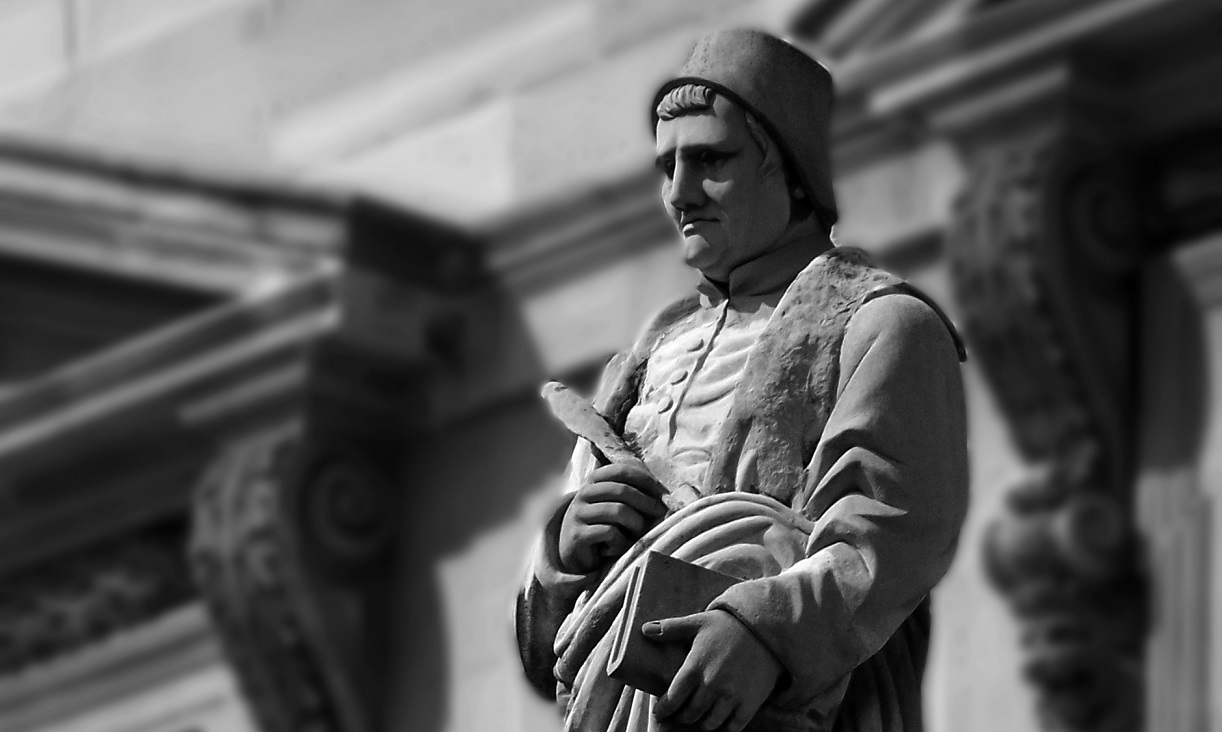
Three Translations of the Poetry of Jean Froissart, by Margaret Coats

January 18, 2020
in Beauty, Culture, Deconstructing Communism, Poetry, Rondeau, Translation
A A
3
poems Three Translations of the Poetry of Jean Froissart, by Margaret Coats

Translator’s note: The following consists of three poems by Jehan (or Jean) Froissart (c.1335–c.1410), translated not very literally but as far as possible in the original form, with its elaborate repetition and rhyme scheme. The form appears to have been created by Froissart. He calls these poems rondiaus qui sont entés en es balades qui s’ensuivent or “rondeaux grafted onto the ballades that follow.” As the eight-line rondeau he employs is now called a triolet, here are three “triolets with ballade glose.”


Understanding Nature

Nature fashions nothing
By random evolution;
Without real causes prompting
Nature fashions nothing.
Though scholars rant in plotting
Against her constitution,
Nature fashions nothing
By random evolution.

Nature fashions nothing
Except as God created,
In wisdom once allotting
The forms she propagated;
To her He delegated
Sure means of distribution;
She is not animated
By random evolution.

Without real causes prompting,
Researchers permeated
By ignorance besotting
Trust theories outdated,
But Nature has re-stated
That chance is no solution,
And time is overrated
By random evolution.

Though scholars rant in plotting
Their unsubstantiated
Denials when confronting
What Nature legislated,
Such science fabricated
Against her constitution
Discredits them, deflated
By random evolution.


French original

Nature ne fait rien
De dissolucion,
Se ce n’est par moien,
Nature ne fait rien;
Quand le naturien
Y met solucion,
Nature ne fait rien
De dissolucion.

Nature ne fait rien
Que par comandement
Du roy celestien,
Qui la fist proprement
Et donna sentement
De bonne intencion,
Non pas entendement
De dissolucion.

Se ce n’est par moyen
D’aucun qui folement
Preingne divers maintien
En son esbatement,
Ou Nature ne sent
En sa condition
Aucun atouchement
De dissolucion.

Quant le naturien
Bien congnoisant entent
Parler contre le bien
De Nature, il ne tent
Qu’a honneur et briefment
Y met solucion,
Et l’escuse humblement
De dissolucion.


Translator’s Note: Yes, the medieval author defies evolution. He calls it “dissolution,” meaning “disorder” and thereby denouncing the idea of creation from chaos. He would also reject another concept known in his time, that life can come from non-living matter, such as rotting wood that in “dissolution” seems to produce maggots. If he knew of it, he would affirm the second law of thermodynamics, which states that disorder in natural systems always increases, and thus cannot give rise to more complex order in nature, no matter how much time there is for chance to operate.


True Likeness

Love is the bread that nourishes
A family’s hearts with honeyed grace;
Love is the wine a home relishes,
Love is the bread that nourishes,
Love is the counsel that banishes
Contrary claims when kindred embrace;
Love is the bread that nourishes
A family’s hearts with honeyed grace.

Love is the bread that nourishes
Health in pure hearts, and spiritual gain;
Love is the key that furnishes
Freedom and friendship in duty’s domain;
Love shows kind hearts how virtues reign;
Love is the consecrated space
Where banquets of manna entertain
A family’s hearts with honeyed grace.

Love is the wine a home relishes,
Sweetening lives austere or plain;
Love understands and cherishes
Those of his own who suffer pain;
Love soothes the troubles that vex life in vain.
Love is the fruit whose flavor can brace
Courage in households ready to train
A family’s hearts with honeyed grace.

Love is the counsel that banishes
Anger from honor’s noble terrain;
Love in itself accomplishes
Anything gentle words ordain.
Love is a bridle, quick to restrain
Contrary claims when kindred embrace,
Offering comforts fit to sustain
A family’s hearts with honeyed grace.


French Original

Amours est le pain qui repaist
Par grace les cuers familleux;
Amours est le vin qui tant plaist,
Amours et le pain qui repaist.
Amours est le conseil tout prest
A refraindre les merveilleux;
Amours est le pain qui repaist
Par grace les cuers familleux.

Amours est le pain qui repaist
Le cuer de creature humaine;
Amours est la clef et l’arrest
Qui tient les cuers en son demaine;
Amours les bons cuers à bien maine;
Amours est le grain vertueux
Qui repaist de manne mondaine
Par grace les cuers familleux.

Amours est le vin qui tant plaist,
Odourant souef comme graine,
Amours scet bien comment il est
A ses gens et lesquels ont paine;
Amours scet qui en vain se paine,
Amours est le fruit gracieux
Qui raemplist, oudoure, alaine
Par grace les cuers familleux.

Amours est le conseil tout prest
A conseiller honnour haultaine;
Amours donne, sans faire prest,
Ses biens par vertu souveraine;
Amours est frain et bride saine
A refraindre les merveilleux,
Et qui assouage et ramaine
Par grace les cuers familleux.


Why Study Love?

You ask how many kinds of love there are,
Since you would serve the love of highest honor;
If not, explain why in particular
You ask how many kinds of love there are.
Is it to learn love’s merit singular,
Or understand its incandescent fervor
You ask how many kinds of love there are,
Since you would serve the love of highest honor?

You ask how many kinds of love there are,
And whether more than one loves loyally.
My common sense observes dissimilar
Desires exciting love confusedly
When hearts love idiosyncratically
In modes as many as the mind can map.
Most human hearts are stable as the sap
That slithers from a tree with nervous vigor,
And as things stand, you bear a handicap,
Since you would serve the love of highest honor.

If not, explain why in particular
You shrink from girls who speak immodestly
And from the men who find a vow bizarre,
Not treasuring true love responsibly
But rousing sentiments licentiously.
Such lovers leave a monumental gap
Between their words and music that might wrap
The doubtful notes in melodies of candor.
I know you hold the two should overlap,
Since you would serve the love of highest honor.

Is it to learn love’s merit singular,
Which is not comprehended easily?
I know no man whose studied repertoire
In music tunes his soul sufficiently
To sing of dissonant loves honestly.
Why study love so eagerly? To tap
Strange energies that make the senses snap,
Or understand its incandescent fervor?
In love, prepare yourself against mishap,
Since you would serve the love of highest honor.


Original French

Vous demandez quantes amours ils sont,
Pour vous tenir a la plus honnourable;
S’il n’est ainsi, dites moi pour quoy don’t
Vous demandez quantes amours ils sont,
Ou pour savoir que leaulz amours font,
Ou pour aucun penser a honnour able?
Vous demandez quantes amours ils sont,
Pour vous tenir a la plus honnourable.

Vous demandez quantes amours ils sont,
Ou s’ils s’en font plus d’une loyaument?
Mon petit sens a ce fait vous respont
Qu’autant qu’il a dessoubz le firmament
De cuers humains qui ont entendement,
De manieres d’amours est il autant,
Qui pas ne sont l’une a l’autre semblant,
Nes que les cuers sont d’un propos estable.
Or y visé de ce jour en avant,
Pour vous tenir a la plus honnourable.

S’il n’est ainsi, dites moy pour quoy don’t
On ne fait nul amoureux jugement
Juste et loyal; quant aval et amont
G’y pense bien, homs n’en puet proprement
Parler au vray que de son sentement.
Ils sont amours, ce dient maint amant,
Où il a plus de note que de chant;
Le chant est bon, et la note est doubtable;
Siques pensez a ces ij maintenant
Pour vous tenir a la plus honnourable,

Ou pour savoir que leaulz amours font,
Ce qu’on ne puet savoir legierement,
Mais je ne scay homme de si parfont
Sens qui peüst sentir si vraiement
Du fait d’autrui que du sien. Et comment
Estes vous dont en estude si grant
Pour deux amours où il n’a qu’un garant,
Ou pour aucun penser a honnour able?
Appareillez vous comme est afferant
Pour vous tenir a la plus honnourable.


Margaret Coats lives in California.  She holds a Ph.D. in English and American Literature and Language from Harvard University.  She has retired from a career of teaching literature, languages, and writing that included considerable work in homeschooling for her own family and others.  
ShareTweetPin
The Society of Classical Poets does not endorse any views expressed in individual poems or commentary.
Read Our Comments Policy Here

RandomPoems

Five Poems for My Mother, by James A. Tweedie
Beauty

Five Poems for My Mother, by James A. Tweedie

August 19, 2022

. Five Poems for My Mother by James A. Tweedie Poet’s Note: My mother, Marjorie Schlatter Tweedie, passed away on...

On An Australian Desert Town: ‘The Station View Itch’ by David Watt
Culture

On An Australian Desert Town: ‘The Station View Itch’ by David Watt

September 12, 2021

. Where meagre rains are tinted red From dust the Western winds have borne, The publican to stranger said: “We’re...

Next Post
Write a Poem on One of These Images

Write a Poem on One of These Images

‘What Song Shall I Sing?’ by James A. Tweedie

'What Song Shall I Sing?' by James A. Tweedie

‘Et In Arcadia Ego’ and Other Poetry by Michael Coy

'Et In Arcadia Ego' and Other Poetry by Michael Coy

Comments 3

  1. Rod says:
    6 years ago

    You have done wonderful work Margaret in resurrecting these poems and giving them new life. In reading your excellent translations I am reminded that despite the passing of centuries we humans of poetic heart are not so different. I am reminded of the words in Ecclesiastes “There is nothing new under the sun” . Thank you for the work you have done in order that we may all share in it.

    Reply
  2. Peter Bridges says:
    6 years ago

    This is elegant and lovely work, Dr. Coats.

    Reply
  3. RM Moore says:
    6 years ago

    Thanks for translating these poems; they help us to properly think and understand.

    Reply

Leave a Reply Cancel reply

Your email address will not be published. Required fields are marked *

  1. Russel Winick on A Poem on the Zambian National Park Mosi-oa-Tunya, by Paul A. FreemanMay 12, 2026

    I love this poem, Paul, because of how well it describes and explains one of the most uniquely beautiful places…

  2. Susan Jarvis Bryant on ‘Spontaneous Conjugal Combustion’ and Other Poems by Susan Jarvis BryantMay 12, 2026

    Joe, I love your interpretation - as far as I'm concerned" a gold-digging young gigolo who attaches himself to a…

  3. Roy Eugene Peterson on National Poetry Month Limerick ChallengeMay 12, 2026

    Urszula, what an imaginative limerick! That is something Poe might have done! Sorry to be so late seeing this.

  4. Roy Eugene Peterson on National Poetry Month Limerick ChallengeMay 12, 2026

    Agreed, Urszula! Thank you for commenting.

  5. Joseph S. Salemi on ‘Spontaneous Conjugal Combustion’ and Other Poems by Susan Jarvis BryantMay 12, 2026

    When I was in the U.K. I heard that "poodle" could mean a henpecked or subservient husband, and by extension…

Subscribe to Daily Poems

Enter your email address to subscribe to this blog and receive notifications of new posts by email.

Join 1,593 other subscribers

Recent Poems

  • A Poem on Coach “Black Mike” Castronis from Athens Y Camp, by Alec Ream
  • A Poem on the Zambian National Park Mosi-oa-Tunya, by Paul A. Freeman
  • ‘Creation of Mom’: A Mother’s Day Poem by Roy E. Peterson
  • ‘Spontaneous Conjugal Combustion’ and Other Poems by Susan Jarvis Bryant
  • ‘The Man in the Moon Was a Very Round Man’: A Poem by Lauren V. Leon
  • ‘Fibromytrauma’: A Poem by Golan Shahar
  • ‘A Lonely Sliver’: A Poem by Katie Tencza
  • ‘Higher Gas Prices Are a Small Price to Pay’: An Iran War Poem by Mark F. Stone
  • ‘Always Ahead’: A Poem by Scharlie Meeuws
  • ‘Hamlet’s Lawyer’ and Other Poetry by Brian Yapko
  • ‘On An Old Photograph’: A Poem by Joseph S. Salemi
  • ‘Faust Foresees His End’: A Poem by Martin Briggs
  • ‘À la Carte’ and Other Poetry by C.B. Anderson
  • ‘Where the Sweet Bluebonnets Bloom’: A Poem by Roy E. Peterson
  • ‘The Waters’: A Poem by Margaret Brinton
  • ‘The Pinnacle of Poetry’ and Other Poems by Russel Winick
  • The First American Sonnets: An Essay on David Humphreys, by Margaret Coats
  • ‘The Holy Rollers on Poetry’: A Poem by Joseph S. Salemi
  • Sappho’s ‘Poem 1’ Translated by Bruce Phenix
  • ‘The Cautionary Tale of Phone Addicted Mimi’: A Poem by Paul A. Freeman
  • ‘Look Away’: A Poem for America’s 250th Anniversary, by Roger Crane
  • ‘Sunday Morning in Canada’: A Poem by Jeffrey Essmann
  • ‘Bean’: A Poem by Jan Mennite
  • ‘The Swan’s Song ’: A Poem for Shakespeare’s Birthday, by Susan Jarvis Bryant
  • ‘The Gravedigger’: A Poem by Marie Burdett
  • ‘Waiting for the Perfect Man’: A Poem by Janice Canerdy
  • ‘The George-A-Saurus’ and Other Poetry by Brian Yapko
  • ‘When Asked: What’s Your Favorite Season?’: A Poem by Paul Millan  
  • ‘The Last At-Bat of Lyndon Braun’: A Poem by Michael Pietrack
  • ‘The Perpetual Battle’ and Other Poetry by Adam Sedia

Categories

  • Acrostic
  • Alexandroid
  • Alliterative
  • Art
  • Best Poems
  • Blank Verse
  • Chant Royal
  • Classical Poets Live
  • Clerihew
  • Covid-19
  • Deconstructing Communism
  • Educational
  • Epic
  • Epigrams and Proverbs
  • Essays
    • Interviews with Poets
    • Poetry Reviews
  • Featured
  • From the Society
  • Great Poets
    • Dante Alighieri
    • Edgar Allan Poe
    • Emily Dickinson
    • Geoffrey Chaucer
    • Henry Wadsworth Longfellow
    • Homer
    • John Keats
    • John Milton
    • Robert Frost
    • William Blake
    • William Shakespeare
    • William Wordsworth
  • Human Rights in China
  • Limerick
  • Love Poems
  • Music
  • Pantoum
  • Performing Arts
  • Poetry
    • Beauty
    • Children's Poems
    • Culture
    • Ekphrastic
    • Found Poems
    • High School Poets
    • Humor
    • Riddles
  • Poetry Challenge
  • Poetry Contests
  • Poetry Forms
    • Curtal Sonnet
    • Haiku
  • Poetry Readings
  • Rhupunt
  • Rondeau
  • Rondeau Redoublé
  • Rondel
  • Rubaiyat
  • Sapphic Verse
  • Satire
  • Science
  • Sestina
  • Shape Poems
  • Short Stories
  • Song Lyrics
  • Sonnet
  • Symposium
  • Terrorism
  • Terza Rima
  • The Environment
  • Translation
  • Triolet
  • Video
  • Villanelle

Quick Links

  • About Us
  • Submit Poetry
  • Become a Member
  • Members List
  • Support the Society
  • Advertisement Placement
  • Comments Policy
  • Terms of Use

Welcome Back!

Login to your account below

Forgotten Password?

Retrieve your password

Please enter your username or email address to reset your password.

Log In
No Result
View All Result
  • Poems
    • Beauty
    • Culture
    • Satire
    • Humor
    • Children’s
    • Art
    • Ekphrastic
    • Epic
    • Epigrams and Proverbs
    • Human Rights in China
    • Music
    • Performing Arts
    • Riddles
    • Science
    • Song Lyrics
    • The Environment
    • The Raven
    • Found Poems
    • High School Poets
    • Terrorism
    • Covid-19
  • Poetry Forms
    • Sonnet
    • Haiku
    • Limerick
    • Villanelle
    • Rondeau
    • Pantoum
    • Sestina
    • Triolet
    • Acrostic
    • Alexandroid
    • Alliterative
    • Blank Verse
    • Chant Royal
    • Clerihew
    • Rhupunt
    • Rondeau Redoublé
    • Rondel
    • Rubaiyat
    • Sapphic Verse
    • Shape Poems
    • Terza Rima
  • Great Poets
    • Geoffrey Chaucer
    • Emily Dickinson
    • Homer
    • Henry Wadsworth Longfellow
    • Dante Alighieri
    • John Keats
    • John Milton
    • Edgar Allan Poe
    • William Shakespeare
    • William Wordsworth
    • William Blake
    • Robert Frost
  • Love Poems
  • Contests
  • SCP Academy
    • Educational
    • Teaching Classical Poetry—A Guide for Educators
    • Poetry Forms
    • The SCP Journal
    • Books

© 2025 SCP. WebDesign by CODEC Prime.