• Submit Poetry
  • Support SCP
  • About Us
  • Members
  • Join
Tuesday, September 15, 2026
Society of Classical Poets
  • Poems
    • Beauty
    • Culture
    • Satire
    • Humor
    • Children’s
    • Art
    • Ekphrastic
    • Epic
    • Epigrams and Proverbs
    • Human Rights in China
    • Music
    • Performing Arts
    • Riddles
    • Science
    • Song Lyrics
    • The Environment
    • The Raven
    • Found Poems
    • High School Poets
    • Terrorism
    • Covid-19
  • Poetry Forms
    • Sonnet
    • Haiku
    • Limerick
    • Villanelle
    • Rondeau
    • Pantoum
    • Sestina
    • Triolet
    • Acrostic
    • Alexandroid
    • Alliterative
    • Blank Verse
    • Chant Royal
    • Clerihew
    • Rhupunt
    • Rondeau Redoublé
    • Rondel
    • Rubaiyat
    • Sapphic Verse
    • Shape Poems
    • Terza Rima
  • Great Poets
    • Geoffrey Chaucer
    • Emily Dickinson
    • Homer
    • Henry Wadsworth Longfellow
    • Dante Alighieri
    • John Keats
    • John Milton
    • Edgar Allan Poe
    • William Shakespeare
    • William Wordsworth
    • William Blake
    • Robert Frost
  • Love Poems
  • Contests
  • SCP Academy
    • Educational
    • Teaching Classical Poetry—A Guide for Educators
    • Poetry Forms
    • The SCP Journal
    • Books
No Result
View All Result
Society of Classical Poets
  • Poems
    • Beauty
    • Culture
    • Satire
    • Humor
    • Children’s
    • Art
    • Ekphrastic
    • Epic
    • Epigrams and Proverbs
    • Human Rights in China
    • Music
    • Performing Arts
    • Riddles
    • Science
    • Song Lyrics
    • The Environment
    • The Raven
    • Found Poems
    • High School Poets
    • Terrorism
    • Covid-19
  • Poetry Forms
    • Sonnet
    • Haiku
    • Limerick
    • Villanelle
    • Rondeau
    • Pantoum
    • Sestina
    • Triolet
    • Acrostic
    • Alexandroid
    • Alliterative
    • Blank Verse
    • Chant Royal
    • Clerihew
    • Rhupunt
    • Rondeau Redoublé
    • Rondel
    • Rubaiyat
    • Sapphic Verse
    • Shape Poems
    • Terza Rima
  • Great Poets
    • Geoffrey Chaucer
    • Emily Dickinson
    • Homer
    • Henry Wadsworth Longfellow
    • Dante Alighieri
    • John Keats
    • John Milton
    • Edgar Allan Poe
    • William Shakespeare
    • William Wordsworth
    • William Blake
    • Robert Frost
  • Love Poems
  • Contests
  • SCP Academy
    • Educational
    • Teaching Classical Poetry—A Guide for Educators
    • Poetry Forms
    • The SCP Journal
    • Books
No Result
View All Result
Society of Classical Poets
No Result
View All Result
Home Poetry Beauty

‘Meditations on Ecclesiastes’ by Cynthia Erlandson

January 3, 2022
in Beauty, Culture, Poetry
A A
12
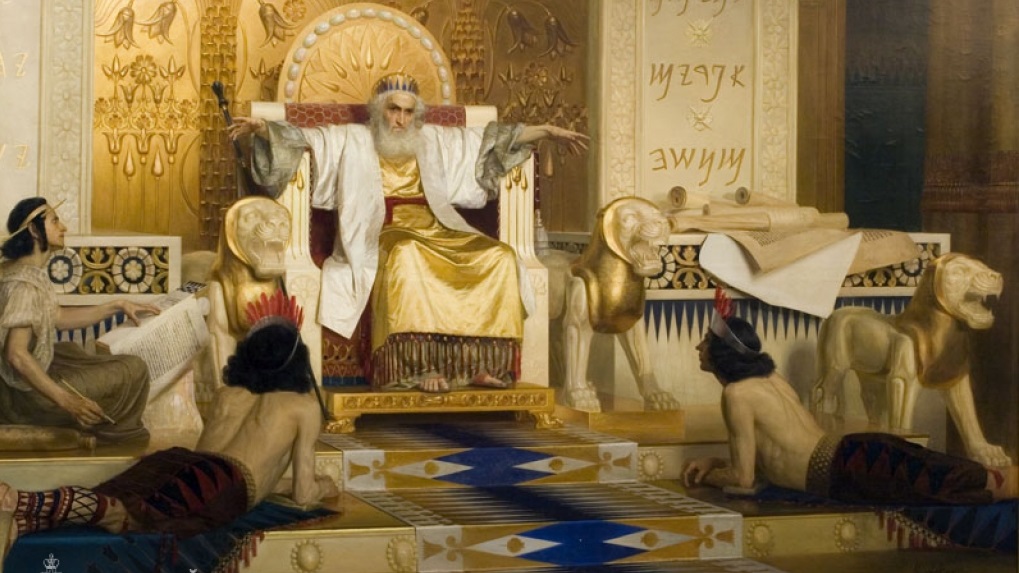
poems 'Meditations on Ecclesiastes' by Cynthia Erlandson

.

Meditations on Ecclesiastes

.

Inquiry

“What profit has a man for all his labor…?” —Ecclesiastes 1: 3

None knows what all his work accomplishes;
What one begins, another finishes
A different way. Or, fools may come in after
He dies, waste life in lust and drunken laughter,
Abandoning the place he built. None will
Recall his arduous efforts or his skill.
This inescapable absurdity
Asserts the depth of earthly vanity.

.

Perplexity

“And this also is a severe evil, that just exactly as he came, so shall he go. And what profit has he who has labored for the wind?” —Ecclesiastes 5: 16-17

We cheer each birth—yet, as man comes, he’ll go—
Naked, as he arrived. The womb is narrow
From whence he comes—as is the grave, where sorrow
Pervades the winds of vanity that blow
About the burial ground, where neither sparrow
Nor man can fall whose Maker doesn’t know.
Of all the things he’s worked for, none will follow
Him to another world. This world seems hollow
To those who mourn his loss; the here and now
Cries out, “Futility! This life is shallow!”
The place of grief surpasses that of mirth;
Therefore a death seems better than a birth.

.

Irony

“There is a vanity which occurs on earth, that there are just men to whom it happens according to the work of the wicked; again, there are wicked men to whom it happens according to the work of the righteous.” —Ecclesiastes 8: 14

Whoever humbly works beneath the skies
With perseverance, thrift, and industry,
Should be rewarded. Why do some, then, rise
By evil? Even worse: the irony
Of those who fall by virtue, is a cause
For philosophical perplexity.
It seems to work against all prudent laws
To give to those who’ve done no good the prize
That should have been bestowed upon the wise
And diligent, however many days he
Labored for posterity. How crazy
To keep back payment from the just! Absurd
Among the things that we have seen and heard,
This system certainly appears insane,
And magnifies a world that seems in vain.

.

Insanity

“… Truly the hearts of the sons of men are full of evil; madness is in their hearts while they live, and after that they go to the dead.” —Ecclesiastes 9: 3

We’re made in God’s own image; nonetheless,
Life is full of madness; then we die.
Has evil led to madness, or has madness
Led to evil? What made us insane?
Why didn’t all-but-one-tree satisfy?
If we had been content, would we have had less
Than all we need? Does soul make war with brain
To warp us? Or, are both demented? Why
Are we conceived and born in craziness?
Our senses can’t make sense of constant pain
That stalks us while, incessantly, we try
Again and yet again, with no success
(The definition of insanity)
To be as God – resulting in the mess
That warped creation’s first and flawless beauty
And carries on this permanent Anomaly.

.

Folly

“And I gave my heart to know wisdom, and to know madness and folly: I perceived that this also is vexation of spirit.” —Ecclesiastes 1: 17 (KJV)

We’re born dissatisfied. Excess vexation
Appears to be our destiny. Like winds
That turn, and blow, and turn about again,
Things change, yet stay the same. Each generation
Repeats the past; wherever one thing ends,
One starts. There’s nothing new beneath the sun.
Our portion in this life—to drink, to eat,
To find some merriment, before defeat
Has overwhelmed us and it is too late
To take delight on earth—this is our fate
While we’re alive. Unfailingly we follow
Our forebears to the always-hungry belly
Of death. Then, what’s the meaning of this folly
We act out on life’s stage beneath a shadow
Of clouds that emphasize our own unknowing?
We chase the wind; it turns, and keeps on blowing
Dust into our eyes, till we can’t see,
Reminding us about the certainty
That we are made of dust, and will return
To it. This paralyzing vanity
Accentuates the Fall’s insanity.
We stumble, wisdom-less, till life is done,
And end in ignorance, as we’d begun.

.

.

Cynthia Erlandson is a poet and fitness professional living in Michigan.  Her second collection of poems, Notes on Time, has recently been published by AuthorHouse, as was her first (2005) collection, These Holy Mysteries.  Her poems have also appeared in First Things, Modern Age, The North American Anglican, The Orchards Poetry Review, The Book of Common Praise hymnal, and elsewhere.

ShareTweetPin
The Society of Classical Poets does not endorse any views expressed in individual poems or commentary.
Read Our Comments Policy Here

RandomPoems

‘One Love’ and Other Poetry by C.B. Anderson
Beauty

‘One Love’ and Other Poetry by C.B. Anderson

July 9, 2019

One Love In all the world there’s but one Love, just one. A single substance—like the billow lit From overhead...

poem/flott/culture
Culture

‘Planned Barrenhood’ by Theresa Rodriguez

March 15, 2020

  Margaret Sanger was the founder of Planned Parenthood Moloch: ancient Canaanite god of child sacrifice Is there one in...

Next Post
‘Unprofitable Servant’ by Margaret Coats

'Unprofitable Servant' by Margaret Coats

‘Forever Faun’ by Emory D. Jones

'Forever Faun' by Emory D. Jones

Review of A Thing With Feathers, by J. John Nordstrom

Review of A Thing With Feathers, by J. John Nordstrom

Comments 12

  1. Julian D. Woodruff says:
    5 years ago

    Elegant poetic echoes of Ecclesiastes, Cynthia, and obvious statements to be making and questions to be posing as we take in breath to face 2022. “Irony” could have been composed as a response to Susan’s marvelous skewering of Blair yesterday.

    Reply
    • Cynthia Erlandson says:
      5 years ago

      Thank you so much, Julian! You are absolutely right: the “character” in Susan’s excellent poem about the “Knight” matches the one here who should not have gotten the prize.

      Reply
  2. James Sale says:
    5 years ago

    Some very powerful – and skilful – poetry here: well done. I love these Biblically related poems, since the source adds a deeper grandeur to the thematic exploration.

    Reply
    • Cynthia Erlandson says:
      5 years ago

      Thank you, James!

      Reply
  3. Sally Cook says:
    5 years ago

    Cynthia, you are a truly unusual poet. I am happy to see your lines on anything, as I am sure that what you write will be well thought out, clear, yet subtle. Thanks !

    Reply
    • Cynthia Erlandson says:
      5 years ago

      Thank you very much, Sally! I have been musing on Ecclesiastes for most of my life.

      Reply
  4. Margaret Coats says:
    5 years ago

    Cynthia, after seeing the line “clouds that emphasize our own unknowing,” I wonder whether you know the medieval English work entitled “The Cloud of Unknowing.” To paraphrase very roughly, the unknown author says that in order to love God, we must set aside our knowledge and enter into the cloud of unknowing where we will find Him. His anticipation seems exactly the opposite of the frustration with experiential knowledge expressed by Ecclesiastes! Your own poems seem to enter into and modernize the Preacher’s mindset, while your titles reveal what you find in it.

    Reply
    • Cynthia Erlandson says:
      5 years ago

      Thank you for your comments, Margaret. I actually have not read that work (though I know of the title). I’m glad you mentioned it; I will have to look it up.

      Reply
  5. Yael says:
    5 years ago

    These are superb Meditations on Ecclesiastes, I really enjoyed reading them. The way you sometimes end a sentence in the middle of a line as opposed to ending them at the end of a line only, adds an interesting amount of suspense and surprise, while lessening the boredom of being able to anticipate words and phrases. Well done, thank you!

    Reply
    • Cynthia Erlandson says:
      5 years ago

      Thank you so much, Yael!

      Reply
  6. Brian Yapko says:
    5 years ago

    Cynthia, these are all marvelous meditations on the wisdom of Ecclesiastes with spotlights on vanity, sanity, birth and death. I enjoyed reading them — especially “Perplexity” which used “o” rhymes for 10 out of 12 lines ending with a true couplet. The “o” sounds seem to echo and amplify the “labor for the wind” quote. In contrast, “Insanity” and “Folly” have somewhat unsteady rhyme schemes — emblematic, perhaps, of a certain lack of societal discipline. Sometimes there are assonances, sometimes slant rhymes. There are a few sets of couplets, but just as often not. “Folly’s rhyme-schemes resolves in the last four lines — not exactly hopefully but with sad wisdom and closure. The effect of carefully-crafted randomness is quite thought-provoking. With respect to all five, thank you for a very enjoyable read.

    Reply
    • Cynthia Erlandson says:
      5 years ago

      I’m so glad you found so much in these, Brian; thank you for your very thoughtful analysis. I was not always aware of doing some of the things you mentioned, particularly the “o” rhymes echoing laboring for the wind. I’ve had experiences over the years (I imagine you have, too) of being surprised at how some things work out subconsciously during the writing process.

      Reply

Leave a Reply Cancel reply

Your email address will not be published. Required fields are marked *


  1. Paul Erlandson on ‘How the Mighty Fell!’: A Poem by Jeff KemperSeptember 15, 2026

    I agree, Margaret ... especially about the capturing of David's feelings for Jonathan. It's hard to do that kind of…

  2. Lauren V. Leon on ‘The Cristero Centennial’: A Poem by Margaret CoatsSeptember 15, 2026

    Dear Margaret, Thank you for educating so many about the Christeros! This poem reminds me of how ancient man understood…

  3. Paul Erlandson on ‘How the Mighty Fell!’: A Poem by Jeff KemperSeptember 15, 2026

    This is very powerful, Jeff. I confess it made tears well up on my lower eyelids. The gut punch line,…

  4. Jonathan Kinsman on ‘Pedagogy’: A Poem by Jonathan KinsmanSeptember 15, 2026

    Dr Salemi, I am sorry for the delay in getting back on this. I was separating the laundry into piles…

  5. Diane Scharper on The Society of Classical Poets 2026 Haiku CompetitionSeptember 15, 2026

    Noisy mix: Growing Grass, seedlings, and weeds. Black Crow trying to sleep. The black bird strutting Proudly under the light…

Subscribe to Daily Poems

Enter your email address to subscribe to this blog and receive notifications of new posts by email.

Join 1,662 other subscribers
No Result
View All Result

Resources

       1. A Guide to Writing Poetry

      2. The Best Poems of 2020      

      3. Poetry and Writing Contests

      4. Journals Accepting Formal Verse

Recent Poems

  • ‘Pedagogy’: A Poem by Jonathan Kinsman
  • ‘Who Are the Villains?’ and Other Poetry by Adam Wasem
  • ‘Isle of Romance’: A Poem by Margaret Brinton
  • ‘Professional Mourner’: A Poem by Brian Yapko
  • A Distillation of Shakespeare’s ‘A Midsummer Night’s Dream’ by Martin Briggs
  • ‘How the Mighty Fell!’: A Poem by Jeff Kemper
  • ‘The One Lone Juror’: A Poem by Joseph S. Salemi
  • ‘Soul of a Prophet’: A Trialog Poem by T.M. Moore
  • ‘Nelson and George’: A Poem by David Filpula
  • ‘When She Arrives’: A Poem by Bhairab Barman
  • ‘On to Better Days’: A Poem by Bruce Dale Wise
  • ‘Serenade’ and Other Poetry by Adam Sedia
  • ‘Self-Exploration’ and Other Poems by Paul Millan
  • ‘Victory’: A Poem by Jonathan Graver
  • ‘The Cristero Centennial’: A Poem by Margaret Coats
  • ‘A Potpourri of Aphoristic Verses’ by C.B. Anderson
  • ‘The Estuary’: A Poem by Jeff Eardley
  • ‘A World Without the Wednesday Child’: A Poem by Kimberly Fore
  • The 2026 Society of Classical Poets International Poetry Competition
  • The 2026 SCP International High School Poetry Competition
  • ‘Realistic Reflections’ and Other Poetry by Anna J. Arredondo
  • ‘China Made’: A Poem by Theresa Werba
  • ‘The Savage Moon’ and Other Poetry by Brian Yapko
  • Poetry Book Review: Love Found, Yearned For, and Lost by James A. Tweedie
  • ‘When Opportunity Knocks’: A Poem by Roy E. Peterson
  • ‘Legend of the Griffin’: A Poem by Iryna Hall
  • ‘Government Issue’ and Other Poems by Joseph S. Salemi
  • ‘Chaucer Announces His Desire to Retire’: A Poem by Paul A. Freeman
  • ‘Advantages of Restaurants’ and Other Poems by Russel Winick
  • ‘Bone China’: A Poem by Mary Gardner

Categories

  • Acrostic
  • Alexandroid
  • Alliterative
  • Art
  • Best Poems
  • Blank Verse
  • Chant Royal
  • Classical Poets Live
  • Clerihew
  • Covid-19
  • Deconstructing Communism
  • Educational
  • Epic
  • Epigrams and Proverbs
  • Essays
    • Interviews with Poets
    • Poetry Reviews
  • Featured
  • From the Society
  • Great Poets
    • Dante Alighieri
    • Edgar Allan Poe
    • Emily Dickinson
    • Geoffrey Chaucer
    • Henry Wadsworth Longfellow
    • Homer
    • John Keats
    • John Milton
    • Robert Frost
    • William Blake
    • William Shakespeare
    • William Wordsworth
  • Human Rights in China
  • Limerick
  • Love Poems
  • Music
  • Pantoum
  • Performing Arts
  • Poetry
    • Beauty
    • Children's Poems
    • Culture
    • Ekphrastic
    • Found Poems
    • High School Poets
    • Humor
    • Riddles
  • Poetry Challenge
  • Poetry Contests
  • Poetry Forms
    • Curtal Sonnet
    • Haiku
  • Poetry Readings
  • Rhupunt
  • Rondeau
  • Rondeau Redoublé
  • Rondel
  • Rubaiyat
  • Sapphic Verse
  • Satire
  • Science
  • Sestina
  • Shape Poems
  • Short Stories
  • Song Lyrics
  • Sonnet
  • Symposium
  • Terrorism
  • Terza Rima
  • The Environment
  • Translation
  • Triolet
  • Video
  • Villanelle

Quick Links

  • About Us
  • Submit Poetry
  • Become a Member
  • Members List
  • Support the Society
  • Advertisement Placement
  • Comments Policy
  • Terms of Use

Welcome Back!

Login to your account below

Forgotten Password?

Retrieve your password

Please enter your username or email address to reset your password.

Log In
No Result
View All Result
  • Poems
    • Beauty
    • Culture
    • Satire
    • Humor
    • Children’s
    • Art
    • Ekphrastic
    • Epic
    • Epigrams and Proverbs
    • Human Rights in China
    • Music
    • Performing Arts
    • Riddles
    • Science
    • Song Lyrics
    • The Environment
    • The Raven
    • Found Poems
    • High School Poets
    • Terrorism
    • Covid-19
  • Poetry Forms
    • Sonnet
    • Haiku
    • Limerick
    • Villanelle
    • Rondeau
    • Pantoum
    • Sestina
    • Triolet
    • Acrostic
    • Alexandroid
    • Alliterative
    • Blank Verse
    • Chant Royal
    • Clerihew
    • Rhupunt
    • Rondeau Redoublé
    • Rondel
    • Rubaiyat
    • Sapphic Verse
    • Shape Poems
    • Terza Rima
  • Great Poets
    • Geoffrey Chaucer
    • Emily Dickinson
    • Homer
    • Henry Wadsworth Longfellow
    • Dante Alighieri
    • John Keats
    • John Milton
    • Edgar Allan Poe
    • William Shakespeare
    • William Wordsworth
    • William Blake
    • Robert Frost
  • Love Poems
  • Contests
  • SCP Academy
    • Educational
    • Teaching Classical Poetry—A Guide for Educators
    • Poetry Forms
    • The SCP Journal
    • Books

© 2025 SCP. WebDesign by CODEC Prime.