• Submit Poetry
  • Support SCP
  • About Us
  • Members
  • Join
Tuesday, September 8, 2026
Society of Classical Poets
  • Poems
    • Beauty
    • Culture
    • Satire
    • Humor
    • Children’s
    • Art
    • Ekphrastic
    • Epic
    • Epigrams and Proverbs
    • Human Rights in China
    • Music
    • Performing Arts
    • Riddles
    • Science
    • Song Lyrics
    • The Environment
    • The Raven
    • Found Poems
    • High School Poets
    • Terrorism
    • Covid-19
  • Poetry Forms
    • Sonnet
    • Haiku
    • Limerick
    • Villanelle
    • Rondeau
    • Pantoum
    • Sestina
    • Triolet
    • Acrostic
    • Alexandroid
    • Alliterative
    • Blank Verse
    • Chant Royal
    • Clerihew
    • Rhupunt
    • Rondeau Redoublé
    • Rondel
    • Rubaiyat
    • Sapphic Verse
    • Shape Poems
    • Terza Rima
  • Great Poets
    • Geoffrey Chaucer
    • Emily Dickinson
    • Homer
    • Henry Wadsworth Longfellow
    • Dante Alighieri
    • John Keats
    • John Milton
    • Edgar Allan Poe
    • William Shakespeare
    • William Wordsworth
    • William Blake
    • Robert Frost
  • Love Poems
  • Contests
  • SCP Academy
    • Educational
    • Teaching Classical Poetry—A Guide for Educators
    • Poetry Forms
    • The SCP Journal
    • Books
No Result
View All Result
Society of Classical Poets
  • Poems
    • Beauty
    • Culture
    • Satire
    • Humor
    • Children’s
    • Art
    • Ekphrastic
    • Epic
    • Epigrams and Proverbs
    • Human Rights in China
    • Music
    • Performing Arts
    • Riddles
    • Science
    • Song Lyrics
    • The Environment
    • The Raven
    • Found Poems
    • High School Poets
    • Terrorism
    • Covid-19
  • Poetry Forms
    • Sonnet
    • Haiku
    • Limerick
    • Villanelle
    • Rondeau
    • Pantoum
    • Sestina
    • Triolet
    • Acrostic
    • Alexandroid
    • Alliterative
    • Blank Verse
    • Chant Royal
    • Clerihew
    • Rhupunt
    • Rondeau Redoublé
    • Rondel
    • Rubaiyat
    • Sapphic Verse
    • Shape Poems
    • Terza Rima
  • Great Poets
    • Geoffrey Chaucer
    • Emily Dickinson
    • Homer
    • Henry Wadsworth Longfellow
    • Dante Alighieri
    • John Keats
    • John Milton
    • Edgar Allan Poe
    • William Shakespeare
    • William Wordsworth
    • William Blake
    • Robert Frost
  • Love Poems
  • Contests
  • SCP Academy
    • Educational
    • Teaching Classical Poetry—A Guide for Educators
    • Poetry Forms
    • The SCP Journal
    • Books
No Result
View All Result
Society of Classical Poets
No Result
View All Result
Home Poetry Beauty

‘Judge Not’ by C.B. Anderson

June 11, 2022
in Beauty, Culture, Dante Alighieri, Poetry, Terza Rima
A A
23
poems 'Judge Not' by C.B. Anderson

.

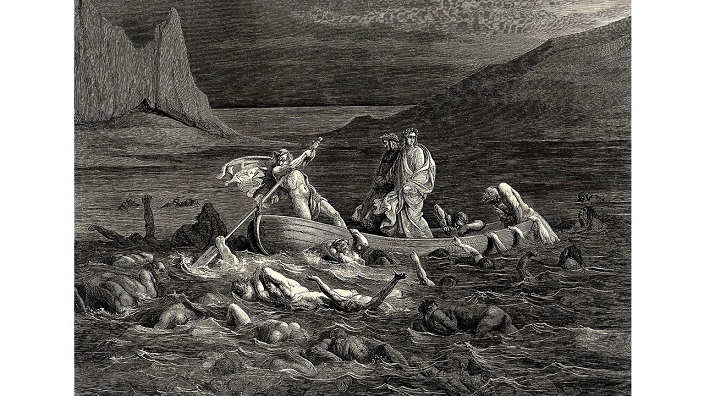
Judge Not

We notice, Signor Alighieri, that
You have a rather well developed bent
For taking your opponents to the mat

And showing them that in the Main Event
They will be pinned like insects to a wall
To illustrate their faults and consequent

Amercements handed out to one and all.
To place yourself upon the Judgment-Seat,
As you have done, must take a lot of gall,

And you yourself might have to face some heat
For doing so.  Perhaps there’s yet another pit
Reserved for those who’ve chosen to compete

With God, the Lord of Law and Holy Writ,
By making show of passing Justice down,
A grave imposture He does not permit.

Did Vergil never show you that?  You frown,
As if you fear that I might well be right,
Or fear the caustic lake in which you’ll drown.

Don’t let these worries keep you up at night,
Or tremble like a stressed anemone;
Let Mercy from above allay your fright.

Make right your heart: Forgive thine enemy;
Don’t play the man who fled Gethsemane.

.

.

C.B. Anderson was the longtime gardener for the PBS television series, The Victory Garden.  Hundreds of his poems have appeared in scores of print and electronic journals out of North America, Great Britain, Ireland, Austria, Australia and India.  His collection, Mortal Soup and the Blue Yonder was published in 2013 by White Violet Press.
ShareTweetPin
The Society of Classical Poets does not endorse any views expressed in individual poems or commentary.
Read Our Comments Policy Here

RandomPoems

‘Boasted Viridian’ and Other Poetry by Alec Ream
Beauty

‘Over the Hill’: A Trimeter Villanelle and Other Poetry by Cheryl Corey

September 11, 2024

. Over the Hill Now that you’re "over the hill," Relax. Enjoy the view. Life’s a beach, so chill. Work?...

How to Write Haiku: What Makes a Good Haiku?
Educational

How to Write Haiku: What Makes a Good Haiku?

June 29, 2022

. How to Write Haiku What Makes a Good Haiku? by Margaret Coats The required 5-7-5 syllable form alone does...

Next Post
Lines On Dreadful Instagram Poetry by S.A.Todd

Lines On Dreadful Instagram Poetry by S.A.Todd

Classical Poetry and the Martial Ethos: An Essay by Andrew Benson Brown

Classical Poetry and the Martial Ethos: An Essay by Andrew Benson Brown

poem/flott/culture

What Is 'Pro-Choice'? and Other Poetry by Joshua C. Frank

Comments 23

  1. Adam Wasem says:
    4 years ago

    Vengeance is mine, saith the Lord, not Dante’s. It always troubled me, in The Inferno, Dante invents all these elaborate and horrific punishments for his characters, but I was always sorely pressed to find much evidence of what exactly they had done within the poem itself, beyond just naming their transgressions once or maybe twice. I remember going over and over the text in vain for the evidence of what, exactly, these people had done to merit such eternal torment, and my inability to find it gave the experience a bitter taste of injustice. I always thought maybe I didn’t understand it, or maybe I needed to read it in the original Italian. Later I discovered the named sufferers were his real-life contemporaries, and who supposedly in real life committed grave sins, but I’ve always believed requiring extra-textual knowledge to undergird the moral of a piece of fiction to be a grave failing, and especially grave in The Inferno, where the knowledge required is, as far as I could tell, almost completely extra-textual. So thank you for addressing The Inferno’s narrator’s vindictive streak so eloquently. What better way to do that than by rhyming “enemy” with “Gethsemane?”

    Reply
    • C.B Anderson says:
      4 years ago

      I’m glad, Adam, that you took this so seriously. For me, it was just a whim.

      Reply
    • Joseph S. Salemi says:
      4 years ago

      Many fine poems require “extra-textual” knowledge to be fully appreciated, and all poems require such knowledge eventually as time passes. That’s why we have literary criticism and learned commentary. In any case, many Italian readers of Dante in his own day would have been familiar with the more prominent personages mentioned in the Inferno’s text.

      Dante is not being vindictive. He is describing people who are damned in hell, and who deserve what they’re getting. And for some of them, like Paolo and Francesca and Ciacco the hog, he does express a kind of pity. But more to the point, as the creator of the poem Dante has carte blanche to create whatever characters and scenarios he pleases. And he need not think about his audience, since he (like any poet) has no idea who that audience may be, or what they may know or feel.

      As Kip says, he wrote the poem just as a whim. That’s generally the right approach for a poet to take.

      Reply
      • C.B. Anderson says:
        4 years ago

        Unless I wish to claim, Joseph, that my hand was guided by the Holy Father Himself, I really have no other option.

        Reply
  2. Cheryl Corey says:
    4 years ago

    Interesting rhyme scheme. I like “anemone”, “enemy” and “Gethsemane”; the phrase “caustic lake”. I had to look up “amercements”, so I’ve learned a new word.

    Reply
    • C.B Anderson says:
      4 years ago

      Guess what, Cheryl. I’ve used that rhyme scheme before. It’s not exact, but it sounds right, and it serves the purpose. I didn’t know the word “amercements” either until I searched my thesaurus for a synonym for “punishment” that worked in the context of the iambic meter. It’s always a good thing to learn a new word, unless the word is not worth learning.

      Reply
  3. Brian Yapko says:
    4 years ago

    This is a fantastic terza rima, C.B.! You have a strong message on the dangers and arrogance of trying to play God in imposing judgment. The conceit of wagging an admonishing finger at Dante is wonderfully original, effective and memorable. There are many fine lines and rhymes here (I’m particularly tickled by your anemone/enemy rhyme) but it’s the audacity of the idea in the first place that really grabs me. I will be coming back to this one. More than once. Well done.

    Reply
    • C.B. Anderson says:
      4 years ago

      Well yes, Brian, the entire project was great fun, for many of the reasons you have noted. Dante the Narrator is not as well placed as he might once have thought.

      Reply
  4. Mike Bryant says:
    4 years ago

    Nothing forced… flows beautifully… pure C.B.
    I would never have thought to chastise Dante… now I wonder why I didn’t.

    Reply
    • C.B. Anderson says:
      4 years ago

      That sounds, Mike, like the afterthought you had after voting for Jimmy Carter. I confess, I voted for him too because Gerald Ford was not good enough. We can’t imagine what courage it must have taken for Dante to have written what he wrote when he wrote it.

      Reply
  5. Margaret Coats says:
    4 years ago

    As Adam Wasem points out, there is some sense of injustice in what Dante has done, because he as a living being lacks knowledge of souls that can only belong to God. Dante can claim that God reveals their sins and punishments to him, but when so many inmates of hell or purgatory turn out to be Dante’s personal or political foes, informed readers become suspicious of the author’s motives. One additional aspect is that Dante as main speaker of the Divine Comedy is himself a character created by Dante the author. With all this to consider, there is plenty of material for a poem like “Judge Not.” I understand that objections were first voiced during Dante’s lifetime, with ensuing debate. Your contribution, C. B., seems to me a very good one using Dante’s own lyric form, but bringing it up to date with current vocabulary, and touches of your personal style in rhyme and diction. The punishment suits the offense, but in a tone that avoids passing judgment and offers persuasive advice in accord with the title.

    Reply
    • C.B. Anderson says:
      4 years ago

      In such matters we must, at all times, observe the distinction between judgment and discernment.

      Reply
  6. Sally Cook says:
    4 years ago

    Dear C.B.
    Well done but unsettling. What I woiuld like to know is — what, in your opinion, is the cutoff point between judgment and discernment?

    .

    Reply
    • C.B. Anderson says:
      4 years ago

      Perhaps, Sally, it’s the difference between cool observation and personal animus, though it could be other things. In any event, I owe you a comprehensive letter explaining my lack of response to your most recent post here. I’ll get to it, I swear!

      Reply
  7. Shaun C. Duncan says:
    4 years ago

    The language flows beautifully and, as others have already pointed out, the closing enemy/Gethsemane rhyme is sensational. I can’t think of another poetic voice who could take Dante to task so effectively but with such good humour.

    Reply
    • C.B. Anderson says:
      4 years ago

      Well, Shaun, humor is not to be taken lightly. There is a reason Dante’s epic is called The Divine Comedy, and I wouldn’t want to disappoint.

      Reply
  8. Norma Pain says:
    4 years ago

    I can Judge Not your poem, other than to say I really like it and the message comes through loud and clear. I tried to read Dante’s Inferno a long time ago but it is so dark and depressing, I gave up. So thank you for this CB.

    Reply
    • C.B. Anderson says:
      4 years ago

      You are very welcome, Norma, but let’s not forget: It’s small payment for all the delightful poems of yours I have been fortunate enough to get to read.

      Reply
  9. Sally Cook says:
    4 years ago

    Dear Kip –
    Hope you do find time to respond.
    I always value your comments, No matter what turn they take, you add something of interest to the conversation.

    In a lighter vein, I Just bought 2 Hibisci. One, called Starry Starry Night, is putting forth a huge asmount of red leaves. The blossoms, when they come, should be red and white striped ! Because of the leaf color, I thought I had got the Dark Red Merlot, but people tell me that those leaves are right for Starry Starry Night. What say you?

    Reply
    • C.B. Anderson says:
      4 years ago

      Sally,

      I always find time for you, but sadly my knowledge of the genus Hibiscus is somewhat limited. I know that there are several species under cultivation, some with dinner-plate-size flowers and others more modest. The shrub called Rose of Sharon is also actually a Hibiscus, namely, Hibiscus syriacus. I’ve probably imbibed Merlot on a starry night, but I have no familiarity with either of those cultivars. See what the flowers look like and then compare notes with the people you alluded to.

      Reply
  10. Joshua C. Frank says:
    4 years ago

    Wow. All that time reading Dante to try to understand it all, and I never thought of this. We Catholics hold his work in such high esteem, but when I read your poem, I ask myself why. Your rhyme scheme is also great, none of it forced. Well done!

    Reply
  11. James A. Tweedie says:
    4 years ago

    The poet, Dante, wrote much that is true.
    His critic, C.B. Anderson, does, too.

    Reply
    • C.B. Anderson says:
      4 years ago

      Much appreciated, James. Not everything I write is true, but I try not to write things I think are not true.

      Reply

Leave a Reply Cancel reply

Your email address will not be published. Required fields are marked *


  1. Rifka Kaplan-Peck on The Society of Classical Poets 2026 Haiku CompetitionSeptember 8, 2026

    Memorable !

  2. Paul Freeman on ‘When She Arrives’: A Poem by Bhairab BarmanSeptember 8, 2026

    I loved how you personify the house, especially when the hand of a woman is present within its walls, and…

  3. Jessica Renee Dawson on The Society of Classical Poets 2026 Haiku CompetitionSeptember 8, 2026

    blackberry flowers a ladybug finds a home amongst the petals remembering her . . . oh! the way sunlight touches…

  4. Bipasha Dutt on ‘When She Arrives’: A Poem by Bhairab BarmanSeptember 8, 2026

    First of all, I must say, I noticed your name. Shiva is my ishta devta. Coming to the poem, it's…

  5. Gerard Maritato on ‘On to Better Days’: A Poem by Bruce Dale WiseSeptember 8, 2026

    I like how the poem talks about “Life” as lived with a grateful heart. I wonder if the poem suggests…

Subscribe to Daily Poems

Enter your email address to subscribe to this blog and receive notifications of new posts by email.

Join 1,637 other subscribers

Recent Poems

  • ‘When She Arrives’: A Poem by Bhairab Barman
  • ‘On to Better Days’: A Poem by Bruce Dale Wise
  • ‘Serenade’ and Other Poetry by Adam Sedia
  • ‘Self-Exploration’ and Other Poems by Paul Millan
  • ‘Victory’: A Poem by Jonathan Graver
  • ‘The Cristero Centennial’: A Poem by Margaret Coats
  • ‘A Potpourri of Aphoristic Verses’ by C.B. Anderson
  • ‘The Estuary’: A Poem by Jeff Eardley
  • ‘A World Without the Wednesday Child’: A Poem by Kimberly Fore
  • The 2026 Society of Classical Poets International Poetry Competition
  • The 2026 SCP International High School Poetry Competition
  • ‘Realistic Reflections’ and Other Poetry by Anna J. Arredondo
  • ‘China Made’: A Poem by Theresa Werba
  • ‘The Savage Moon’ and Other Poetry by Brian Yapko
  • Poetry Book Review: Love Found, Yearned For, and Lost by James A. Tweedie
  • ‘When Opportunity Knocks’: A Poem by Roy E. Peterson
  • ‘Legend of the Griffin’: A Poem by Iryna Hall
  • ‘Government Issue’ and Other Poems by Joseph S. Salemi
  • ‘Chaucer Announces His Desire to Retire’: A Poem by Paul A. Freeman
  • ‘Advantages of Restaurants’ and Other Poems by Russel Winick
  • ‘Bone China’: A Poem by Mary Gardner
  • ‘On the Death of One Too Young to Die’: A Poem by Jeffrey Essmann
  • ‘This Too Shall Pass’ and Other Poetry by Justin Dasher
  • ‘Humdrum and Harum-Scarum’: A Lecture on Free Verse, by Robert Bridges (1922)
  • ‘Unrest On the Floodplain’: A Poem by Bhikkhu Nyanasobhano
  • ‘Latitude and Loss’: A Poem by Martin Briggs
  • ‘Act III’ and Other Poetry by C.B. Anderson
  • ‘God’s Funeral’: A Poem by James Sale
  • ‘Star Festival’: A Poem by Margaret Coats
  • ‘Song of the Frog Princess’: A Poem by Scharlie Meeuws

Categories

  • Acrostic
  • Alexandroid
  • Alliterative
  • Art
  • Best Poems
  • Blank Verse
  • Chant Royal
  • Classical Poets Live
  • Clerihew
  • Covid-19
  • Deconstructing Communism
  • Educational
  • Epic
  • Epigrams and Proverbs
  • Essays
    • Interviews with Poets
    • Poetry Reviews
  • Featured
  • From the Society
  • Great Poets
    • Dante Alighieri
    • Edgar Allan Poe
    • Emily Dickinson
    • Geoffrey Chaucer
    • Henry Wadsworth Longfellow
    • Homer
    • John Keats
    • John Milton
    • Robert Frost
    • William Blake
    • William Shakespeare
    • William Wordsworth
  • Human Rights in China
  • Limerick
  • Love Poems
  • Music
  • Pantoum
  • Performing Arts
  • Poetry
    • Beauty
    • Children's Poems
    • Culture
    • Ekphrastic
    • Found Poems
    • High School Poets
    • Humor
    • Riddles
  • Poetry Challenge
  • Poetry Contests
  • Poetry Forms
    • Curtal Sonnet
    • Haiku
  • Poetry Readings
  • Rhupunt
  • Rondeau
  • Rondeau Redoublé
  • Rondel
  • Rubaiyat
  • Sapphic Verse
  • Satire
  • Science
  • Sestina
  • Shape Poems
  • Short Stories
  • Song Lyrics
  • Sonnet
  • Symposium
  • Terrorism
  • Terza Rima
  • The Environment
  • Translation
  • Triolet
  • Video
  • Villanelle

Quick Links

  • About Us
  • Submit Poetry
  • Become a Member
  • Members List
  • Support the Society
  • Advertisement Placement
  • Comments Policy
  • Terms of Use

Welcome Back!

Login to your account below

Forgotten Password?

Retrieve your password

Please enter your username or email address to reset your password.

Log In
No Result
View All Result
  • Poems
    • Beauty
    • Culture
    • Satire
    • Humor
    • Children’s
    • Art
    • Ekphrastic
    • Epic
    • Epigrams and Proverbs
    • Human Rights in China
    • Music
    • Performing Arts
    • Riddles
    • Science
    • Song Lyrics
    • The Environment
    • The Raven
    • Found Poems
    • High School Poets
    • Terrorism
    • Covid-19
  • Poetry Forms
    • Sonnet
    • Haiku
    • Limerick
    • Villanelle
    • Rondeau
    • Pantoum
    • Sestina
    • Triolet
    • Acrostic
    • Alexandroid
    • Alliterative
    • Blank Verse
    • Chant Royal
    • Clerihew
    • Rhupunt
    • Rondeau Redoublé
    • Rondel
    • Rubaiyat
    • Sapphic Verse
    • Shape Poems
    • Terza Rima
  • Great Poets
    • Geoffrey Chaucer
    • Emily Dickinson
    • Homer
    • Henry Wadsworth Longfellow
    • Dante Alighieri
    • John Keats
    • John Milton
    • Edgar Allan Poe
    • William Shakespeare
    • William Wordsworth
    • William Blake
    • Robert Frost
  • Love Poems
  • Contests
  • SCP Academy
    • Educational
    • Teaching Classical Poetry—A Guide for Educators
    • Poetry Forms
    • The SCP Journal
    • Books

© 2025 SCP. WebDesign by CODEC Prime.