



.
Paperbark Maples
The leaves grow bright with dew; the trunks grow dark.
A contrapuntal autumn morning stirs.
The smoothest trees are wrapped with crumpled bark
and up above, the play of breezes spurs
a brimming sparkle in the air. A dash
of pepper accents smells of fresh-cut grass.
Bouquets of slightly souring maple mash
suffuse the sweet kukicha tea I pass
across the table; though the tea is dark,
your smile is bright. Our day is far from new;
the night before is well-dissolved. A stark
but softly chiming china, stirred by you,
entrances me: I wonder, having been
awake with you so long, As we decay,
do we grow more imperfect here within
our crumpled flesh as summer peels away?
Or less imperfect? Sanded down by time,
our selves remain what they remain. Is all
the rest just paper dross? Or more sublime?
The breezes rustle, filled with leaves that fall
through shafts of light that never seem to end;
and yet, the tumbling efflorescence they
display consumes itself. As tailings wend
their way to earth, I don’t know what to say.
The brighter all the tones of autumn grow,
the fewer leaves there are. The breeze goes on.
The rustling turns to ringing, soft and slow,
then turns to meditation chimes. I’m drawn
to you. “Hey, baby,” tapping on your cup
you grin, “What’s up?” We live from laud to vesper:
As steam from tea, our breath, it rises up
in prayer, an imperfect human whisper.
.
.
Daniel Kemper is a former tournament-winning wrestler, a black belt in traditional Shotokan karate and a former infantryman. He has a BA in English, an MCSE (Systems Engineering), and an MBA. He quit a 25-year IT career in 2023 and went all-in on poetry. Since then, he’s had works accepted for publication at The Blue Unicorn, The Lyric, thehypertexts.com, The Creativity Webzine, Amethyst Review, Rat’s Ass Review, Formalverse, The Literary Hatchet, the Society for Classical Poets, and Ekphrastic Review. He was an invited presenter at the 2023 national PAMLA conference and will preside over the Poetics Panel at PAMLA 2024. He was nominated for a Pushcart Prize by The Blue Unicorn and has been the featured poet at the historic Luna’s Cafe and the Sacramento Poetry Center.
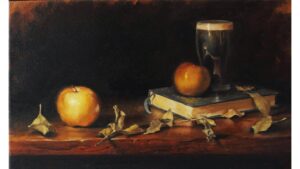


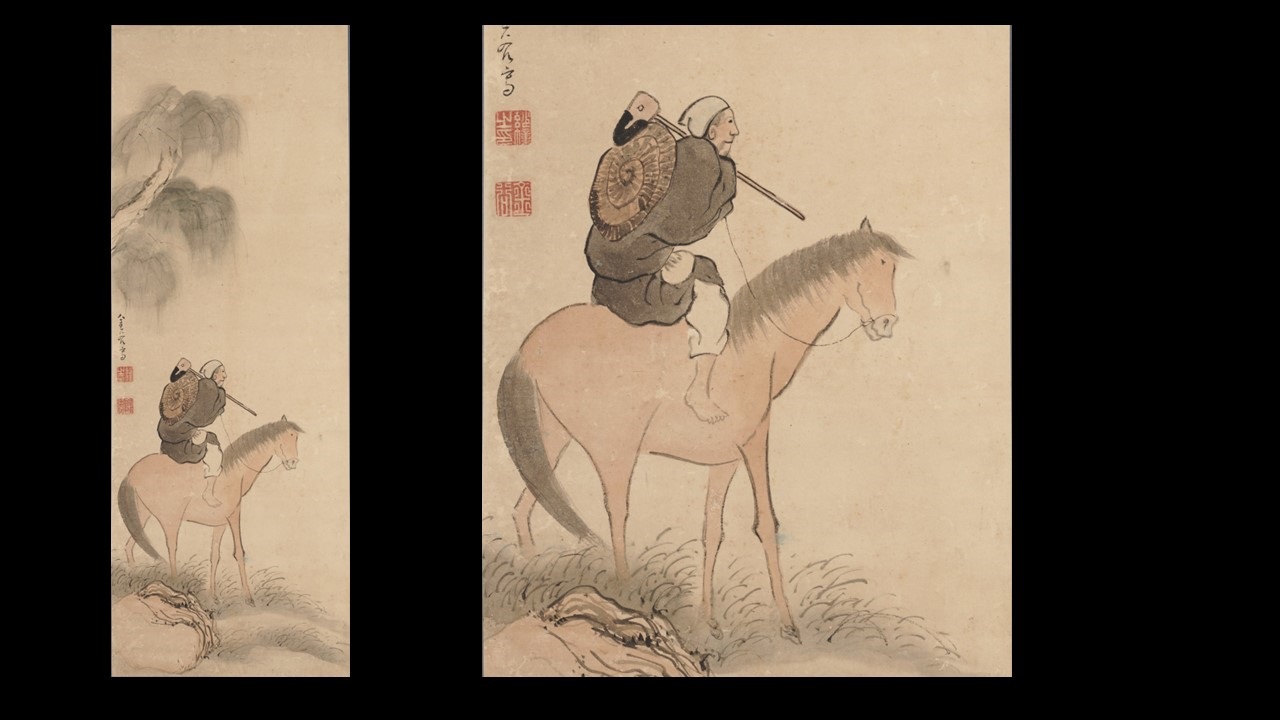















Your well-honed, philosophically inclined poem compares human skin to the maple bark in a fascinating way, has contrasts of dark and light, and steam from the tea likened to our breath rising in prayer like “an imperfect whisper.” This is a beautiful poem for us as fall is in the offing.
Howdy sir,
Thank you for your compliments. I tried really hard to layer in the meanings to reward a reader at whatever their preferred depth. For example, “The breezes rustle, filled with leaves that fall / through shafts of light that never seem to end;” can be linked to memories cascading through the light of time, or the lives of people in the light of eternity, or breeze=time, light=eternity, leaves=material world, any of which should be consistent with the rest of the poem. None of which need to be grappeled with intellectually in order to be felt intuitively, I think. I hope. Thank you again.
BTW, paperbark maples are a specific variety, not just a poetic coinage.
https://arboretum.harvard.edu/plant-bios/paperbark-maple/
This poem, so full of beautiful imagery and profound thought, is exquisitely woven together. From the contrast of brightness and darkness, to the comparison of tree bark to human flesh (about which Roy spoke), to the leaves’ “tumbling efflourescence” consuming itself; to the imperfect meter in your final line accenting the “imperfect human whisper”, you’ve described autumn scenery as truly “contrapuntal” (an ingenious metaphor, as the day affects all of the senses!) “Our day is far from new; the night before is well-dissolved”, and “We live from laud to vesper” — because they seem to mean simultaneously both the present day, and all of one’s life as a whole — bring to my mind a night prayer from The Book of Common Prayer: “O Lord, support us all the day long, until the shadows lengthen and the evening comes, and the busy world is hushed, and the fever of life is over, and our work is done. Then in thy mercy grant us a safe lodging, and a holy rest, and peace at the last.”
Yo Cynthia!
Your perceptive message was very encouraging and satifying. More importantly, getting linked to the Book of Common Prayer stuns me. First, for various reasons, some time back I started trying to add a regular period of prayer to my life. Same prayer, same time. I have a morning one. I’m far from praying the hours (and not Catholic, btw, though raised Episcopalian, which was at the time basically Pope-less Catholicism). I’ve been casting about for an evening one and, well The Lord works in mysterious ways. Thank you.
Imagery and philosophy in spades. I’ll definitely give this poem a re-read or two.
Thanks for the read, Daniel.
Awesome Paul, that’s what I was aiming for. To make a poem that rewards many re-reads.
I was a bit concerned about some of those layers. For example, it being not inconsistent with a sort of Buddhist take running through it. It was influenced semi-consciously by a woman I was engaged to at the time who subscribes to a synchratistic sort of faith. The “night before” reads a bit reincarnation-ish to those of Buddhist leanings, which they feel is reinforced by the chimes– which were a deliberate detail. To enter into meditation at the sound of a chime and then exit from it with a chime also. Here, the mediation chime is the spoon against the cup. Meditation has history in more places than the East, though.
Beautiful poem. Thank you.
Hey jd, thank you for engaging it and letting me know you enjoyed it.
Beautiful images and something lingering and sad, so truly autumnal.
Rohini, a poet never tires of readers who appreciate their work and let them know when they’ve really hit the mark. Thank you.
Daniel, this is a vivid poem which contains some imagery which is both beautiful and unexpected. Autumn’s melancholy seems to be a favorite among poets and yours is a wonderful reflection of the season as well as the relationship metaphor that it presents. I especially appreciate the array of sensory impressions which infuse your first stanza — each sense is represented. The “pepper accent smells of fresh-cut grass” particularly delighted me as did your sound-sense related use of “contrapuntal.” And the sad truth that “The brighter all the tones of autumn grow,/the fewer leaves there are.” We must treasure what we have while we have it. Well done.
Brian,
Your compliments carry a particular kind of weight coming from someone of your talent and similar sympathy for ode type things. 🙂 I’m delighted you noticed the senses. It was a design intent.
Sight: bright/dark/efflourescence
Sound: ringing/chiming/rustling
Smell: pepper/maple mash
Touch: smooth/crumpled/peeling/
Taste: sweet ( little weak here)
Sense of time…
It was also a design objective to center the discussion on degrees of imperfection rather than degrees of perfection. More imperfect/less imperfect. That was an intuitive call, though part of the design it was, indeed.
I *think* it helps the gesture of the final line come across as a little bit peeling off the poem as the poem itself faces its end…
Anyway, I also felt like I’d been presenting a lot of challenging material regarding meter changes, the perfect meter they require, musical techniques, etc. so a simpler venture as a moment to rest seemed appropriate.
Thanks for the link to a close-up of paperbark maples. They look vaguely human. At first, “paperbark” seemed like a word to be defined in the poem–as indeed it is, while being applied to the human realm as well. But as the tree scene fades into the tea scene, another word to question is introduced: “imperfect.” Good choice, as there can be many “more or less” degrees of imperfection, while the opposite quality (perfection) in essence has none. I remember being taught to say, “more nearly perfect” as a proper comparative, after seeing in the US Constitution that we the people aim to form a “more perfect union.”
The poem asks whether decay, with time peeling away something unspecified, renders persons more imperfect or less imperfect. “Our selves remain what they remain” is a non-committal statement in the agnostic (“I don’t know what to say”) next-to-last stanza. I’ll give my opinion for the second law of thermodynamics and a naturally increasing state of disorder, which would mean more imperfection. Of course, that posits adding no new energy to the system, and living, breathing human beings can overcome entropy in spirit if not always in matter. I’m glad to see that added energy in your final two lines, the last of which is metrically quite imperfect–unless you read “prayer” as a two-syllable word (the feminine ending to an iambic line makes the eleventh syllable). “Prayer” is an important means of using our “breath” to appeal for that added spiritual energy. Yet as you say, it is “an imperfect human whisper.” The perfecting power comes from outside ourselves. Beautifully done.
Hi Margaret,
Great critique–so much bubbles in me because of it!
You know, the thing which peels away–funny yes, I don’t know what it *is* but I perceive the actions of what it *does*. Something like Fineman’s view of energy.
[selves remain] Perhaps, “What thou lovest best remains, the rest is dross,” whose echo prompted my word choice. I intended speechlessness as an expression of awe, which indeed is no answer. But silence counterpoints the sounds.
Ah, but now my favorite imperfection. First, I was a bit concerned with whether the beseeching nature of the ending would come through without me saying the speaker is beseeching answers, mercy, succor. Second, I was hoping that with a perfect (metrically) core to the poem, a final touch of imperfection would be a perfect core shedding a piece of bark.
Third, as a corollary to the second, one doesn’t get that opportunity (point #2) if meter isn’t perfect up to that point, right?
If the poem followed what seems the average accepted rate of metrical imperfection (? one per two lines of pentameter?), the signal would be lost in the noise. I couldn’t strike the otherworldly tranquility inside the reader if they were jostled and stumbling along.
A fit form girded up for work is not the same as a flabby form jammed into a girdle.
It’s paradoxical, but true: perfect meter actually enables far more expressiveness than imperfect.
The little musical pieces I’ve rolled out are just intimations of the vast possibilities. But even just exploring a single change of meter at a tactical point in a sonnet, e.g. going from iambic meter to anapestic at the volta, gives us at minimum a four-fold increase (iamb, trochee, anapest, dactyl) in what we can do with sonnets. Again, that doesn’t work with imperfect meter because the reader is confused at the moment of the change, not knowing if it’s important or just another variation. By the time they can discern it, the moment is already gone.
The poetic world could use a careful study of meter changes under controlled circumstances to get an idea of what those changes actually DO–feeling, pace, variability, etc. Music has this sort of thing with keys.
I’ve gone on and on. Thank you, Margaret for your deep thinking, which has spurred so much additional thought.
This musical, sensual, philosophical, spiritual treat of a poem is beautiful. “A contrapuntal autumn morning stirs” drew me in to a swirl of mellifluous magic that had me under its spell way beyond the exquisite whisper of the closing lines.
I just love this question: “… Sanded down by time, / our selves remain what they remain. Is all / the rest just paper dross? Or more sublime?” These words put me in mind of 2 Corinthians 4:15: “For all things are for your sakes, that the abundant grace might through the thanksgiving of many redound to the glory of God.” I believe we learn this wisdom in the autumn of our years. For me, your poem sings with a glorious yet humble sagacity. Daniel, thank you!
Hi Susan and thank you for your inimitable words of praise. I am most humbled by the term sagacity. I am quite pleased that the poem moved you and that biblical quotations naturally bubbled up from it.
Daniel thank you for this beautiful poem.
For some reason it has reminded me of an old haiku of mine,
whistling wind lifts
fallen russet leaves to dance
autumn’s last tango
A kernel compared to your poem I know,
I even had to look up in one two words eg contrapuntal so thank you