• Submit Poetry
  • Support SCP
  • About Us
  • Members
  • Join
Tuesday, June 30, 2026
Society of Classical Poets
  • Poems
    • Beauty
    • Culture
    • Satire
    • Humor
    • Children’s
    • Art
    • Ekphrastic
    • Epic
    • Epigrams and Proverbs
    • Human Rights in China
    • Music
    • Performing Arts
    • Riddles
    • Science
    • Song Lyrics
    • The Environment
    • The Raven
    • Found Poems
    • High School Poets
    • Terrorism
    • Covid-19
  • Poetry Forms
    • Sonnet
    • Haiku
    • Limerick
    • Villanelle
    • Rondeau
    • Pantoum
    • Sestina
    • Triolet
    • Acrostic
    • Alexandroid
    • Alliterative
    • Blank Verse
    • Chant Royal
    • Clerihew
    • Rhupunt
    • Rondeau Redoublé
    • Rondel
    • Rubaiyat
    • Sapphic Verse
    • Shape Poems
    • Terza Rima
  • Great Poets
    • Geoffrey Chaucer
    • Emily Dickinson
    • Homer
    • Henry Wadsworth Longfellow
    • Dante Alighieri
    • John Keats
    • John Milton
    • Edgar Allan Poe
    • William Shakespeare
    • William Wordsworth
    • William Blake
    • Robert Frost
  • Love Poems
  • Contests
  • SCP Academy
    • Educational
    • Teaching Classical Poetry—A Guide for Educators
    • Poetry Forms
    • The SCP Journal
    • Books
No Result
View All Result
Society of Classical Poets
  • Poems
    • Beauty
    • Culture
    • Satire
    • Humor
    • Children’s
    • Art
    • Ekphrastic
    • Epic
    • Epigrams and Proverbs
    • Human Rights in China
    • Music
    • Performing Arts
    • Riddles
    • Science
    • Song Lyrics
    • The Environment
    • The Raven
    • Found Poems
    • High School Poets
    • Terrorism
    • Covid-19
  • Poetry Forms
    • Sonnet
    • Haiku
    • Limerick
    • Villanelle
    • Rondeau
    • Pantoum
    • Sestina
    • Triolet
    • Acrostic
    • Alexandroid
    • Alliterative
    • Blank Verse
    • Chant Royal
    • Clerihew
    • Rhupunt
    • Rondeau Redoublé
    • Rondel
    • Rubaiyat
    • Sapphic Verse
    • Shape Poems
    • Terza Rima
  • Great Poets
    • Geoffrey Chaucer
    • Emily Dickinson
    • Homer
    • Henry Wadsworth Longfellow
    • Dante Alighieri
    • John Keats
    • John Milton
    • Edgar Allan Poe
    • William Shakespeare
    • William Wordsworth
    • William Blake
    • Robert Frost
  • Love Poems
  • Contests
  • SCP Academy
    • Educational
    • Teaching Classical Poetry—A Guide for Educators
    • Poetry Forms
    • The SCP Journal
    • Books
No Result
View All Result
Society of Classical Poets
No Result
View All Result
Home Poetry Culture

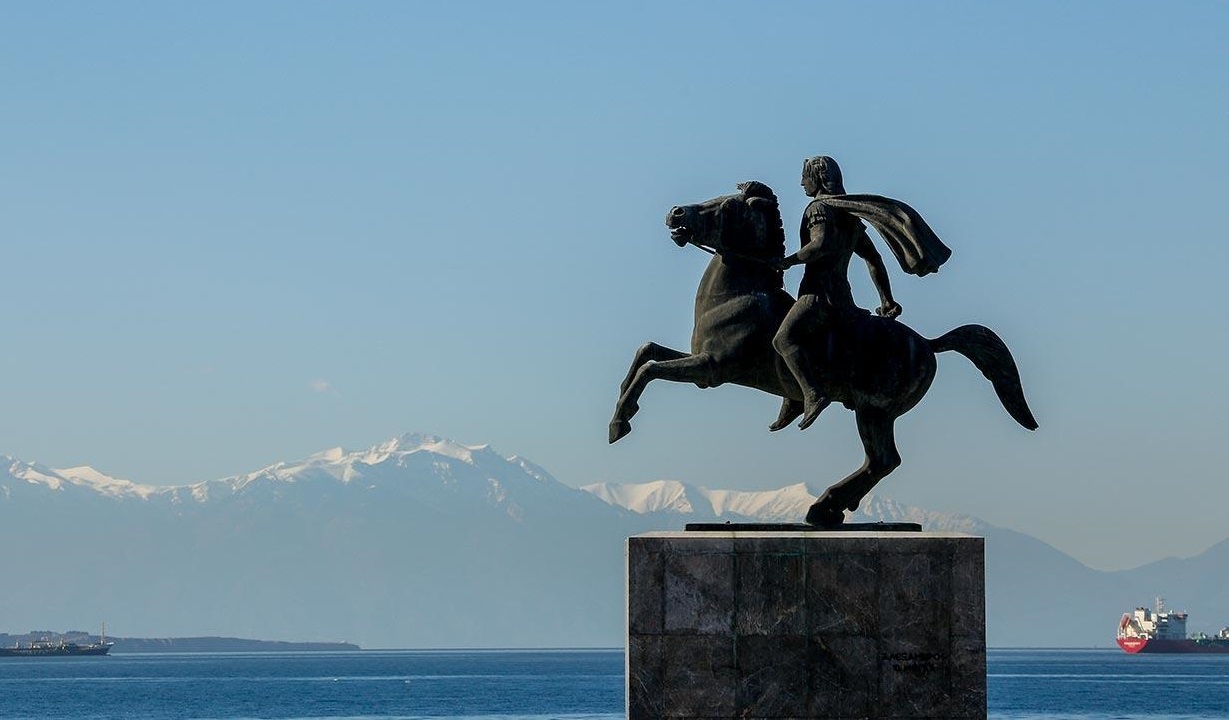
‘Three Things Alexander Knew’: A Poem by James Sale

October 5, 2024
in Culture, Poetry
A A
26
poems 'Three Things Alexander Knew': A Poem by James Sale

.

Three Things Alexander Knew

“What can you tell me that deserves such excitement,
except perhaps that Homer has come back to life?”
—Alexander the Great

He conquered the world
And it was too small. How?
The lessons are clear:

He read the Iliad, ignored girls—
Messages were irrelevant. Wow—
If Homer lived again—there

Was the power—Achilles strove
As Alexander did, seized the now,
Invoking gods we don’t dare.

It wasn’t luck—how missiles wove
Each and every way, as though
Designed to miss him, hit air.

No, not luck—his fate furled
Round him perfect as a glove,
Hard as ox-hide, no-one to spare.

.

.

James Sale has had over 50 books published, most recently, “Mapping Motivation for Top Performing Teams” (Routledge, 2021). He has been nominated by The Hong Kong Review for the 2022 Pushcart Prize for poetry, has won first prize in The Society of Classical Poets 2017 annual competition, and performed in New York in 2019. He is a regular contributor to The Epoch Times. His most recent poetry collection is “StairWell.” For more information about the author, and about his Dante project, visit https://englishcantos.home.blog. To subscribe to his brief, free and monthly poetry newsletter, contact him at [email protected]
ShareTweetPin
The Society of Classical Poets does not endorse any views expressed in individual poems or commentary.
Read Our Comments Policy Here

RandomPoems

33 Riddles for Young and Old
Culture

‘Epigrams for Today and Tomorrow’ by C.B. Anderson

May 11, 2021

. Raw Now, listen, if you want to know the truth: The world's a battleground of claw and tooth. ....

‘Government Waste’: A Poem by Warren Bonham for the Reagan Movie Premiere
Culture

‘Government Waste’: A Poem by Warren Bonham for the Reagan Movie Premiere

August 31, 2024

. Wisdom of Reagan: Government Waste “Government is like a baby: with a big appetite at one end and no...

Next Post
The Struggle for the Formalist Tradition: An Essay by Joseph S. Salemi

'Not the Same Thing Anymore' and Other Poems by Russel Winick

‘Of Election and Limits’ by Alec Ream

'Political Musings': Couplets by Cheryl Corey

Poetry by Groth and Heine, translated by Julian Woodruff

'Consequences of Following Advice': A Poem by Roy E. Peterson

Comments 26

  1. Roy Eugene Peterson says:
    2 years ago

    The quote sets up this poem nicely. Fascinating way to start the poem and then the rhyme scheme skipping through the three-line verses. A pleasure to read and for cogitation.

    Reply
    • James Sale says:
      2 years ago

      Thanks Roy – as military person yourself, I am sure Alexander must hold a special fascination for you? Certainly, even as a non-military person, he does for me: certainly one of the most striking individuals in all of recorded history, and he has cast a long shadow. Glad you appreciated the rhyming pattern.

      Reply
  2. Jeremiah Johnson says:
    2 years ago

    Epic stuff! – Those missiles weaving around him, designed to miss. Reminds me of Rommel’s near misses leading charges from the top of his tank. I would call it Providence – but it’s amazing how many near misses some of these military leaders had. Guess a pure logician would say those had to have been near misses or they wouldn’t have lasted long enough to earn fame.

    Reply
    • James Sale says:
      2 years ago

      Epic? – thank you Jeremiah, a favourite word of mine as I have just completed my 3 volume epic, The English Cantos. But if this small lyric also has the flavour – the whiff – of high heroism, then you have made me very happy! And BTW, I’ve always wished to have an epic name like Jeremiah Johnson: the alliteration, the Biblical prophetic, it’s poetry itself! Don’t change your name!

      Reply
      • Jeremiah Johnson says:
        2 years ago

        James – The English Cantos are on my to-read list! Possibly this summer (I’m currently reading The Divine Comedy through for the third time with a group of colleagues from my university and feel primed to dive into your contemporary re-imagining – if I may think of it that way?) As for my name, I’m regularly informed by those of my parents’ generation that there is a great western film, “Jeremiah Johnson.” If you had asked my father, he would’ve said I was name after that movie – a roundabout way of naming me after himself, as he very much resembled that character 🙂

        Reply
      • James Sale says:
        2 years ago

        Yes, I think I saw that movie back in the 70s, Jeremiah – starring Robert Redford? Let me know if you want to be on my monthly poetry newsletter – it’s free – [email protected]

        Reply
  3. Joseph S. Salemi says:
    2 years ago

    Alexander seems to have been fixated on Achilles: both of them were energetic young men, both were fierce fighters, both chose everlasting fame over long life, both led an army, and both were impetuous.

    One difference is that a certain arrow was aimed at Achilles, and did manage to hit him.

    A great little poem, James!

    Reply
    • James Sale says:
      2 years ago

      You are so right about that arrow Joe: but then, of course, Paris was guided by Apollo, the archer – who can resist that? The Persians had no such helper! Glad you liked it – thanks.

      Reply
  4. Margaret Coats says:
    2 years ago

    As brief as Alexander might have made it, had he been a poet. Almost seems as if he is the speaker, outlining his concerns. The final item–his fate–is something he didn’t know, and yet that topic absorbs the last stanza here, leaving me wondering if James Sale favors any of the several theories on Alexander’s death. Or do you simply convey your own wonder about the destiny and the event, James?

    Reply
    • James Sale says:
      2 years ago

      That there is a mystery surrounding his death, Margaret, only adds to the mystique; and we note that one of only a handful of people who could be compared with Alexander as a military commander, Napoleon, also died in mysterious circumstances with the strong suggestion of poison. It’s not a definitive biography (in the UK probably Robin Lane Fox’s is the one), but I do like Graham Phillips’ Alexander the Great: Murder in Babylon and the evidence for poisoning as he writes his murder mystery! Thanks for commenting.

      Reply
  5. Jeff Eardley says:
    2 years ago

    James, this reminds me of the Robert Duvall character, Bill Kilgore (what a name!) in the movie, “Apocalypse Now” strutting around and totally immune to the death and fire going on around him. A good read. Thank you.

    Reply
    • James Sale says:
      2 years ago

      That was one film, Jeff!!! And Duvall is always great. Thanks for liking it.

      Reply
  6. Anthony Watts says:
    2 years ago

    The flexible rhyming scheme, rhythm and abundant enjambement work together to make a neat poem. I couldn’t help thinking how welcome some of those ‘designed to miss’ missiles would be in certain parts of the world today.

    Reply
    • James Sale says:
      2 years ago

      Thanks Anthony – yes, if only!

      Reply
  7. Cheryl Corey says:
    2 years ago

    One of the greatest, albeit ruthless, adventurers and conquerors of all time. From what I’ve read, he pushed his men relentlessly until, reaching Inda, they had had enough.

    Reply
    • James Sale says:
      2 years ago

      Thanks Cheryl – yes. Indeed, it was on the return from India that he nearly met his own end, but certainly a huge swathe of his army did, as he recklessly decided to cross the Gedrosian Desert, which is located in present-day southern Iran and Pakistan, around 325 BCE. But even here his heroism prevailed: one immortal story concerns the scouts ahead who returned with a helmet full of water – for him to drink. In full view of all his remaining troops, he poured the water on the ground – if they didn’t have any, he wouldn’t. The effect on morale was electric.

      Reply
  8. Adam Sedia says:
    2 years ago

    A great inspirational poem, reminding us that fortune favors the bold. I find the form particularly intriguing, with the interlocking rhyme scheme of the first two stanza lines and the constant third tying the stanzas together. It also required a second reading to digest fully, which I consider the mark of a well-written poem.

    Reply
    • James Sale says:
      2 years ago

      Thanks Adam – it’s not a popular idea that you have to read a poem twice in order to digest it, but you are right. That is the beauty of poetry: it is not baby food, but meat for the soul.

      Reply
  9. Linda Alice Fowler says:
    2 years ago

    A short, lyrical comment with engaging form. I read it aloud a couple of times-it’s better that way. 🙂 Ignoring distraction, he boldly embraced his fate, daring to conquer. He was not oblivious, only accepting of the outcome.

    Reply
    • James Sale says:
      2 years ago

      Yes, Linda – like Achilles, he knew he had to fall. Really pleased you read it out loud – there is so much more in poetry when this occurs. Thanks.

      Reply
  10. ABB says:
    2 years ago

    I appreciate this poem’s reverential tone. Of course—not sure if you’re aware of this, James—but Alexander was the most devious representative of toxic masculinity to ever have lived, the forefather of colonialism, and a murderous mansplainer.

    I once read that when Alexander died his body didn’t show signs of decomposition for quite some time. Truly a man of destiny, emphasized by the repetition of the “not luck” phrase. The “ox-hide glove” metaphor is striking. Fate is indeed both flexible and impenetrable. Your short, punchy lines and enjambment echo the energy and decisiveness of Alexander himself.

    Reply
    • Joseph S. Salemi says:
      2 years ago

      One of the best stories about Alexander is how he cut the insoluble Gordian knot with one savage blow of his sword. He never sat around discussing and debating things. He just acted decisively.

      Reply
    • James Sale says:
      2 years ago

      No, I had no idea that Alexander was a devious representative of toxic masculinity, and of course if I had I would never have written this poem; quite frankly, it’s disgraceful – the poet and the poem. Regarding your other point about punchy lines and enjambment echoing the energy and decisiveness of Alexander himself – thank you. Energy is a big word in my world and life is all about having massive amounts of it – God willing.

      Reply
  11. Maria says:
    2 years ago

    Perhaps it is relevant to note that Alexander won every battle with an army of a third of the size of his enemies. He alone was able to unify the army which fell apart after his death. Also the Persians were attacking Greece long before Alexander.

    Reply
    • James Sale says:
      2 years ago

      Thanks Maria – yes, to your historical points. One can never be certain about what might have happened if things were otherwise – if Hitler, for example, had not, against his generals’ advice, divided his army into 3 when he reached Moscow and so made that far-reaching mistake that undermined his whole mission. Similarly, if there had been no Alexander, and the massive Persian empire had not been brought down so spectacularly, would the Roman Empire even have arisen, and would the Europe we know today ever have come into existence? His fate furled round him … and with him, us today.

      Reply
    • Joseph S. Salemi says:
      2 years ago

      The Persians (i.e. the Iranians) have always been nothing but trouble to the West.

      Reply

Leave a Reply Cancel reply

Your email address will not be published. Required fields are marked *

  1. Joseph S. Salemi on ‘Archaic Torso of Apollo’ by Rainer Maria Rilke, Translated by Mary Jane MyersJune 30, 2026

    Brian -- yes, I think "or pulse as starlight flares" would be absolutely right. It gets rid of "quasar" and…

  2. Brian Yapko on ‘Archaic Torso of Apollo’ by Rainer Maria Rilke, Translated by Mary Jane MyersJune 30, 2026

    Mary Jane, this is a wonderful translation of Rilke's original German. I love how you maintained the rhyme-scheme and the…

  3. Zumwalt on ‘Archaic Torso of Apollo’ by Rainer Maria Rilke, Translated by Mary Jane MyersJune 30, 2026

    Wow! Very impressive, and imaginatively creative, translation feat!

  4. James Sale on ‘Then and Now’: A Sonnet by James SaleJune 30, 2026

    Good advice Nathan - totally agree.

  5. Russel Winick on ‘Not Small At All’ and Other Short Poems by Russel WinickJune 29, 2026

    Thanks Margaret. Speaking of Langston Hughes, it’s an endless fascination to me that my (and many other people’s) two favorite…

Subscribe to Daily Poems

Enter your email address to subscribe to this blog and receive notifications of new posts by email.

Join 1,592 other subscribers

Recent Poems

  • ‘Archaic Torso of Apollo’ by Rainer Maria Rilke, Translated by Mary Jane Myers
  • ‘The Council of Infinite Opinions’: A Poem by David Lee
  • Odyssey Audiobook Serialization Begins: First Fully Dramatized Version
  • ‘Not Small At All’ and Other Short Poems by Russel Winick
  • ‘The Roommate’: A Poem by Jeffrey Essmann
  • ‘Pouting Polly’: A Poem by Robert Nachtegall
  • Two Satirical Sonnets by Joseph S. Salemi
  • ‘Then and Now’: A Sonnet by James Sale
  • ‘The Ministry of Twee’: A Poem by Susan Jarvis Bryant
  • ‘Breath of Night’: A Poem by Paulette Calasibetta
  • A Song Inspired by Edward Rowland Sill’s ‘Among the Redwoods’, by Gunny Markefka
  • ‘Kaddish for My Father’: A Poem by Brian Yapko
  • ‘Canceled’ and Other Limericks by Joseph Mason
  • ‘The Diamond’: A Marriage Proposal Poem by Adam Sedia
  • ‘The Dancer’ and Other Rondeaux by David Murphy
  • ‘Chastity’: A Sonnet Sequence by Justin Dasher
  • Horace Odes I.11 and III.30, Translated by Mary Jane Myers
  • ‘The Bird with the Ugly Voice’: A Poem by Scharlie Meeuws
  • ‘The Dryads’: A Poem by Patricia Rogers Crozier
  • ‘Stories of Saint Anthony’: Poems by Margaret Coats
  • ‘An Englishman to World Cups Past’: A Poem by Paul A. Freeman
  • ‘Faux Pas’ and Other Poetry by C.B. Anderson
  • ‘Trip to Italy: A Poetry Travel Journal’ by James A. Tweedie
  • ‘Spring Song’: A Poem by Rohini Sunderam
  • ‘The Eagle’: A Poem by Bruce Dale Wise
  • ‘Good Night’ and Other Poetry by Kevin Ahern
  • ‘Mothiavelli’ and Other Poetry by Susan Jarvis Bryant
  • ‘Poetic Justices: The Poetry of United States Supreme Court Justices’: An Essay by Adam Sedia
  • ‘Blur’ and Other Poems by Anna J. Arredondo
  • ‘The Cottage on the Ridge’ and Other Poetry by Martin Rizley

Categories

  • Acrostic
  • Alexandroid
  • Alliterative
  • Art
  • Best Poems
  • Blank Verse
  • Chant Royal
  • Classical Poets Live
  • Clerihew
  • Covid-19
  • Deconstructing Communism
  • Educational
  • Epic
  • Epigrams and Proverbs
  • Essays
    • Interviews with Poets
    • Poetry Reviews
  • Featured
  • From the Society
  • Great Poets
    • Dante Alighieri
    • Edgar Allan Poe
    • Emily Dickinson
    • Geoffrey Chaucer
    • Henry Wadsworth Longfellow
    • Homer
    • John Keats
    • John Milton
    • Robert Frost
    • William Blake
    • William Shakespeare
    • William Wordsworth
  • Human Rights in China
  • Limerick
  • Love Poems
  • Music
  • Pantoum
  • Performing Arts
  • Poetry
    • Beauty
    • Children's Poems
    • Culture
    • Ekphrastic
    • Found Poems
    • High School Poets
    • Humor
    • Riddles
  • Poetry Challenge
  • Poetry Contests
  • Poetry Forms
    • Curtal Sonnet
    • Haiku
  • Poetry Readings
  • Rhupunt
  • Rondeau
  • Rondeau Redoublé
  • Rondel
  • Rubaiyat
  • Sapphic Verse
  • Satire
  • Science
  • Sestina
  • Shape Poems
  • Short Stories
  • Song Lyrics
  • Sonnet
  • Symposium
  • Terrorism
  • Terza Rima
  • The Environment
  • Translation
  • Triolet
  • Video
  • Villanelle

Quick Links

  • About Us
  • Submit Poetry
  • Become a Member
  • Members List
  • Support the Society
  • Advertisement Placement
  • Comments Policy
  • Terms of Use

Welcome Back!

Login to your account below

Forgotten Password?

Retrieve your password

Please enter your username or email address to reset your password.

Log In
No Result
View All Result
  • Poems
    • Beauty
    • Culture
    • Satire
    • Humor
    • Children’s
    • Art
    • Ekphrastic
    • Epic
    • Epigrams and Proverbs
    • Human Rights in China
    • Music
    • Performing Arts
    • Riddles
    • Science
    • Song Lyrics
    • The Environment
    • The Raven
    • Found Poems
    • High School Poets
    • Terrorism
    • Covid-19
  • Poetry Forms
    • Sonnet
    • Haiku
    • Limerick
    • Villanelle
    • Rondeau
    • Pantoum
    • Sestina
    • Triolet
    • Acrostic
    • Alexandroid
    • Alliterative
    • Blank Verse
    • Chant Royal
    • Clerihew
    • Rhupunt
    • Rondeau Redoublé
    • Rondel
    • Rubaiyat
    • Sapphic Verse
    • Shape Poems
    • Terza Rima
  • Great Poets
    • Geoffrey Chaucer
    • Emily Dickinson
    • Homer
    • Henry Wadsworth Longfellow
    • Dante Alighieri
    • John Keats
    • John Milton
    • Edgar Allan Poe
    • William Shakespeare
    • William Wordsworth
    • William Blake
    • Robert Frost
  • Love Poems
  • Contests
  • SCP Academy
    • Educational
    • Teaching Classical Poetry—A Guide for Educators
    • Poetry Forms
    • The SCP Journal
    • Books

© 2025 SCP. WebDesign by CODEC Prime.