• Submit Poetry
  • Support SCP
  • About Us
  • Members
  • Join
Thursday, September 17, 2026
Society of Classical Poets
  • Poems
    • Beauty
    • Culture
    • Satire
    • Humor
    • Children’s
    • Art
    • Ekphrastic
    • Epic
    • Epigrams and Proverbs
    • Human Rights in China
    • Music
    • Performing Arts
    • Riddles
    • Science
    • Song Lyrics
    • The Environment
    • The Raven
    • Found Poems
    • High School Poets
    • Terrorism
    • Covid-19
  • Poetry Forms
    • Sonnet
    • Haiku
    • Limerick
    • Villanelle
    • Rondeau
    • Pantoum
    • Sestina
    • Triolet
    • Acrostic
    • Alexandroid
    • Alliterative
    • Blank Verse
    • Chant Royal
    • Clerihew
    • Rhupunt
    • Rondeau Redoublé
    • Rondel
    • Rubaiyat
    • Sapphic Verse
    • Shape Poems
    • Terza Rima
  • Great Poets
    • Geoffrey Chaucer
    • Emily Dickinson
    • Homer
    • Henry Wadsworth Longfellow
    • Dante Alighieri
    • John Keats
    • John Milton
    • Edgar Allan Poe
    • William Shakespeare
    • William Wordsworth
    • William Blake
    • Robert Frost
  • Love Poems
  • Contests
  • SCP Academy
    • Educational
    • Teaching Classical Poetry—A Guide for Educators
    • Poetry Forms
    • The SCP Journal
    • Books
No Result
View All Result
Society of Classical Poets
  • Poems
    • Beauty
    • Culture
    • Satire
    • Humor
    • Children’s
    • Art
    • Ekphrastic
    • Epic
    • Epigrams and Proverbs
    • Human Rights in China
    • Music
    • Performing Arts
    • Riddles
    • Science
    • Song Lyrics
    • The Environment
    • The Raven
    • Found Poems
    • High School Poets
    • Terrorism
    • Covid-19
  • Poetry Forms
    • Sonnet
    • Haiku
    • Limerick
    • Villanelle
    • Rondeau
    • Pantoum
    • Sestina
    • Triolet
    • Acrostic
    • Alexandroid
    • Alliterative
    • Blank Verse
    • Chant Royal
    • Clerihew
    • Rhupunt
    • Rondeau Redoublé
    • Rondel
    • Rubaiyat
    • Sapphic Verse
    • Shape Poems
    • Terza Rima
  • Great Poets
    • Geoffrey Chaucer
    • Emily Dickinson
    • Homer
    • Henry Wadsworth Longfellow
    • Dante Alighieri
    • John Keats
    • John Milton
    • Edgar Allan Poe
    • William Shakespeare
    • William Wordsworth
    • William Blake
    • Robert Frost
  • Love Poems
  • Contests
  • SCP Academy
    • Educational
    • Teaching Classical Poetry—A Guide for Educators
    • Poetry Forms
    • The SCP Journal
    • Books
No Result
View All Result
Society of Classical Poets
No Result
View All Result
Home Poetry Beauty

A Poem on Kangaroos: ‘With Spring in Their Step’ by David Watt

October 10, 2020
in Beauty, Culture, Poetry
A A
19
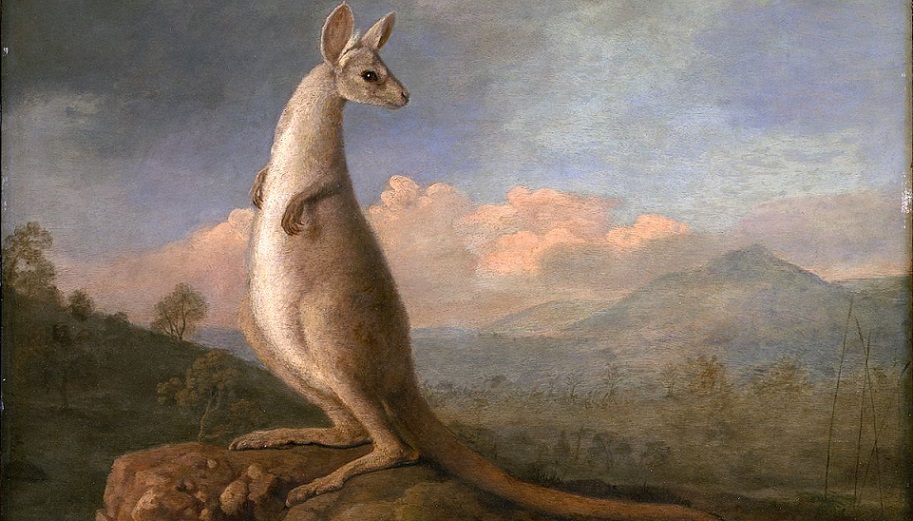
poems A Poem on Kangaroos: 'With Spring in Their Step' by David Watt


When springtime has come to the high mountain ranges
The melting of snow bares the landscape to changes;
And creatures awaken from seasonal slumber
In valleys below, where snows never encumber
The passage of feet between tussocks still growing
Through long months of winter—the season of slowing.
Then, kangaroos lift up their nostrils to breezes
And twitch to the richness the warming air seizes.

They savour the scents of fresh daisies and grasses,
Sphagnums as piquant as seasoned molasses,
Fragrant Coprosma and marigold buttons;
Favourable grazing for herbivore gluttons
Desirous of pleasures in highlands rebounding
From coldness to sweetness in triumph resounding.
Ascending by shuffle and leap alternating,
The mob reach those treasures made sweeter through waiting.

Up there, where the light shines with brightness unmuted
The macropod diners make haste undisputed;
Batting eyelashes between endless courses,
Surveying the scene, and replenishing forces
For times when the pickings are lower and leaner;
When memories of springtime are felt all the keener.
And wrigglesome joeys, impatient to frolic,
Drop down from their pouches to pastures bucolic.

When spring turns to summer, the frolicking ceases
As space between patches of greenness increases.
The kangaroos’ whiskers, once silvered with morning,
Bear dust on their tips as an ominous warning
That lengthening days, and the west wind arriving
Must yellow and wither the grasses surviving.
Then, taking the lead from a battle-scarred bounder,
The mob take their leave before food supplies founder.

Though kangaroos act on sensations and hunches,
They teach us to cheerfully roll with the punches;
Accepting that seasons are fickle and fleeting,
In rhythms dependent on cycles repeating.
Take what you can when the moment emerges—
For there will be times when a hostile wind surges.


David Watt is a writer from Canberra, the “Bush Capital” of Australia. He has contributed regularly to Collections of Poetry and Prose by Robin Barratt. When not working for IP (Intellectual Property) Australia, he finds time to appreciate the intrinsic beauty of traditional rhyming poetry.

ShareTweetPin
The Society of Classical Poets does not endorse any views expressed in individual poems or commentary.
Read Our Comments Policy Here

RandomPoems

Preparing for Winter and Spring by Damian Robin
Culture

‘Two Poems on U.K. Immigration’ by Damian Robin

September 11, 2018

My Wife Is Clad in Cloth From Head to Foot My wife is clad in cloth from head to foot....

‘When I Speak of History’ by Leonard Dabydeen
Beauty

‘When I Speak of History’ by Leonard Dabydeen

November 18, 2017

When I speak of history I speak well; I leave behind the past where broken bones Lay scattered on blistering...

Next Post
An Ode to Anti-French Revolution Hero ‘Charlotte Corday,’ by Jeremy Gadd

An Ode to Anti-French Revolution Hero 'Charlotte Corday,' by Jeremy Gadd

poem/kelly/censorship

On the Chinese Communist Party Censoring Pence, Not Harris, and Other Poetry by Bruce Dale Wise

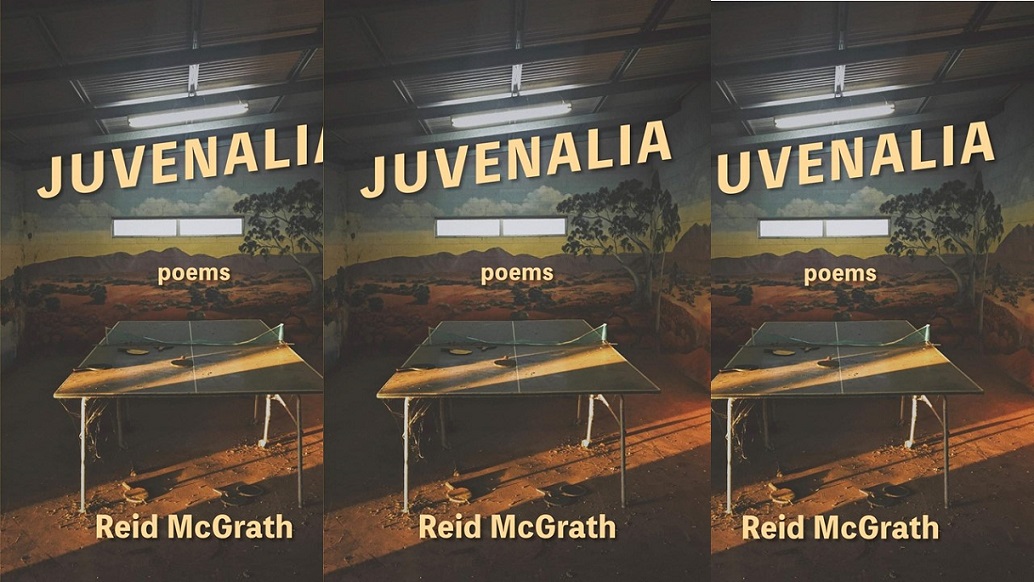
A Review of Juvenalia by Reid McGrath

A Review of Juvenalia by Reid McGrath

Comments 19

  1. Leo Zoutewelle says:
    6 years ago

    A fine, straightforward poem ending with a punch. Thanks.

    Reply
    • David Watt says:
      6 years ago

      Thank you Leo. I’m glad you enjoyed my poem and its punchline.

      Reply
  2. Susan Jarvis Bryant says:
    6 years ago

    David, this poem combines my love of words with my love of animals and has filled my Saturday morning with marsupial merriment! The poem rolls along with foot-tapping musicality and the images it conjures are lovely – “Marigold buttons/herbivore gluttons”, “impatient to frolic/pastures bucolic” are just two of my favourites. The wise wink in the closing couplet is a masterstroke – I’m definitely learning a lesson from those Kangaroos “With Spring in Their step” – great title! Thank you!

    Reply
    • David Watt says:
      6 years ago

      I really appreciate your kind comments Susan. There are certainly plenty of ‘hostile winds’ to contend with at the moment. Far better to make the most of the cards we’re dealt.

      Reply
  3. Joseph S. Salemi says:
    6 years ago

    I always delight in these non-iambic meters, especially when they pound along (in this case, just like the marsupials being described). Part of my pleasure is in the fact that such poems send our modernist enemies into a blood-rage of resentment: the poems are frequently examples of the much-hated “light” verse; and their metrical hard punches remind everyone that regular ictus is a mark of genuine verse.

    Watt also does something here that should be a lesson to all of us: HE DOESN’T COUNT SYLLABLES. Most of the lines here have twelve syllables, but five of them have only eleven, and this has no effect whatsoever on the smooth flow of the meter. In addition, Watt refuses to indulge in the pretentious affectation of using apostrophes to omit an unpronounced syllable. For example, in the third stanza the line “When memories of springtime are felt all the keener”, the second word has to be pronounced MEM – ries. But Watt quite rightly leaves the regular spelling of that word alone.

    He does the same thing in stanza 2, line 4 ( “Favourable grazing for herbivore gluttons”). The first word has to be pronounced FAVE – ra – bull, as any intelligent reader will realize in a flash, without the absurdity of an apostrophe.

    Also, pulling off nineteen feminine rhymes is a tour de force. Solid work, Mr. Watt!

    Reply
    • David Watt says:
      6 years ago

      Thanks Joe S. for your detailed comments, and for your support.

      It has largely been through reading SCP comments that I have become more conscious of not counting syllables, or abbreviating unnecessarily.

      This is the first time I have tried using feminine endings for each line. I think they add some variety to a mainly anapestic line.

      Reply
  4. Jeff Eardley says:
    6 years ago

    David, what a firecracker of sizzling, stupendous synchronicity. Rhyming and scanning to perfection. I can hear guitars, I can hear the jaws harp, I can hear wobble boards for Christ’s sake! This could be the next Eurovision winner (Yes, you are still in it) and if this doesn’t make you poet laureate of that fair dinkum nation of yours, I’ll eat my hat….and the corks.

    Reply
    • David Watt says:
      6 years ago

      Thank you Jeff for your most generous comments.
      I’ll await a call from the Eurovision Committee, but I won’t hold my breath!
      Australia once had a poet laureate, the convict Michael Massey Robinson, appointed in 1818. I understand that he was paid two cows for his services.
      We haven’t had a poet laureate since, possibly because contenders had a ‘beef’with the pay.

      Reply
  5. David Paul Behrens says:
    6 years ago

    In addition to being a well constructed poem using colorful and descriptive language with a rhythmic flow, I find deep meaning in the final stanza as it pertains to past and current human activities and existence. In a word, it is excellent.

    Reply
    • David Watt says:
      6 years ago

      David, I’m glad the final stanza, in particular, resonated with you. ‘Rolling with the punches’ is a fine principle to follow, though not always easy.

      Reply
  6. Norma Okun says:
    6 years ago

    William Carlos Williams said in his autobiography to listen to the poem first without having to understand immediately what the message is. Since I hear d the kangaroo in the wild in your poem I liked it. I think you did see the kangaroo and showed you do care about them.

    Reply
    • David Watt says:
      6 years ago

      Hi Norma, yes I have seen many kangaroos in their natural environment.
      They are a fascinating animal, and extremely adaptable to changing conditions. A kangaroo doe can even have two joeys using her pouch at the same time.

      Reply
      • Norma Okun says:
        6 years ago

        Lovely poem about kangaroos. I am glad that you had a chance to see them in their environment and being able to write a poem about them.

        Reply
  7. C.B. Anderson says:
    6 years ago

    Though a self-described bush poet, David, you have lifted yourself out of the bush league and are beyond criticism by any normal technical standard. Your poem is a virtual boomerang that demolishes all expectations, yet still comes home to roost in the the hand of its author.

    Reply
    • David Watt says:
      6 years ago

      Thanks C.B. for your tremendous comments. I like to think I’ve picked up some more technical skills though continuous learning. Having some knowledge of the subject, whether it is kangaroos, or something else, lends greater detail and authenticity to a descriptive poem.

      Reply
  8. Margaret Coats says:
    6 years ago

    As one of my wrigglesome joeys nicknamed me “Mamaroo,” I thoroughly appreciate these extended comments on his characterization!

    Reply
    • David Watt says:
      6 years ago

      Margaret, what an endearing nickname one of your joeys has given you!
      I’m so glad you appreciated the specific characteristics presented in this poem.

      Reply
  9. Peter Hartley says:
    6 years ago

    David – a very fine poem, this, with clever use of female rhyme throughout. I’ve read it four times now and each time it gets better.

    Reply
    • David Watt says:
      6 years ago

      Thanks very much Peter. The feminine rhymes seemed to suit the long lashes and deceptively delicate appearance of kangaroos.

      Reply

Leave a Reply Cancel reply

Your email address will not be published. Required fields are marked *


  1. Margaret Coats on ‘The Secret Rose’ and Other Poetry by Luke PereraSeptember 17, 2026

    Luke, "The Secret Rose" must be your signature poem as Substack's "Metrical Poet." It's no description of a flower, as…

  2. Joseph S. Salemi on ‘Military Quatrains, or the Modern Archilochus’: A Poem by Joseph S. SalemiSeptember 17, 2026

    Kip, I want my poems to be interesting and arresting and unexpected. Sometimes war, sometimes peace, and sometimes something freaky.

  3. Joseph S. Salemi on ‘Military Quatrains, or the Modern Archilochus’: A Poem by Joseph S. SalemiSeptember 17, 2026

    Roy, thanks for this wonderful comment. I was not in the military, but I had many fellow classmates in Fordham…

  4. C.B. Anderson on ‘Military Quatrains, or the Modern Archilochus’: A Poem by Joseph S. SalemiSeptember 17, 2026

    Always in the trenches and ever trenchant, Salemi keeps his readers in his crosshairs. Incoming!

  5. Roy Eugene Peterson on ‘Military Quatrains, or the Modern Archilochus’: A Poem by Joseph S. SalemiSeptember 17, 2026

    Joseph, you cannot imagine how much I love this military poem. I was familiar with everything and remembered what "Willie…

Subscribe to Daily Poems

Enter your email address to subscribe to this blog and receive notifications of new posts by email.

Join 1,645 other subscribers
No Result
View All Result

Resources

       1. A Guide to Writing Poetry

      2. The Best Poems of 2020      

      3. Poetry and Writing Contests

      4. Journals Accepting Formal Verse

Recent Poems

  • ‘Military Quatrains, or the Modern Archilochus’: A Poem by Joseph S. Salemi
  • ‘The Secret Rose’ and Other Poetry by Luke Perera
  • ‘The Family Archive’: A Poem by Robert Thomas
  • ‘Pedagogy’: A Poem by Jonathan Kinsman
  • ‘Who Are the Villains?’ and Other Poetry by Adam Wasem
  • ‘Isle of Romance’: A Poem by Margaret Brinton
  • ‘Professional Mourner’: A Poem by Brian Yapko
  • A Distillation of Shakespeare’s ‘A Midsummer Night’s Dream’ by Martin Briggs
  • ‘How the Mighty Fell!’: A Poem by Jeff Kemper
  • ‘The One Lone Juror’: A Poem by Joseph S. Salemi
  • ‘Soul of a Prophet’: A Trialog Poem by T.M. Moore
  • ‘Nelson and George’: A Poem by David Filpula
  • ‘When She Arrives’: A Poem by Bhairab Barman
  • ‘On to Better Days’: A Poem by Bruce Dale Wise
  • ‘Serenade’ and Other Poetry by Adam Sedia
  • ‘Self-Exploration’ and Other Poems by Paul Millan
  • ‘Victory’: A Poem by Jonathan Graver
  • ‘The Cristero Centennial’: A Poem by Margaret Coats
  • ‘A Potpourri of Aphoristic Verses’ by C.B. Anderson
  • ‘The Estuary’: A Poem by Jeff Eardley
  • ‘A World Without the Wednesday Child’: A Poem by Kimberly Fore
  • The 2026 Society of Classical Poets International Poetry Competition
  • The 2026 SCP International High School Poetry Competition
  • ‘Realistic Reflections’ and Other Poetry by Anna J. Arredondo
  • ‘China Made’: A Poem by Theresa Werba
  • ‘The Savage Moon’ and Other Poetry by Brian Yapko
  • Poetry Book Review: Love Found, Yearned For, and Lost by James A. Tweedie
  • ‘When Opportunity Knocks’: A Poem by Roy E. Peterson
  • ‘Legend of the Griffin’: A Poem by Iryna Hall
  • ‘Government Issue’ and Other Poems by Joseph S. Salemi

Categories

  • Acrostic
  • Alexandroid
  • Alliterative
  • Art
  • Best Poems
  • Blank Verse
  • Chant Royal
  • Classical Poets Live
  • Clerihew
  • Covid-19
  • Deconstructing Communism
  • Educational
  • Epic
  • Epigrams and Proverbs
  • Essays
    • Interviews with Poets
    • Poetry Reviews
  • Featured
  • From the Society
  • Great Poets
    • Dante Alighieri
    • Edgar Allan Poe
    • Emily Dickinson
    • Geoffrey Chaucer
    • Henry Wadsworth Longfellow
    • Homer
    • John Keats
    • John Milton
    • Robert Frost
    • William Blake
    • William Shakespeare
    • William Wordsworth
  • Human Rights in China
  • Limerick
  • Love Poems
  • Music
  • Pantoum
  • Performing Arts
  • Poetry
    • Beauty
    • Children's Poems
    • Culture
    • Ekphrastic
    • Found Poems
    • High School Poets
    • Humor
    • Riddles
  • Poetry Challenge
  • Poetry Contests
  • Poetry Forms
    • Curtal Sonnet
    • Haiku
  • Poetry Readings
  • Rhupunt
  • Rondeau
  • Rondeau Redoublé
  • Rondel
  • Rubaiyat
  • Sapphic Verse
  • Satire
  • Science
  • Sestina
  • Shape Poems
  • Short Stories
  • Song Lyrics
  • Sonnet
  • Symposium
  • Terrorism
  • Terza Rima
  • The Environment
  • Translation
  • Triolet
  • Video
  • Villanelle

Quick Links

  • About Us
  • Submit Poetry
  • Become a Member
  • Members List
  • Support the Society
  • Advertisement Placement
  • Comments Policy
  • Terms of Use

Welcome Back!

Login to your account below

Forgotten Password?

Retrieve your password

Please enter your username or email address to reset your password.

Log In
No Result
View All Result
  • Poems
    • Beauty
    • Culture
    • Satire
    • Humor
    • Children’s
    • Art
    • Ekphrastic
    • Epic
    • Epigrams and Proverbs
    • Human Rights in China
    • Music
    • Performing Arts
    • Riddles
    • Science
    • Song Lyrics
    • The Environment
    • The Raven
    • Found Poems
    • High School Poets
    • Terrorism
    • Covid-19
  • Poetry Forms
    • Sonnet
    • Haiku
    • Limerick
    • Villanelle
    • Rondeau
    • Pantoum
    • Sestina
    • Triolet
    • Acrostic
    • Alexandroid
    • Alliterative
    • Blank Verse
    • Chant Royal
    • Clerihew
    • Rhupunt
    • Rondeau Redoublé
    • Rondel
    • Rubaiyat
    • Sapphic Verse
    • Shape Poems
    • Terza Rima
  • Great Poets
    • Geoffrey Chaucer
    • Emily Dickinson
    • Homer
    • Henry Wadsworth Longfellow
    • Dante Alighieri
    • John Keats
    • John Milton
    • Edgar Allan Poe
    • William Shakespeare
    • William Wordsworth
    • William Blake
    • Robert Frost
  • Love Poems
  • Contests
  • SCP Academy
    • Educational
    • Teaching Classical Poetry—A Guide for Educators
    • Poetry Forms
    • The SCP Journal
    • Books

© 2025 SCP. WebDesign by CODEC Prime.